August 24, 2026 • Margot Calloway • 12 min reading time • Prices verified June 4, 2026
Bamboo, Cotton, and Poly-Blend Shells: Which Outer Fabric Actually Keeps Hot Sleepers Cooler
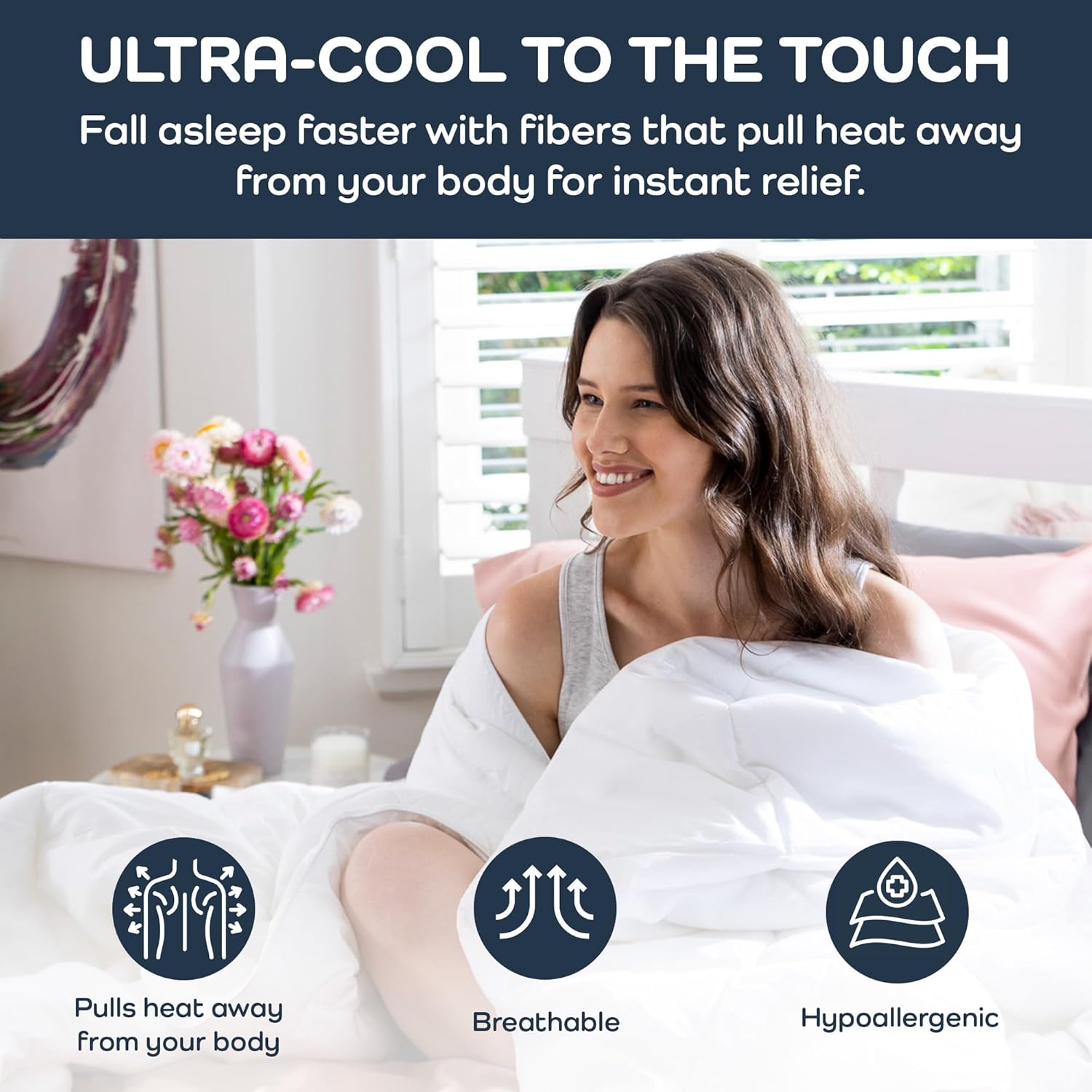
When most people shop for a cooling comforter, they spend all their mental energy on the fill — whether it’s down, down-alternative, or some proprietary fiber blend. The outer fabric, called the shell, gets maybe a glance. That’s a mistake. The shell is the only part of a comforter that directly contacts your skin, and its weave, fiber, and construction govern how quickly body heat escapes, how fast moisture wicks away, and whether you wake up clammy at 2 a.m. Think of the shell as a filter between your body and the fill: a poor filter traps heat no matter how aggressively the fill is marketed as “cooling.” This article breaks down the three dominant shell materials you’ll encounter — bamboo-derived fabric (usually viscose or lyocell from bamboo), cotton (ranging from percale to sateen), and polyester blends (typically 60/40 or 80/20 cotton-poly) — compares them honestly across three purchase tiers, and makes the case for which one actually earns the cooling label for hot sleepers.
Why Shell Fabric Is a Real Variable, Not Marketing Noise
Here’s the honest framing: fill power (how much loft one ounce of down creates) and fill weight (total ounces of fill inside a comforter) tell you about insulation capacity. Shell fabric tells you about thermal transfer — how readily heat and moisture move away from your body through the outer layer. The two are independent variables. You can have an 800-fill-power goose-down comforter with a dense sateen cotton shell that sleeps warmer than a 600-fill-power comforter with an open-weave percale shell, because the shell is throttling the system.
The Sleep Foundation, in its guide “Best Cooling Comforters,” identifies breathability at the shell level as a primary driver of hot-sleeper satisfaction — consistently ranked ahead of fill type and fill weight among buyers who report sleeping warm. Good Housekeeping, in its expert-tested roundup “Best Cooling Comforters,” similarly flags shell weave as a top-three variable in cooling performance, noting that percale cotton outperforms sateen cotton in heat dissipation because its plain weave structure creates more air movement per square inch. Real Simple, in “What Is Fill Power? A Complete Guide to Down Comforters,” draws the practical line clearly: fill metrics and shell metrics are separate purchasing decisions, and optimizing only one while ignoring the other produces predictably disappointing results for hot sleepers.
This matters practically: when choosing between two comforters at the same fill-weight tier, the shell is often the deciding variable. The three sections below examine each shell material in turn, organized by the purchase tier where each most commonly appears.
The Three Shell Types: An Honest Comparison
Bamboo Shells — Best Moisture Management, Mid-to-Premium Tier
Bamboo-derived fabrics — sold as bamboo viscose, bamboo rayon, or bamboo lyocell depending on the manufacturing process — have a genuine moisture-wicking advantage over most cotton constructions. The fiber’s cross-section is naturally porous, which allows moisture vapor to move outward rather than pooling against skin. For hot sleepers who sweat rather than simply radiate heat, this is a meaningful structural difference, not a marketing claim.
Real owner reviews bear this out with unusual specificity. A buyer of the Olive + Crate bamboo comforter with eczema-prone skin framed the shell choice as a medical-adjacent decision: she specifically credited the bamboo shell for reduced skin irritation on the neck and arms compared to poly-blend shells she had used previously. That’s not a clinical finding, but it’s a pattern that surfaces consistently — across aggregated reviews, bamboo shell owners with sensitive or reactive skin report fewer friction and irritation complaints than comparable poly-blend buyers.
Where bamboo oversells: The phrase “naturally cooling” is elastic marketing language. Bamboo viscose is not inherently cooler to the touch than cotton — its advantage is moisture management, not thermal conductivity. If you’re a dry heat sleeper who radiates warmth without sweating much, a well-woven cotton percale shell will perform comparably. The Spruce, in “The Best Bamboo Comforters,” makes this distinction explicitly: bamboo’s perceived “cool feel” is largely a moisture-movement story rather than a contact-temperature story. Buyers who expect bamboo to feel like touching a cold tile floor will be disappointed; buyers who want to wake up drier will not be.
Thread count note: Most bamboo shell comforters run 300–400TC. Thread counts above 500TC in bamboo can paradoxically reduce breathability, because tighter weave density slows air movement. A bamboo shell marketed above 500TC is a warmth signal, not a quality signal.
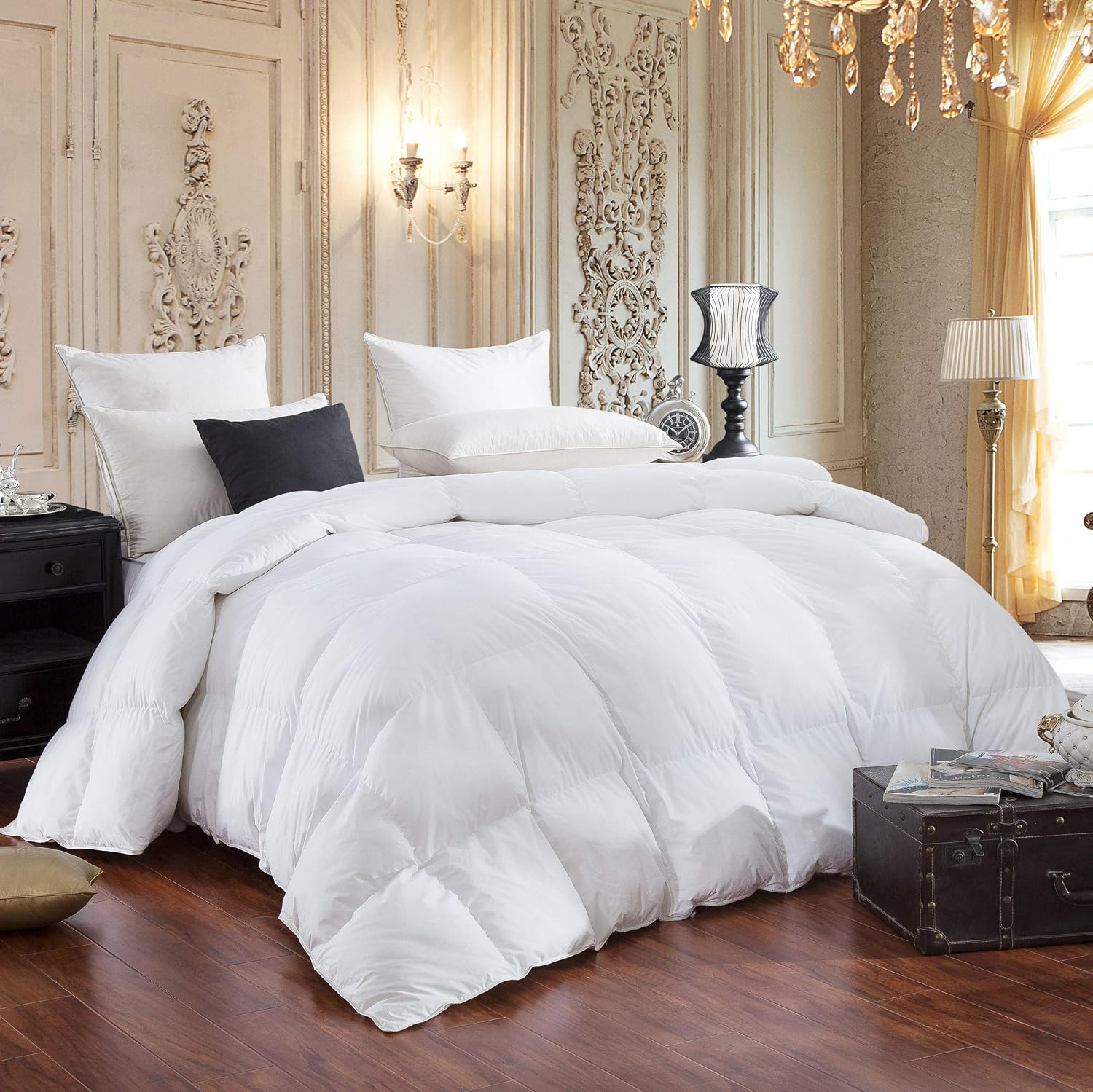
600-Thread-Count
$129.95
In stock on Amazon
Check price on AmazonCotton Shells — The Incumbent With a Critical Weave Variable, Entry-to-Mid Tier
Cotton is the default shell material, and for good reason: it’s durable, reliably washable, and predictably breathable when the construction is right. But “cotton shell” covers an enormous range of actual sleep experiences, and thread count interacts with weave type in ways that routinely surprise buyers.
Percale weave (typically 200–400TC): One-over-one-under plain weave. More air pockets per square inch. Matte finish. Feels crisp and slightly cool to the touch. The Sleep Foundation specifically identifies percale as the most breathable common cotton weave construction for comforter shells, and it is the default recommendation in nearly every serious hot-sleeper guide, including Good Housekeeping’s tested roundup.
Sateen weave (typically 300–600TC): Four-over-one-under weave. Silkier, drapier feel with a slight sheen. More surface area of fiber contacts skin per square inch, which increases heat retention. Sateen is aesthetically appealing and works well for sleepers who run cold; for hot sleepers, it’s a measurable step backward from percale.
The high-thread-count puzzle: A buyer of the puredown 700TC cotton shell comforter pushed back explicitly on negative warmth reviews, reporting that she was not experiencing the heat complaints others described. Her experience is genuinely informative: high-quality combed or long-staple cotton at 700TC can be less dense per thread than mid-quality cotton at 400TC, because longer fibers pack more efficiently and leave more interstitial space. So the thread count number alone doesn’t predict heat; fiber quality and yarn diameter interact with it. A budget 700TC shell using short, thick yarns will sleep hotter than a quality 300TC percale shell — consistently, across aggregated buyer data.
The practical decision rule for cotton: Prioritize weave type and fiber quality over thread count number. Percale at 300TC from a quality mill outperforms sateen at 500TC for hot sleepers. Thread count only becomes meaningful comparison data when weave type is held constant.
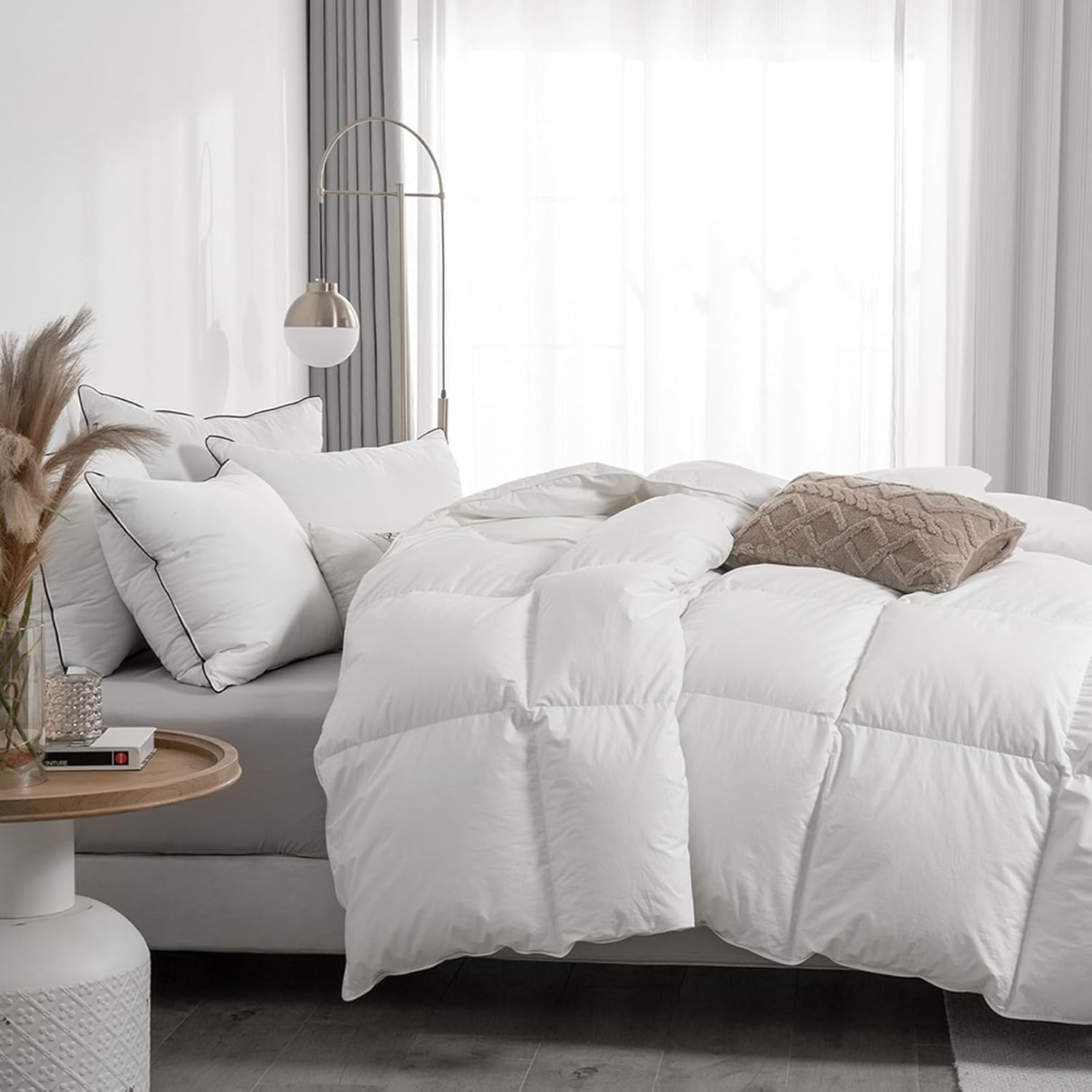
APSMILE
$79.90
In stock on Amazon
Check price on AmazonPoly-Blend Shells — Honest About the Tradeoff, Entry Tier
Polyester-blend shells — typically 60% cotton / 40% polyester, or sometimes 80/20 in either direction — dominate the $60–$150 entry-level tier and appear at the mid-market in alternative-fill comforters. They’re there for cost and manufacturing reasons: polyester fiber is cheaper, more wrinkle-resistant, and more dimensionally stable through repeated machine washing.
The honest tradeoff: Polyester does not breathe the way natural fibers do. It has a lower moisture vapor transmission rate than cotton or bamboo, meaning perspiration stays closer to the skin surface longer before evaporating. For cool or temperate sleepers, this is a non-issue. For hot sleepers — especially those who sweat — it compounds the insulation effect of the fill itself, and the shell becomes the bottleneck in the heat-shedding system.
A useful real-world stress test comes from a buyer of the Amélie Home cooling comforter, who placed it over an existing all-season duvet — essentially doubling the insulation layer — and reported that her extremely hot-sleeping husband remained comfortable. This is notable because it suggests that fill weight and construction choices (in this case, a notably lightweight fill) can partially offset the breathability limits of a poly-blend-adjacent shell. It doesn’t make poly-blend the right choice for hot sleepers; it does illustrate that fill weight is a meaningful lever when shell material is constrained by budget.
The layering finding: If you’re considering stacking a cooling comforter over an existing duvet, poly-blend shells are the highest-risk choice for heat buildup. Bamboo or percale cotton shells give a layered system more capacity to shed heat. Good Housekeeping’s testing framework identifies this directly: in stacked configurations, shell breathability becomes more critical, not less, because the total insulation load increases while the shell remains the only outward thermal pathway.
The climate-change-of-address variable: A buyer of the APSMILE lightweight feather-down comforter articulates a pattern The Spruce surfaces in “The Best Bamboo Comforters” — buyers relocating to warmer climates (she moved to Georgia) frequently find that their existing bedding overshoots, and they need reduced fill weight and a more breathable shell simultaneously. For these buyers, a poly-blend shell on a reduced-fill comforter is a partial solution; a percale or bamboo shell on a reduced-fill comforter is the complete one.
APSMILE
$79.90
In stock on Amazon
Check price on AmazonSide-by-Side: Shell Material at a Glance
| Shell Type | Breathability | Moisture Wicking | Hot Sleeper Fit | Typical Price Tier |
|---|---|---|---|---|
| Bamboo viscose / lyocell | High | Excellent | Best for sweaty sleepers | Mid–Premium ($150–$350) |
| Cotton percale (200–400TC) | High | Good | Best for dry-heat sleepers | Entry–Mid ($80–$300) |
| Cotton sateen (300–600TC) | Moderate | Moderate | Acceptable in lightweight builds | Mid ($120–$400) |
| 60/40 Cotton-poly blend | Low–Moderate | Poor | Works only in very light fills | Entry ($60–$150) |
APSMILE
$79.90
In stock on Amazon
Check price on AmazonThe Premium Case: When Shell Quality Justifies the Price Jump
The A/B comparison data point worth treating as primary evidence comes from a Pacific Coast buyer who purchased two all-season comforters simultaneously — a direct shell-material comparison conducted in the same household by the same sleeper. Her verdict: one shell “breathed noticeably more,” and after a few weeks of parallel use, the breathable-shell version had become the permanent choice. She did not use technical vocabulary, but her description maps cleanly onto the percale-versus-denser-weave comparison that appears in Good Housekeeping’s testing methodology.
This kind of side-by-side observation is the most honest evidence available for shell comparisons. Lab metrics like Q-Max (maximum heat flux, measured in W/cm², quantifying the “cool-touch” sensation on first contact) are useful tie-breakers between comparably breathable shells, but they measure only the first-contact moment — not sustained thermal regulation across eight hours. The Sleep Foundation notes this limitation explicitly: a high Q-Max score indicates a pleasant initial feel but does not predict all-night comfort if the shell lacks sustained breathability and moisture-wicking capacity. For hot sleepers, the all-night metrics matter more than the first-touch sensation.
The premium case for bamboo lyocell or long-staple percale cotton over budget poly-blend is straightforwardly this: the shell is the one component of a comforter that cannot be upgraded after purchase. Fill weight can be compensated by sleeping with fewer covers. Shell material cannot be compensated by anything except replacing the comforter.
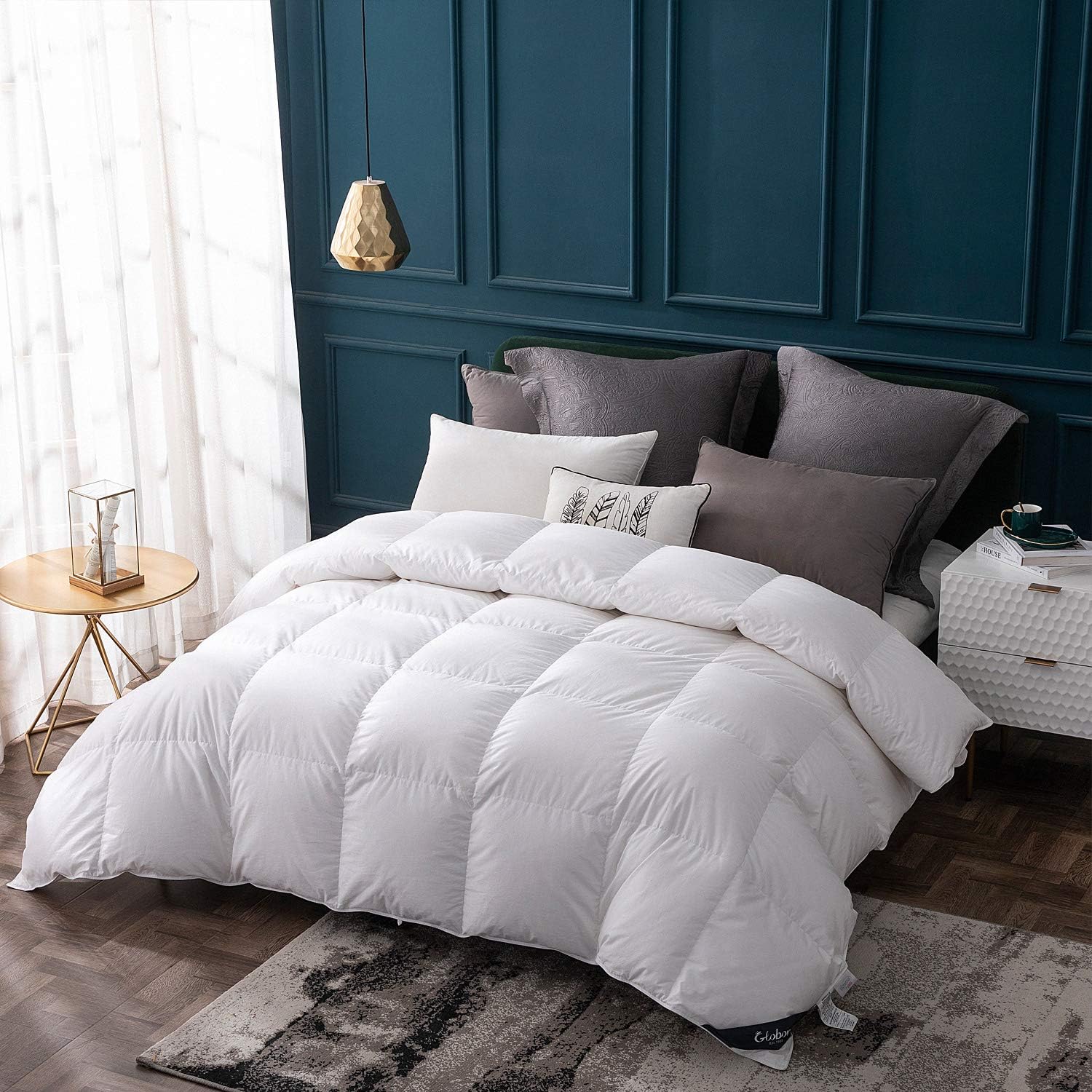
Globon
$226.78
In stock on Amazon
Check price on AmazonFrequently Asked Questions
Does a bamboo shell comforter actually feel cooler or is it mainly marketing language? Partially both. Bamboo viscose genuinely wicks moisture faster than most cotton constructions, so if you sweat during sleep, you’ll feel drier — which registers as cooler. But bamboo is not significantly lower in contact temperature than quality percale cotton on a dry skin surface. If a brand claims bamboo is “10 degrees cooler,” that’s marketing language without a standardized measurement behind it. The real advantage is moisture management, not raw thermal conductivity.
What thread count in a cotton shell makes a meaningful difference for breathability? Thread count matters less than weave type. A 200–300TC percale shell breathes better than a 500TC sateen shell, consistently. If comparing within the same weave type, thread counts above 400TC in cotton begin to reduce breathability without proportionally improving softness. The puredown 700TC buyer’s experience is a useful exception: high-quality long-staple cotton can outperform what its thread count predicts, but that’s a fiber quality story.
Can a cooling comforter be layered over an existing all-season duvet without overheating? It depends on the fill weight of both pieces and the shell of the cooling comforter. The Amélie Home buyer’s test suggests it’s possible with a lightweight fill and breathable shell. But the honest answer is: layering doubles the insulation stack, and the shell’s breathability becomes more critical, not less. A poly-blend shell in a layered configuration is a meaningful heat-trap risk. A bamboo or percale cotton shell gives the system more capacity to exhale.
Is a 60/40 cotton-poly shell noticeably warmer than a 100% cotton shell in real use? Yes, consistently across aggregated owner reviews. Buyers who switch from poly-blend to 100% cotton shells report a perceptible reduction in night-sweat frequency. The polyester component lowers the shell’s moisture vapor transmission rate, meaning perspiration lingers closer to the skin surface longer. In a lightweight fill comforter, the effect is minor. In a mid-weight or all-season fill, it compounds the fill’s insulation effect, and the poly-blend shell becomes the bottleneck.
What is Q-Max and should it factor into a cooling comforter purchase? Q-Max (maximum heat flux, W/cm²) measures how quickly a fabric absorbs heat from your skin on initial contact — the “cool-touch” sensation. A score above 0.20 W/cm² is generally considered cool-touch territory. However, Q-Max only captures the first-contact moment, not sustained overnight thermal regulation. For hot sleepers, sustained breathability and moisture wicking matter more than first-touch sensation. Use Q-Max as a tiebreaker between two otherwise comparably breathable shells, not as a primary filter.
The Decision Rule
If you sweat during sleep: Bamboo shell is your first choice. Moisture wicking is the bottleneck, and bamboo viscose or lyocell addresses it directly. Paired with a lightweight fill weight, it’s the strongest complete system for perspiration-driven heat.
If you radiate heat but stay dry: Cotton percale at 200–400TC from a quality mill is the right call. It breathes as well as bamboo for dry-heat sleepers, costs less at equivalent quality tiers, and washes more predictably over years of use.
If you’re budget-constrained and landing in poly-blend territory: Prioritize the lowest available fill weight over shell optimization. A lightweight poly-blend shell comforter will outperform a heavier poly-blend shell comforter for hot sleepers more than any shell upgrade within that price tier.
If you’re layering: Bamboo or percale cotton shell only. The stacked insulation system needs every available pathway to shed heat, and a poly-blend shell closes the most important one.