August 10, 2026 • Margot Calloway • 10 min reading time • Prices verified June 4, 2026
Bed-in-a-Bag Sets That Actually Look Good: Aesthetic, Color Accuracy, and Sheet Quality Examined
A bed-in-a-bag is exactly what it sounds like: a single packaged set that contains everything you need to dress a bed — typically a comforter (the thick, quilted outer blanket), matching pillow shams (decorative covers for your sleeping pillows), a flat sheet, a fitted sheet, and sometimes pillowcases, all coordinated in one pattern or colorway. The appeal is obvious. You buy one box, unpack it, and your bed looks like a finished room rather than a pile of mismatched textiles. For first apartments, guest rooms, rental properties, and anyone who just doesn’t want to spend three weekends mixing and matching, it’s a genuinely practical category. The tradeoff is that sets must hit price, pattern, warmth, and sheet quality all at once — and most of them compromise somewhere. This guide breaks down where the popular sets succeed and where they fall short, with a specific focus on the thing buyers care most about right now: whether the color you see on the listing actually shows up in your bedroom.
| EDITOR'S PICKELNIDO QUEEN® Feather Comforter… | Mid-tierBedsure King Size Comforter Set… | Budget pickUtopia Bedding Full Comforter D… | |
|---|---|---|---|
| Set type | Comforter only | 7-piece set | Comforter only |
| Fill | Feather & downfiber | Down alternative | Down alternative |
| Shell | 100% cotton | — | — |
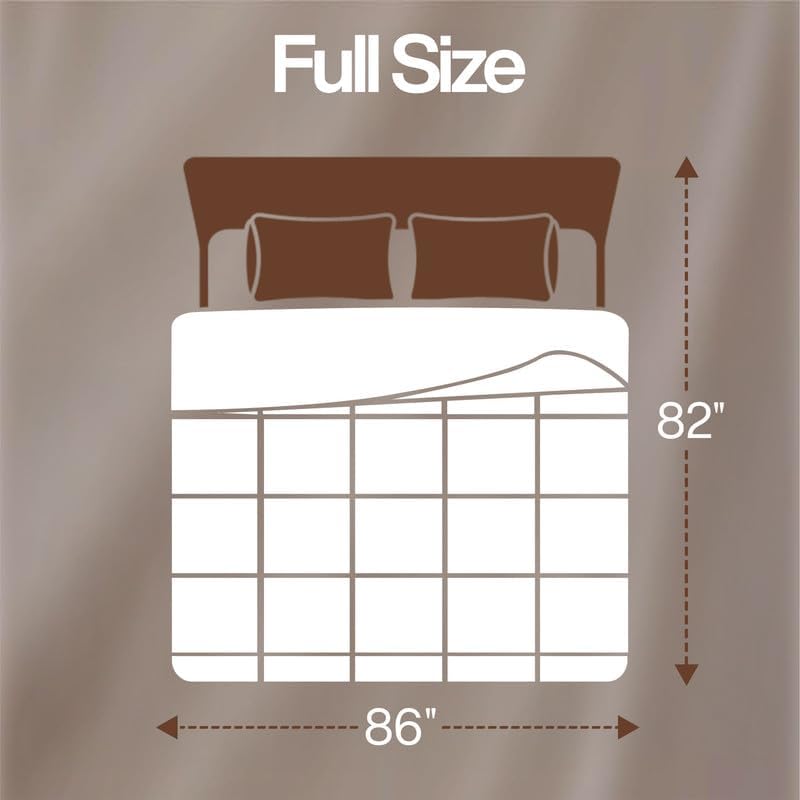
| Size | Queen 90x90" | King | Full 82x86" |
| Color | White | Grey | White |
| Sheets included | ✗ | ✓ | ✗ |
| Price | $56.99 | $44.99 | $28.99 |
| See on Amazon → | See on Amazon → | See on Amazon → |
Why Color Accuracy Is the Real Purchase Decision
Color disappointment is the single most common reason buyers return bedding, particularly in the bed-in-a-bag category where the aesthetic coordination of the whole set is the primary selling point. The gap between a monitor’s color gamut and a bedroom’s natural or artificial light is real, and it’s compounded by how most product photography is shot — controlled studio lighting optimized to make fabric look saturated and clean.
Across aggregated reviews, the brands in this category that earn the most consistent “looks exactly like the photo” feedback are Bedsure, CozyLux, HEVUMYI, and Monbix. That’s not a small thing. It means their photo teams are shooting under conditions closer to how the fabric actually reads at home — or their dye processes are consistent enough that there’s minimal color shift between production and product page. Either way, reviewers in each of these lines specifically call out that what arrived matched what they expected, which is a meaningful differentiator when color disappointment drives a disproportionate share of returns.
The standout in this area is the Monbix Italian Plum colorway. This set uses a cationic dyeing process — a method that applies dye to specially engineered fibers at an ionic level, producing deeper, more uniform color saturation than standard reactive dyeing. The Spruce’s overview of textile dyeing techniques notes that cationic-dyed fabrics typically show stronger color depth and better resistance to washing-related fade compared to surface-applied dyes. In practice, Monbix reviewers describe the Italian Plum shade as genuinely rich and dimensional in-room — not the washed-out purple that often results when “plum” bedding meets real-world bedroom lighting.
The implication for buyers: if you’re choosing between a set where color is purely decorative (neutral grays, whites, basic blues) and one where the colorway is the whole point of the purchase, it’s worth specifically looking for evidence of cationic dyeing or a pattern of reviewer confirmation that the color landed correctly. Standard dye processes on lower-GSM microfiber shells tend to look accurate in the box and fade toward the sixth or eighth wash.
Sheet Quality: The Persistent Weak Point, With One Real Exception
Here’s the honest pattern across almost every bed-in-a-bag set at the $60–$150 price tier: the comforter carries the set, and the sheets are an afterthought. Multiple HEVUMYI buyers describe the included sheets as “a bit thin,” and this sentiment shows up consistently across the category in Good Housekeeping’s product testing roundups and in aggregated buyer review pools. Thin sheets aren’t necessarily uncomfortable — microfiber at even modest GSM (grams per square meter, a measure of fabric weight and density) can feel smooth — but they don’t hold up to repeated washing the way a separately purchased percale or sateen sheet in the $40–$80 range would.
By the numbers:
- Typical bed-in-a-bag sheet GSM: 60–80 GSM (light, prone to pilling after 15–20 washes)
- Separately purchased mid-tier microfiber sheets: 90–110 GSM
- Real Simple’s bedding label guide benchmarks 90 GSM as the minimum for durability
The exception worth naming explicitly is WRENSONGE. Reviewers consistently call out the sheets in WRENSONGE sets as noticeably softer than category average — not just at unboxing, but through use. The deep-pocket fitted sheet construction also earns specific praise for staying on mattresses up to 16 inches tall, which matters for anyone using a mattress topper. This is unusual enough in the category that it’s worth weighting if sheets are a priority for you.
There’s also one durability flag on WRENSONGE: at least one buyer noted “slight discoloration after a month,” suggesting that despite the better base fabric, some colorways in the line may use dyes that respond poorly to repeated machine washing — particularly in warm water. If you go with WRENSONGE, cold water, gentle cycle, and avoiding high-heat drying will protect the color longer than the care tag minimum.
For every other set in the category, the practical framing is this: treat the sheets as a bonus, not a permanent solution. If you’re outfitting a guest room or a short-term rental and sheets are being rotated and replaced on a cycle anyway, the included sheets are fine. If this is your primary bed and you’re sleeping on these sheets nightly, budget an additional $40–$60 for a separately purchased sheet set and treat the bed-in-a-bag as a comforter-plus-shams package that happened to include serviceable sheets.
The Detail That Actually Differentiates: WRENSONGE’s Side Pocket
Aesthetic guides tend to focus on color and pattern. But in aggregated buyer reviews of WRENSONGE sets, the feature that generates the most unprompted mentions isn’t the sheet quality or the comforter fill — it’s a side pocket sewn into the comforter or duvet cover for storing a TV remote.
This sounds minor. It isn’t. Apartment Therapy’s guides to bedroom organization consistently identify “where does the remote actually go” as one of the small friction points that shapes how a bedroom feels to live in day-to-day. The WRENSONGE side pocket is cited by multiple buyers as a feature they didn’t know they wanted until they had it. It’s also a signal about product design philosophy: a brand that adds a remote pocket is thinking about how the product functions in a real bedroom, not just how it photographs in a studio.
For buyers choosing between sets at similar price points, this kind of feature shouldn’t be the deciding factor — but it’s worth knowing it exists if you’re already leaning toward WRENSONGE for other reasons.
The Vacuum-Seal Surprise: What CozyLux Buyers Get Right
CozyLux sets arrive vacuum-compressed, which means they look considerably smaller and less impressive in the box than they will on the bed. At least one CozyLux reviewer documents the specific arc of skepticism: the set looked thin and cheap at unboxing, but after the comforter expanded over several hours at room temperature, it filled out to normal loft and appearance.
This matters because vacuum compression is a legitimate shipping and packaging method — it doesn’t indicate lower fill or worse construction. Sleep Foundation’s comforter guidance notes that compressed down-alternative fills typically recover to full loft within two to four hours when laid flat, and within twelve hours if you give the comforter a few shakes and let it breathe. The issue is purely expectation management: if you don’t know this is how the product works, you might return it before it’s had a chance to perform.
The CozyLux pattern here mirrors what reviewers report about compressed standalone comforter inserts. The lesson is the same: don’t judge a vacuum-packed comforter until it’s had at least a few hours to decompress. If it still looks flat and thin after that, then you have a legitimate product concern.
Frequently Asked Questions
Do bed-in-a-bag sheets hold up as well as separately purchased sheets?
Generally, no. The sheets included in most bed-in-a-bag sets are made to a price point that allows the brand to hit a bundled MSRP. Across the category, included sheets tend to run 60–80 GSM — lighter than the 90–110 GSM you’d find in a dedicated sheet set at even a modest price. WRENSONGE is the notable exception, with reviewers consistently noting above-average softness and durability. For everyone else, treat the included sheets as functional for occasional use or short-term rental rotation, but plan to upgrade for a primary bed.
Are the pillow shams in these sets the same quality as the comforter?
Usually yes, but the comparison isn’t exactly even. Shams use less fill and construction than a comforter, so they’re less demanding to produce. In practice, sham quality in most of these sets reads as consistent with the comforter shell — same fabric, same stitching pattern. What reviewers occasionally flag is that pillow shams in these sets are sometimes envelope-closure rather than zippered, which can let the pillow shift inside. That’s a construction choice, not a defect, but it’s worth noting if you want shams that look crisp rather than slightly lumpy.
How accurate are the color photos for these sets — will it look different in my room?
It depends heavily on the brand. Bedsure, CozyLux, HEVUMYI, and Monbix all earn consistent reviewer confirmation that colors match listing photos. The bigger variable is your room’s lighting. A deep navy or plum that reads rich under a warm-white bulb may look cooler or more muted under daylight-spectrum lighting. If you’re choosing a set for a room with limited natural light, go slightly warmer or deeper than you think you need — colors almost always read lighter in-room than on a monitor. The Monbix Italian Plum cationic-dyed colorway has the deepest real-world color-match praise of any option reviewed here.
What does cationic dyeing mean and does it affect how the color holds up?
Cationic dyeing is a process that bonds dye molecules to specially treated synthetic fibers at an ionic level, rather than applying dye to the surface of the fiber. The result is typically deeper color saturation and better wash resistance than standard reactive dyeing. The Spruce’s overview of textile dyeing methods notes that cationic-dyed fabrics tend to retain color longer under repeated washing because the dye is embedded in the fiber rather than sitting on top of it. It’s particularly effective on polyester and microfiber shells — the exact materials used in most bed-in-a-bag sets at this tier.
Is a 7-piece set actually better value than buying a comforter and sheets separately?
Mathematically, yes — in most cases. A standalone comforter at this tier runs $50–$90; a sheet set runs $30–$60; pillow shams add another $20–$35. A complete 7-piece set at $80–$130 usually bundles at a discount relative to those individual purchases, even accounting for the lower sheet quality. The “buy separately” case makes more sense if you already own sheets you like and just want the comforter, or if you’re upgrading your primary bed and want the durability of a dedicated sheet set. For a guest room, first apartment, or rental property, the bundle almost always wins on value per dollar spent.
Will the comforter in a bed-in-a-bag set be as warm as a standalone comforter?
At the same fill weight, yes — the comforter in a bed-in-a-bag set uses the same down-alternative polyester fill as a standalone insert at this price tier. Where you may notice a difference is fill weight: bundled sets sometimes use slightly lighter fills to keep the overall set packable and shippable. If warmth is a primary concern, check whether the listing specifies an “all-season” or “warm” designation. Sets marketed as “all-season” at this tier typically run slightly lighter than what cold sleepers want for winter; a standalone comforter with a clearly stated fill weight gives you more control over that variable.