May 18, 2026 • Margot Calloway • 10 min reading time • Prices verified June 4, 2026
Cooling Comforters for Hot Sleepers, Menopause, and Warm Climates: What Actually Works
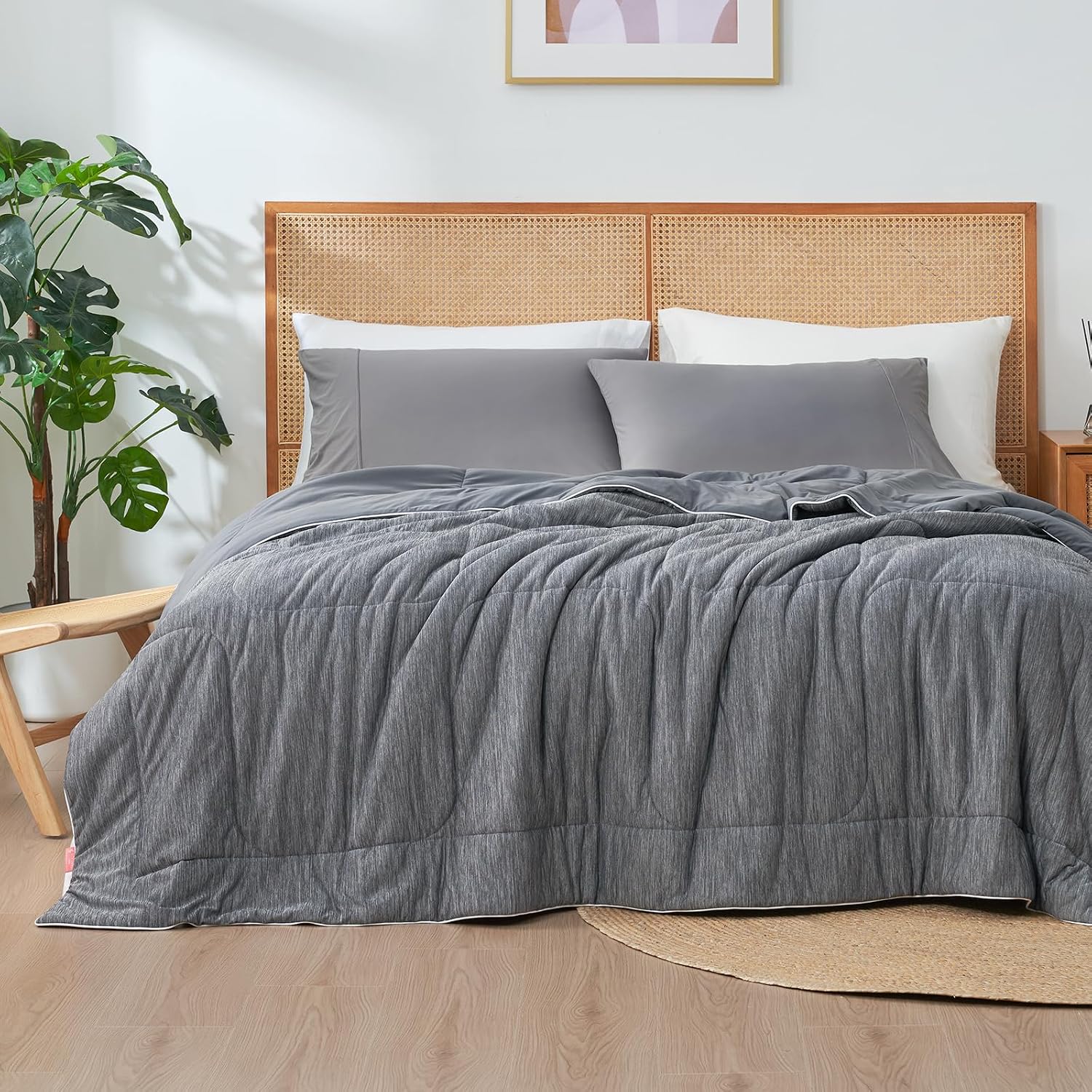
If you sleep hot — meaning you regularly wake up sweaty, kick off covers, or find yourself lying on top of the sheets by 3 a.m. — you already know standard bedding is not built for you. A “cooling comforter” is exactly what it sounds like: a comforter designed with lighter fill, more breathable shell fabrics, or moisture-wicking materials to reduce the heat buildup that wakes you up. The category has exploded in the past few years, partly because menopause-related night sweats affect an estimated 75 percent of people going through perimenopause and menopause (per the Sleep Foundation’s overview of sleep and hormonal changes), and partly because warm-climate households in Texas, Florida, and the Southwest have figured out that a year-round all-season comforter is simply the wrong tool for a hot night. This guide synthesizes what reviewers, spec sheets, and material science actually tell us — so you can make a confident decision instead of guessing.
| EDITOR'S PICK[600-Thread-Count Egyptian Cotto…](https://www.amazon.com/dp/B002XZ4704?tag=greenflower20-20) | Mid-tier[Globon Summer Down Comforter Bl…](https://www.amazon.com/dp/B0DP42WQ2B?tag=greenflower20-20) | Budget pick[TEXARTIST Premium 2100 Series Q…](https://www.amazon.com/dp/B08D3WQNMR?tag=greenflower20-20) | |
|---|---|---|---|
| Fill material | Goose down | Down | Down alternative |
| Shell fabric | Egyptian cotton | — | — |
| Fill weight | 55 oz | 10 oz | — |
| Construction | Baffle box | — | — |
| Corner tabs | — | — | ✓ |
| All-season | — | — | ✓ |
| Price | $129.95 | $119.99 | $36.98 |
| See on Amazon → | See on Amazon → | See on Amazon → |
What “Cooling” Actually Means on a Comforter Label (and What It Doesn’t)
Let’s be direct: no comforter actively cools you. What cooling comforters do is reduce heat trapping — they breathe better, wick moisture away from the body faster, or carry less insulating fill so less heat accumulates under the blanket. The difference matters because it sets realistic expectations. Reviewers across the products we researched report reduced overheating, not elimination of it. A menopausal reviewer of the Amélie Home dual-sided cooling comforter called it “a lifesaver” — but she did not say night sweats disappeared entirely. Her husband, who was waking up sweating under their all-season duvet, found it “perfect.” That’s the realistic ceiling: meaningful improvement, not a clinical fix.
The mechanisms that actually deliver that improvement fall into three buckets:
1. Low fill weight. Fill weight (measured in ounces) is the total amount of insulating material inside the comforter. A summer-weight comforter might carry 12–18 oz of down or down-alternative fill; an all-season runs 20–30 oz. Lower fill weight means less material trapping your body heat. This is the most reliable cooling lever available, and it’s why a well-constructed lightweight down comforter can genuinely outperform a “cooling fabric” comforter that’s still packed with fill.
2. Shell fabric and weave. The outer shell — typically cotton, bamboo-derived viscose, or a synthetic — controls airflow. A percale weave (crisp, one-over-one-under) breathes better than sateen. Bamboo-derived viscose has a reputation for moisture-wicking. The Olive + Crate bamboo comforter earns specific praise from an eczema sufferer for breathability, which tracks with bamboo’s reputation for softer, less-irritating feel on sensitive skin. That said, Real Simple’s cooling comforter coverage notes that bamboo marketing claims vary widely by brand and processing method — “bamboo-derived” can mean several different things at the fiber level.
3. Phase-change or Q-Max materials. Some comforters incorporate phase-change materials (PCMs) or are rated with a Q-Max score. Q-Max — more on this below in the FAQ — measures how quickly a fabric absorbs heat from your skin on contact. Higher Q-Max = more immediate cool-to-the-touch sensation. Whether that sensation persists through the night is a separate question.
The Product Landscape: What Reviewers Are Actually Saying
Rather than flattening every option into one list, it’s worth mapping what reviewers report by use case, because “hot sleeper” is not one person.
For Menopause Night Sweats: Dual-Sided and Moisture-Wicking Constructions
The Amélie Home dual-sided cooling comforter gets some of the most specific menopause-related testimony in this category. Owners describe using the cooler side during active hot flashes and the warmer side on calmer nights — a practical solution for the variability that makes menopause sleep so difficult. Night sweats don’t follow a schedule, and a reversible construction gives you a manual thermostat without leaving the bed.
The TEXARTIST 4D Spiral fill comforter is called out specifically by a self-described hot sleeper as “good quality” for that reason — the 4D spiral fill is a hollow-fiber alternative that allows airflow through the fill clusters, reducing the solid-insulation feel of standard polyester fill. It’s worth being clear: this is a synthetic fill, not down, and it won’t approach the loft or longevity of a quality down product. But for buyers who want machine-washable simplicity and heat management, the tradeoff is reasonable.
For Warm Climates (Texas, Florida, AC-Dependent Households)
The Globon Summer comforter comes up repeatedly in warm-climate reviews. Buyers in Texas describe it as appropriate for nights when you still want something over you but can’t tolerate weight. The word “weight” keeps appearing in this segment of the review corpus — hot sleepers in warm climates are often less concerned with temperature-regulating technology and more concerned with simply not having 3 pounds of fill sitting on them at midnight.
The Martha Stewart comforter line earns explicit recommendations from buyers in warm climates for hot sleepers — not on the basis of advanced cooling tech, but on lightweight construction and breathable shell fabric. Reviewers in this segment are less interested in Q-Max ratings and more interested in whether the comforter is thin enough to sleep under without a fan running at full blast.
For Fabric-Sensitive and Eczema-Prone Sleepers
Joysoul’s reviewer with fabric sensitivities reports temperature control without overheating — the relevant variable here appears to be the softness and non-irritating nature of the fill and shell together, which affects perceived heat by reducing the sweating that comes from skin irritation. The Olive + Crate bamboo comforter’s eczema sufferer review makes the same indirect point: breathability and softness interact. A scratchy shell is a warm shell.
The Numbers Worth Knowing
| Fill Weight | Typical Use Case | Heat Trapping Risk |
|---|---|---|
| Under 18 oz | Summer / warm climate | Low |
| 18–24 oz | All-season, temperature-regulated rooms | Moderate |
| 25–35 oz | Cold climates, cold sleepers | High for hot sleepers |
Per The Spruce’s fill power explainer, fill weight and fill power are different specs — fill power (e.g., 650, 800) measures loft efficiency per ounce, not total warmth. A high fill-power comforter can be lightweight and lofty. That’s why a 650-fill-power down summer comforter at 14 oz can feel cloud-like while delivering minimal heat retention.
If X, Then Y: The Decision Rules
You’ve been in this category long enough to know what you’re weighing. Here’s the clear frame:
If you’re managing menopause night sweats and the variability is the problem (some nights burning, some nights fine), buy the dual-sided construction. The Amélie Home dual-sided cooling comforter is the most-cited product in this specific use case in our review synthesis. You want the ability to flip, not a fixed solution.
If you sleep hot in a warm climate and own a normal AC setup, a summer-weight comforter with a low fill weight (under 18 oz) will outperform any “cooling technology” product with a full fill weight. The Globon Summer comforter and Martha Stewart options address this correctly. Don’t pay a premium for Q-Max fabrics if you’re just going to overheat because the fill weight is still 28 oz.
If breathability and skin sensitivity are the primary complaints, lean toward bamboo-derived or percale shells over polyester microfiber. The Olive + Crate bamboo comforter serves this use case explicitly. Budget accordingly — bamboo shells typically add cost versus microfiber.
If you want a single comforter that handles year-round, be honest that you are probably buying an all-season product, not a cooling one. An all-season product for a hot sleeper should be on the low end of all-season fill weight (18–20 oz) with a percale or bamboo shell. It will not perform as well as a dedicated summer comforter in peak heat, but it reduces the need for two separate comforters.
If budget is the constraint, the TEXARTIST 4D Spiral and Joysoul options deliver the most reviewer-cited hot-sleeper satisfaction in the under-$100 range. Manage expectations: these are synthetic fills with a shorter lifespan than down, and the cooling benefit comes from fill construction, not material science magic.
Frequently Asked Questions
What does Q-Max 0.43 mean on a cooling comforter? Q-Max (also written as Qmax) measures the maximum rate of heat flux — essentially, how fast the fabric absorbs heat from your skin on first contact, in watts per square centimeter. A Q-Max of 0.43 W/cm² is generally considered the threshold for a fabric to feel “cool to the touch” on initial contact. Higher is more immediately cool-feeling. The important caveat: Q-Max measures a momentary sensation, not sustained overnight temperature regulation. A comforter with a high Q-Max and a heavy fill weight may feel cool when you first get in and warm by midnight. Good Housekeeping’s cooling comforter coverage notes this distinction — cool touch is a real feature, but it doesn’t substitute for fill weight management.
Is bamboo actually cooler than cotton for comforter shells? Bamboo-derived viscose (often labeled “bamboo rayon”) is broadly reported by reviewers as feeling softer and less heat-retaining than standard cotton, and it has some moisture-wicking properties that standard cotton lacks. However, Real Simple’s cooling comforter coverage flags that bamboo shell performance varies meaningfully by processing — some “bamboo” products contain as little as 30% bamboo-derived fiber. If bamboo breathability is the goal, check the fiber content label, not just the marketing language.
Can a lightweight down comforter work as a cooling comforter in summer? Yes — and it’s often the best option for buyers who can afford it. A quality down comforter at 600–700 fill power and under 18 oz fill weight provides natural breathability that synthetic alternatives rarely match. Down clusters allow air circulation through the fill in a way that solid polyester fiberfill does not. The Spruce’s fill power explainer confirms that fill power is about loft efficiency, not warmth alone — meaning a high-fill-power, low-fill-weight down product delivers comfort without insulation bulk.
Will any comforter help with menopause night sweats? A cooling comforter can reduce heat buildup enough to make night sweats more tolerable and reduce how often they wake you up — but no comforter eliminates the underlying hormonal trigger. The Sleep Foundation’s overview of sleep and hormonal changes notes that thermoregulation during menopause is a physiological process involving estrogen fluctuation; bedding is an environmental management tool, not a medical intervention. That said, reviewer testimony is consistent: the right low-weight, breathable comforter can meaningfully improve sleep quality during perimenopause and menopause compared to an all-season duvet.
What is the difference between a summer comforter and an all-season comforter? Fill weight, primarily. A summer comforter typically runs under 18 oz of fill and is designed for warm nights or warm-climate use. An all-season comforter runs 20–28 oz and is designed to work across a range of temperatures in a temperature-controlled bedroom. Some all-season products use baffled construction (internal fabric boxes that keep fill evenly distributed) to improve warmth-per-ounce efficiency. Hot sleepers in warm climates almost always do better with a dedicated summer-weight option rather than an all-season product at the low end.
Is a cooling comforter warm enough for winter, or do I need two comforters? For most hot sleepers in temperature-controlled homes, a single all-season comforter at the lower fill-weight end will serve year-round better than a summer comforter. A true summer-weight cooling comforter (under 18 oz) will feel cold in winter rooms below 65°F for most sleepers. The honest answer: hot sleepers in climates with real winters often do best with two comforters — a summer/cooling option and a lightweight all-season — rather than trying to split the difference with one product. The cost of two mid-tier comforters is often less than one premium comforter, and the temperature flexibility is significantly better.