September 13, 2026 • Margot Calloway • 9 min reading time • Prices verified June 4, 2026
The Crinkle Sound Divide: Down Buyers Who Love It vs. Buyers Who Hate It
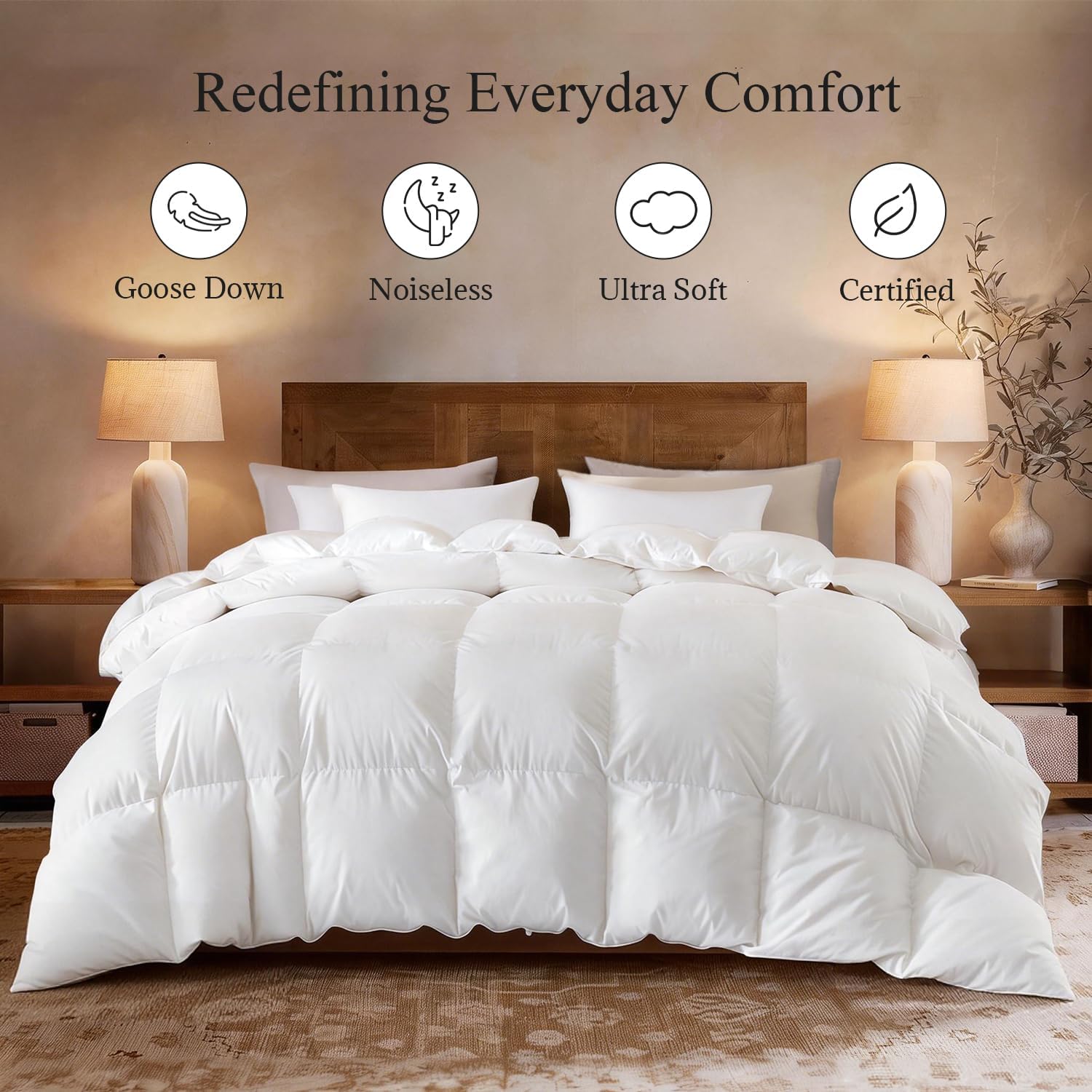
If you’ve ever slid under a new down comforter — a comforter is the fluffy, insulating blanket that goes inside a duvet cover or sits on top of your bed on its own — and heard a soft rustle or crinkle every time you moved, you’ve encountered one of the most genuinely divisive sensory debates in the bedding world. That sound comes from the shell, which is the outer fabric casing that holds the down or down-alternative fill inside. Some shells are made from crisp, tightly woven cotton that produces an audible crinkle. Others are made from softer, brushed, or synthetic-blend fabrics engineered to be nearly silent. Neither is objectively better. But if you’re mid-decision on a comforter purchase right now, getting this wrong means a return label and a lost month of good sleep. This article maps the divide clearly — who loves the crinkle, who hates it, why it happens, and exactly which products land on which side of the line.
Why Shells Crinkle (and Why Some Don’t)
The crinkle sound has nothing to do with the fill — whether you’re sleeping under real goose down or a synthetic down alternative doesn’t determine whether your comforter is noisy. The variable is entirely the shell fabric.
Cotton shells — particularly high-thread-count cotton percale and cambric — are the primary source of comforter crinkle. Percale weaves are crisp by design; that’s what gives them their cool, clean feel. A tightly woven 300–400 thread count cotton cambric shell, which is standard in mid-range and premium down comforters, produces an audible sound when compressed or shifted because the fibers have structural rigidity. This rigidity also serves a purpose: it helps prevent down clusters from migrating or poking through the fabric, which is why quality manufacturers use it.
Sateen cotton shells are softer and produce less sound than percale because the weave floats more threads on the surface, creating a smoother, more pliable hand feel.
Microfiber and synthetic-blend shells — common in down-alternative and budget comforters — are generally the quietest because the fibers are finer and the weave is more flexible. This is not a quality indicator; it’s a material property.
The practical takeaway: if you’re comparing a crisp cotton-shell comforter to a microfiber-shell comforter, the cotton will almost always be louder. That’s physics, not a defect.
Two Real Camps, Two Real Buying Signals
Across a broad sweep of owner reviews, two distinct sensory preferences emerge — and they’re not casual quibbles. They’re identity-level preferences about what “quality bedding” is supposed to feel like.
Camp One: The Crinkle Is the Point
Owners in this camp treat the sound as an indicator of material substance. One Ubauba Twin comforter reviewer explicitly called out “that wonderful crinkly sound” as a feature they loved, framing it as evidence that the shell was real cotton with structural integrity — not the soft, ambiguous hand of a cheaper synthetic. A Canadian Luxury goose down comforter owner described the cotton shell as “kind of stiff” in a way that “holds the whole comforter up and off of you like a cloud” — the stiffness and the slight sound were inseparable from the lofted, elevated feeling they valued. For this buyer, a silent comforter reads as flat, insubstantial, or plasticky.
This camp tends to correlate with:
- Buyers who’ve come up through the premium tier (Sferra, Matouk, Frette) where cambric cotton shells are standard
- Readers who sleep hot and associate crispness with breathability
- People who grew up with grandparents’ heirloom cotton-shell comforters and have positive sensory memory attached to that sound
Camp Two: The Crinkle Is a Problem
The opposing camp is equally vocal — and often just as quality-conscious. Bedsure GentleSoft owners consistently cited “surprisingly quiet” as one of their top praise points, which tells you something important: these buyers had been burned before. They weren’t praising silence as a baseline expectation; they were relieved by it. The framing is “I was afraid of noise, and this solved that.” Globon’s king and summer comforter lines are literally marketed under the phrase “noiseless shell,” and multiple verified owners confirm across listings that the claim holds up in real-world use. One Globon summer comforter buyer named “no loud crinkles when moving” as a top feature — leading the review, not tucked into a paragraph.
This camp tends to correlate with:
- Light sleepers or people who share a bed with a partner who wakes easily
- Buyers with sensory sensitivities (certain neurodivergent shoppers, people with hyperacusis or noise sensitivity conditions)
- Anyone who has tried to shift positions quietly at 3 a.m. under a percale-shell comforter and failed
One Royoliving lightweight comforter owner offered a genuinely useful middle-ground perspective: “The noise the blanket makes is normal for the material — sounds like every other down blanket I’ve owned.” This is the first-time down buyer’s voice, normalizing the sound for people who haven’t owned a down comforter before and might mistake the crinkle for a defect. It’s not. It’s just cotton doing what cotton does.
The Decision Frame: Four Variables That Should Drive Your Choice
| Variable | Lean Toward Crinkle Shell | Lean Toward Quiet Shell |
|---|---|---|
| Sleep style | Solo sleeper, deep sleeper | Partner sleeper, light sleeper |
| Material priority | Breathable cotton, heirloom feel | Soft hand, neutral sensory profile |
| Shell preference | Percale, cambric cotton | Microfiber, sateen, brushed cotton |
| Price tier | $150–$1,500+ (premium cotton is standard) | $60–$300 (quiet shells more common) |
If you’re a solo sleeper who runs warm and values the tactile signal of a substantial cotton shell, the crinkle is almost certainly not going to bother you — and you’d probably find a silent microfiber shell disappointing in texture.
If you share a bed with a partner who wakes at a whisper, or if you yourself are a light sleeper who shifts positions frequently, the crinkle will compound over a night and become a real quality-of-life issue. In that case, Globon’s explicit “noiseless shell” positioning — confirmed by owners, not just marketing — is where to start your shortlist.
Specific Products on Each Side of the Divide
Confirmed crinkle-positive (owners praise the sound or stiffness):
- Ubauba Twin comforter — reviewers explicitly call out the crinkle as a quality signal; cotton shell, lofted fill
- Canadian Luxury goose down comforter — owners describe the shell stiffness as contributing to a “held up off you” cloud-like loft; crinkle is part of the sensory package
Confirmed quiet (owners and/or marketing specifically identify low noise):
- Globon king comforter — “noiseless shell” is a stated product attribute, confirmed across multiple owner reviews
- Globon summer comforter — owners specifically cite “no loud crinkles when moving” as a lead feature
- Bedsure GentleSoft — owners consistently praise quiet as a standout, suggesting the shell material was specifically chosen for noise reduction
Neutral / normalizing (owners frame the sound as expected, not a flaw):
- Royoliving lightweight comforter — owner reviews contextualize the sound as “normal for the material,” helpful for first-time down buyers calibrating expectations
Frequently Asked Questions
Is a crinkling comforter a sign of low quality or a defect?
No. Crinkling is a material property of the shell fabric, not a defect or a quality indicator in either direction. Premium comforters from Sferra, Matouk, and similar brands use high-thread-count cambric cotton shells that crinkle by design — the weave that produces that sound is the same weave that keeps down clusters from migrating and poking through. A crinkle sound from a cotton shell is expected behavior. A crinkle from a shell that’s degrading, pilling, or delaminating after washes would be different — but that’s a construction problem, not a sound problem.
Does washing a cotton-shell comforter soften the noise over time?
Generally, yes — with caveats. Cotton fibers soften with repeated laundering and use. A brand-new cotton percale shell is at its stiffest, crispest state out of the box; after several washes and nights of use, the hand typically relaxes and the sound often becomes less pronounced. How much depends on the thread count, the weave, and whether you’re using a low-heat dryer cycle that allows the shell to move freely. High-thread-count cotton may retain more structure longer than a lower-thread-count shell.
Will adding a duvet cover reduce the crinkle sound significantly?
Yes, meaningfully so. A duvet cover — especially one made from a dense cotton sateen, flannel, or linen — adds a layer of fabric that absorbs and muffles the shell sound before it reaches your ears. If you’re already committed to a cotton-shell comforter and find the sound disruptive, investing in a thicker-fabric duvet cover is the most practical noise-reduction move available to you without buying a new comforter.
Which comforters in this list are specifically marketed and confirmed quiet by owners?
Globon’s king and summer comforter lines are the clearest case — “noiseless shell” is part of the product positioning, and owner reviews confirm this across multiple verified purchases. Bedsure GentleSoft earns the “quiet” label from owners consistently praising it as a standout feature, even if the brand doesn’t lead with noise-reduction marketing as directly as Globon does.
Do down-alternative fills always sound quieter than real down fills?
Not necessarily — though there’s a correlation. The sound comes from the shell, not the fill. A down-alternative comforter in a cotton percale shell will crinkle just as much as a real-down comforter in the same shell. However, down-alternative comforters are more commonly packaged in microfiber or synthetic-blend shells (because they’re positioned at lower price points where microfiber is standard), and those shells are inherently quieter. So the pattern exists, but it’s about shell material, not fill type.
Is the crinkle sound louder with higher thread count shells?
Counterintuitively, higher thread count doesn’t always mean louder — it often means stiffer, which can produce a more pronounced crinkle, but it also means tighter weave, which can dampen sound transmission. The loudest shells in owner reviews tend to be mid-range (200–300 thread count) percale cotton — structured enough to crinkle audibly, without the density of a high-count weave to absorb it. Very high thread count sateen shells (600+) are often quieter than mid-range percale because the weave type overrides the thread count effect.
The If/Then Decision Rule
Here’s where this lands for a buyer with a decision pending:
- If you sleep alone, run warm, and want the tactile signal of a real cotton shell — then buy into the crinkle. The Ubauba and Canadian Luxury lines deliver that sensory package. Don’t fight the material.
- If you share a bed, are a light sleeper, or have any sensory sensitivity to repetitive sounds — then make quiet your first filter, not fill power. Start with Globon’s confirmed-quiet lineup and verify the shell material before buying anything else.
- If you’re a first-time down buyer unsettled by the sound — then read the Royoliving owner notes as a reality check. The crinkle is normal for cotton-shell down comforters. You’re not getting a defective product; you’re getting the authentic material experience. Whether that’s right for you is the only remaining question.
This is an irreducible preference divide. There is no universally correct answer — only the answer that matches how you sleep.