August 7, 2026 • Margot Calloway • 10 min reading time • Prices verified June 4, 2026
Feather Down vs. Down Alternative: What Budget Buyers Actually End Up Preferring

If you’ve ever stood in a bedding aisle — or scrolled through product listings at midnight — wondering whether “feather-fiber fill” and “down alternative” are basically the same thing with different marketing, you’re not alone. Here’s the plain version: a feather-fiber comforter uses actual waterfowl feathers (and sometimes a small percentage of down, the soft clusters underneath those feathers) as its insulating fill. A down alternative comforter uses synthetic fibers — usually polyester microfiber — engineered to mimic the loft and softness of real down without any animal material. Both sit comfortably in the $40–$120 budget range. Both will keep you warm. But buyers who have lived with one type for a full season describe them in strikingly different language, and those word patterns tell you more than the spec sheets do.
This article draws on aggregated reviewer language and published editorial comparisons — not a lab test. The goal is to map what real buyers at the budget tier actually end up valuing, so you can make a sharper call before your next purchase.
| EDITOR'S PICKThree Geese Pinch Pleat Waterfo… | Mid-tierELNIDO QUEEN® Feather Comforter… | Budget pickUtopia Bedding Comforter Queen… | |
|---|---|---|---|
| Fill Type | Feather & down | Feather & downfiber | Down alternative |
| Shell Fabric | 100% Cotton | 100% Cotton | — |
| Thread Count | 1200TC | — | — |
| Dimensions | — | 90 x 90 in | 88 x 88 in |
| Corner Tabs | ✓ | — | ✓ |
| Machine Washable | — | — | ✓ |
| Price | $135.98 | $56.99 | $24.89 |
| See on Amazon → | See on Amazon → | See on Amazon → |
How Buyers Talk About Each Type — And Why the Vocabulary Gap Matters
The most consistent pattern across feather-fiber reviews — particularly for products like the ELNIDO Queen and the Three Geese feather-fiber inserts — is the unprompted appearance of the phrase “hotel quality.” Buyers at the sub-$80 price point use this language repeatedly, pairing it with “warm but light” and “breathable” to describe what they’re experiencing. This is notable because “hotel quality” is an experiential benchmark, not a spec. Buyers aren’t reaching for thread counts; they’re reaching for a sensory memory of a good night in a well-made bed.
Good Housekeeping’s roundup titled “Best Down Comforters” notes that this perception tracks with how natural fills actually behave: real feathers and down clusters create a three-dimensional loft that traps air in a way synthetic fibers can approximate but don’t fully replicate. The result is a fill that can feel warmer relative to its weight — lighter on the body, but thermally efficient.
Down alternative buyers — especially reviewers of Utopia Bedding and Bedsure’s polyester-fill options — cluster around entirely different language. The words that repeat are “soft,” “easy to wash,” and “cozy.” What’s almost entirely absent is the hotel comparison. Alternative buyers describe the comforter on its own terms rather than benchmarking it against a luxury-sleep reference point. That’s not a knock on synthetic fills — it’s useful signal. It tells you these buyers are satisfied with comfort and convenience, and aren’t chasing a particular texture or atmosphere.
The Sleep Foundation’s overview titled “Down vs. Down Alternative Comforters” draws a related conclusion: polyester fills excel on washability and allergen resistance, while natural fills tend to score higher on long-term loft retention and the subjective “feel” that experienced comforter buyers describe as difficult to replicate synthetically.
The Construction Detail Nobody Talks About Enough: Shell Fabric
One of the most instructive data points in recent buyer reviews comes from a shopper who purchased two all-season comforters simultaneously — one feather-down fill, one alternative — specifically to compare them side by side. What she noticed first wasn’t warmth. It was the shell fabric.
The feather-fiber version used an all-cotton shell. The alternative version used a 60/40 cotton-polyester blend. Her observation: the cotton shell breathed noticeably better over a full night of sleep, even when the comforters were matched for warmth rating. The polyester-blend shell on the alternative trapped more surface moisture, which she described as a “slightly clammy” feeling by morning.
This matters for budget buyers because it’s easy to assume that fill is everything. Wirecutter’s guide titled “The Best Down Comforter” specifically flags shell fabric as a critical variable — a low-thread-count polyester shell can undercut even a decent fill by reducing airflow. When you’re comparing budget options, check the shell: 100% cotton, even at modest thread counts (around 233–300 TC), will outperform a poly-blend shell on breathability across seasons.
The practical decision rule: if you run warm at night or sleep in a room that doesn’t cool below 68°F, the shell fabric matters as much as what’s inside it. Prioritize an all-cotton shell regardless of which fill type you choose.
The Tradeoffs: Three Fill Scenarios Compared
Feather-Fiber Fill: The Sensory Experience vs. the Quirks
Three complaints show up in feather-fiber reviews with enough regularity that you should go in with eyes open.
The arrival smell. Many buyers report a faint — occasionally stronger — odor when first unpacking a feather or feather-down comforter. This is the natural smell of cleaned waterfowl material, and the consensus across reviews is that it dissipates within 24–72 hours of airing out. A small number of reviewers report it persisting up to a week in less-ventilated rooms. The fix is simple: unpack, drape over a chair near an open window, and wait. This is not a defect; it’s a property of the fill.
The sound. Feather-fiber comforters make a rustling sound when you shift in bed. Buyer vocabulary splits interestingly here: some reviewers describe this as a negative (“crinkly and loud”), while a meaningful subset explicitly describe it as a positive — “that wonderful crinkly sound,” as one ELNIDO reviewer put it, linking it to the hotel experience. Sound preference is genuinely personal. If you’re a light sleeper who wakes to small noises, this is worth weighing seriously. If the sound signals “luxury hotel” to your brain, it functions as a feature rather than a flaw.
Quill poke-through. Yes, it’s real. No, it’s not universal. A consistent minority of feather-fiber reviewers report finding an occasional quill that works its way through the shell fabric. The Spruce’s guide titled “Best Down Alternative Comforters” notes this is most common in lower-TC shells where the weave is looser. At the budget tier, this is a known tradeoff. It’s a mild annoyance rather than a safety issue, and it’s avoidable by choosing a tighter-weave shell or switching to a down alternative entirely.
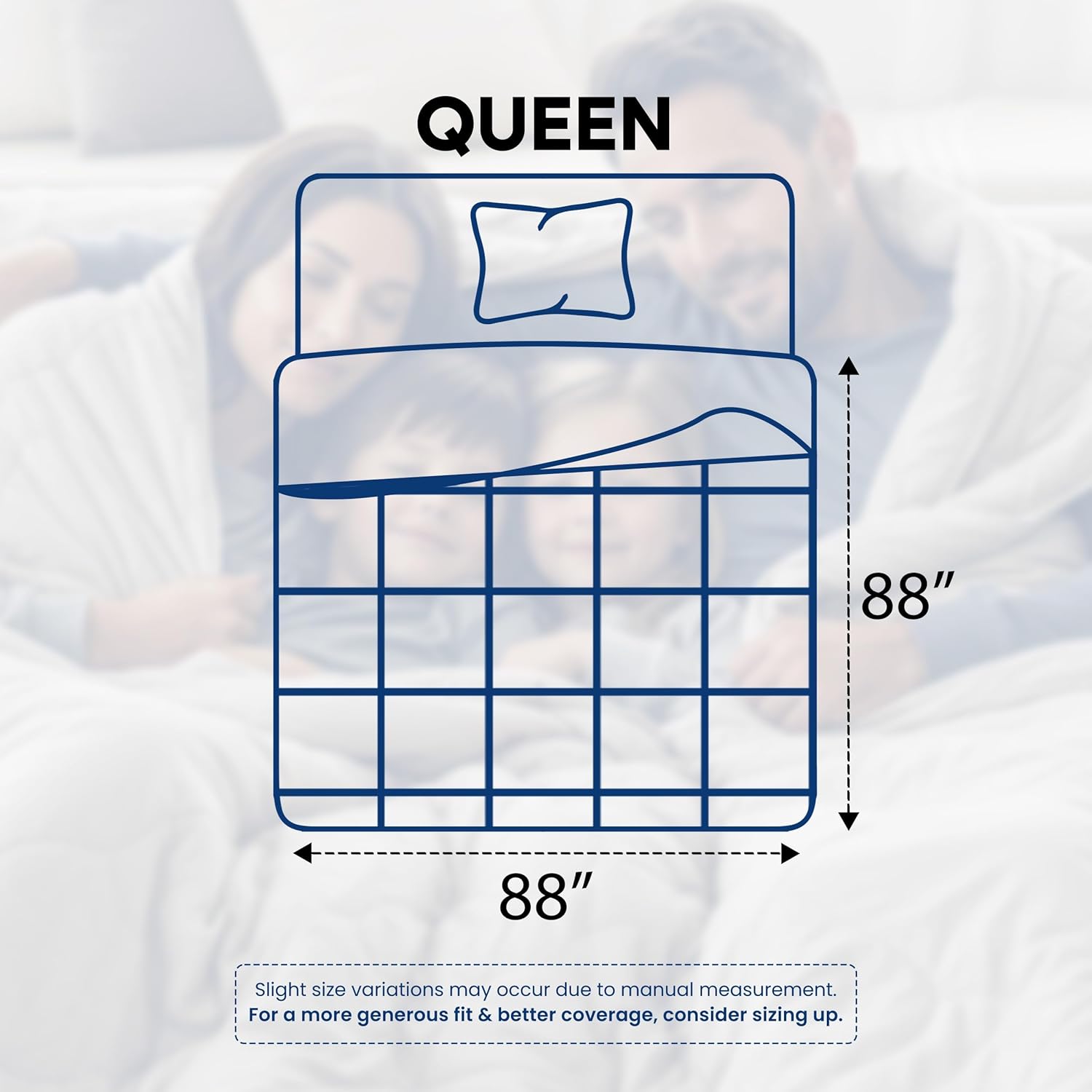
Utopia
$24.89
In stock on Amazon
Check price on AmazonDown Alternative Fill: Convenience vs. the Warmth Ceiling
Alternative buyers surface the crinkle-noise complaint more often than feather-fiber buyers do — and less fondly. This is largely a shell-fabric issue as much as a fill issue: polyester-blend shells are noisier under friction than cotton shells, and budget alternative comforters frequently use that blend. Apartment Therapy’s piece titled “Down vs. Down Alternative: Which Should You Choose?” notes that higher-quality microfiber fills in 100% cotton shells significantly reduce this noise signature.
The more substantive tradeoff is warmth ceiling. Down alternative fills — particularly budget polyester options — tend to compress more over time and trap less air per ounce of fill weight than natural feather and down. The Sleep Foundation’s “Down vs. Down Alternative Comforters” notes that while a quality synthetic fill can approximate the warmth of a light down comforter in the first year, the performance gap tends to widen after 18–24 months of regular washing and use. For Airbnb Superhosts or B&B operators cycling comforters through frequent laundering, this is a real variable in the cost-per-cycle math.
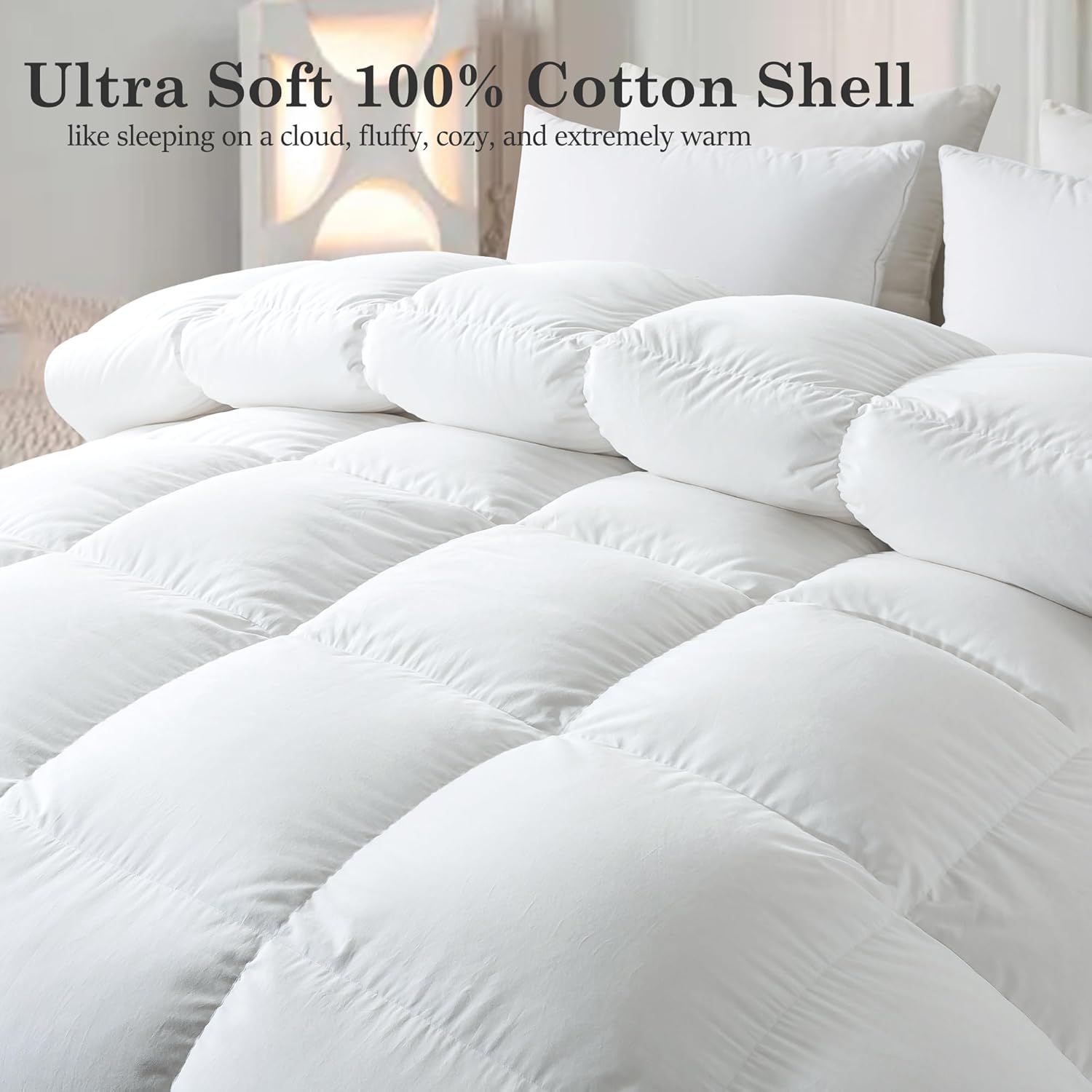
ELNIDO
$56.99
In stock on Amazon
Check price on AmazonAllergy Households and Special-Use Cases
For households where anyone has a confirmed down or feather allergy, down alternative is not a preference — it’s a non-negotiable. Good Housekeeping’s “Best Down Comforters” roundup is direct on this point: even well-cleaned feather fills carry residual proteins that can trigger reactions in sensitive sleepers. No amount of shell thread count or fill cleaning certification changes this for genuinely allergic users.
For hot sleepers sharing a bed with a cold sleeper, the fill choice matters less than the shell and construction. Both fill types are available in “all-season” weights; the shell breathability (cotton vs. poly-blend) and baffle-box vs. sewn-through construction will do more to regulate temperature than whether the fill is synthetic or natural.
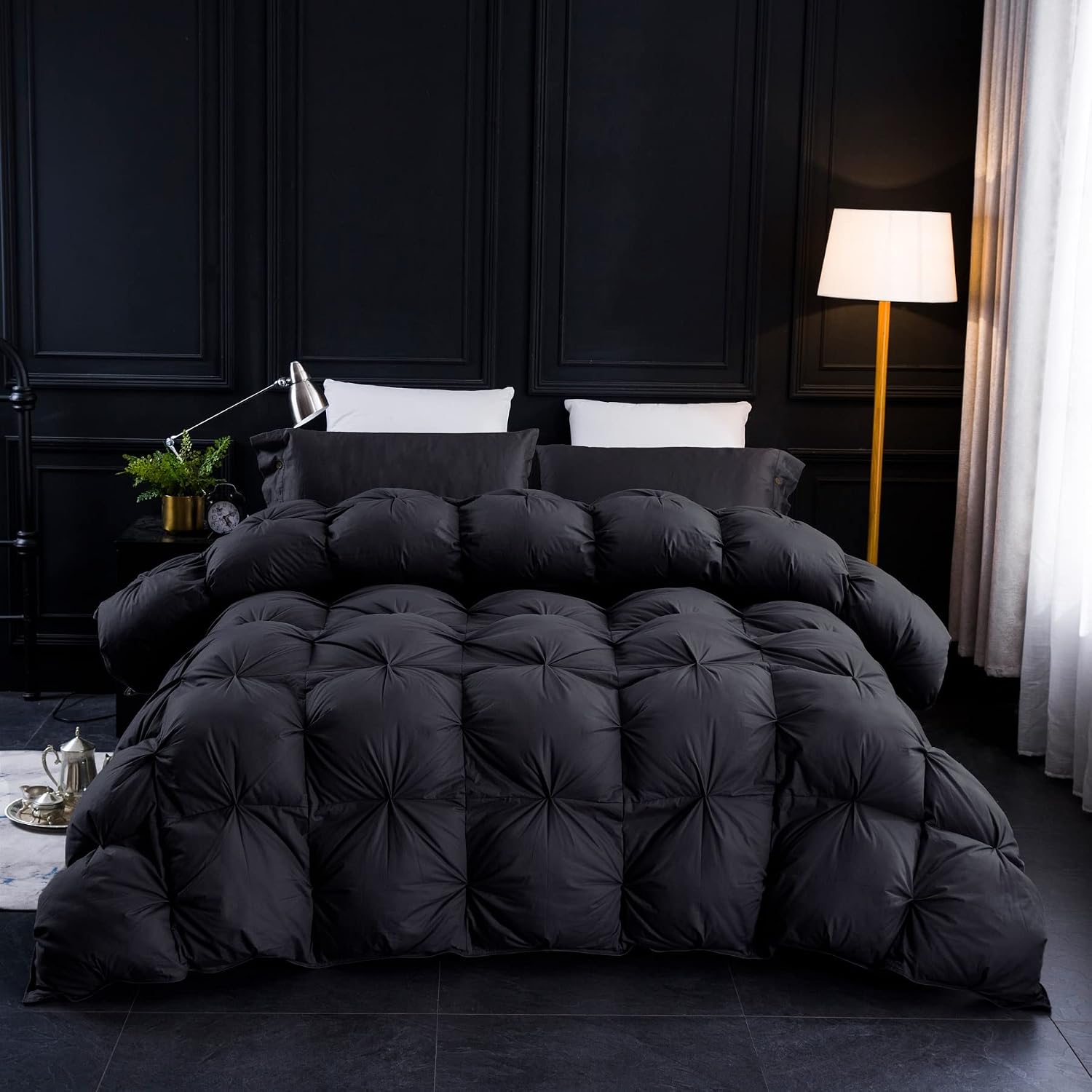
Three
$135.98
In stock on Amazon
Check price on AmazonBy the Numbers
| Variable | Feather-Fiber (Budget Tier) | Down Alternative (Budget Tier) |
|---|---|---|
| Typical fill weight | 40–60 oz | 50–70 oz (heavier for equivalent warmth) |
| Shell fabric (common) | 100% cotton, 233–300 TC | 60/40 cotton-poly blend |
| Machine washable? | Yes, but less frequently recommended | Yes, designed for regular washing |
| Estimated useful lifespan | 5–8 years with care | 2–4 years before loft degrades |
| Allergen risk | Low (if properly cleaned at source) | None |
Who Should Actually Buy Which
Here’s the decision frame, stated plainly:
If you want the closest approximation of a hotel-sleep experience at under $100, feather-fiber is the call. The combination of natural loft, cotton-shell breathability, and the tactile weight-to-warmth ratio is what buyers consistently point to when they invoke “hotel quality” — and that language doesn’t appear organically in alternative reviews at this price point.
If you or anyone in your household has a down or feather allergy, down alternative is the only answer. Good Housekeeping’s “Best Down Comforters” roundup is unambiguous: residual proteins in natural fills are a genuine trigger risk for sensitive sleepers, regardless of how thoroughly the fill has been cleaned.
If you’re an Airbnb Superhost or B&B operator washing comforters weekly, the calculus shifts toward alternative fills — but only if you’re buying a quality alternative (100% cotton shell, tight weave, denser microfiber fill) rather than the cheapest option available. Budget-tier polyester fills washed on heavy rotation can degrade to visibly flat within a year, which harms guest experience more than the initial savings justify. Budget feather-fiber comforters hold up better per washing cycle than budget polyester alternatives when laundered properly — a pattern that surfaces consistently in long-run operator reviews.
If noise is a genuine concern — either because you’re a light sleeper or sharing a bed with one — prioritize a down alternative with a 100% cotton shell. As Apartment Therapy’s fill-type comparison “Down vs. Down Alternative: Which Should You Choose?” observes, the shell fabric matters more for noise reduction than the fill type does.
If you’re a first-apartment buyer trying to build category knowledge, start with feather-fiber. The sensory vocabulary you build — what “hotel quality” actually feels like, what loft means in practice — transfers directly when you’re ready to evaluate mid-tier and premium options a few years from now. Budget alternative fills are capable products, but they don’t teach you what to look for at the next price point.
Frequently Asked Questions
Will feather-fiber comforters smell when they arrive, and how long does it take to go away? Yes — a faint to moderate odor on unboxing is common and expected. Most buyers report it dissipating within 24–72 hours when the comforter is aired out in a well-ventilated space. In a closed room it can linger up to a week. It’s not a manufacturing defect; it’s a property of cleaned natural fill.
Do down alternative comforters ever feel as warm as real feather-down? In year one, a quality synthetic fill can closely approximate the warmth of a light feather-down comforter. Over time — particularly with frequent washing — the gap widens as polyester fill compresses and loses loft. For initial warmth, alternatives are competitive. For sustained warmth across years of use, natural fills hold the advantage, a point consistent with the Sleep Foundation’s “Down vs. Down Alternative Comforters” overview.
Which type holds up better after repeated machine washing? For budget-tier products, feather-fiber tends to retain loft better over repeated wash cycles than polyester alternative fills. That said, feather comforters should be washed less frequently (2–4 times per year) and dried thoroughly to prevent mildew. Alternative fills tolerate more frequent washing but degrade faster in aggregate.
Is quill poke-through a real problem or just rare outlier complaints? It’s real but not universal. It appears in a consistent minority of feather-fiber reviews and is most common in comforters with lower thread count shells (under 233 TC). It’s a mild annoyance rather than a serious flaw, and it’s avoidable by choosing a tighter-weave shell or switching to a down alternative. The Spruce’s guide “Best Down Alternative Comforters” identifies shell thread count as the primary variable here.
Does feather-fiber actually feel heavier than down alternative, and is that a good thing? Feather-fiber comforters often feel slightly heavier body-to-body than equivalent-warmth alternatives because feathers are denser than polyester fiber. For buyers who find weight comforting and “substantial,” this reads as a quality signal. For buyers who prefer minimal body weight on top — including some hot sleepers — the alternative’s lighter feel is the advantage. Neither is objectively better; it depends entirely on how you sleep.