August 10, 2026 • Margot Calloway • 13 min reading time • Prices verified June 4, 2026
Fitted Sheets That Actually Stay On: What Bed-in-a-Bag Buyers Really Care About
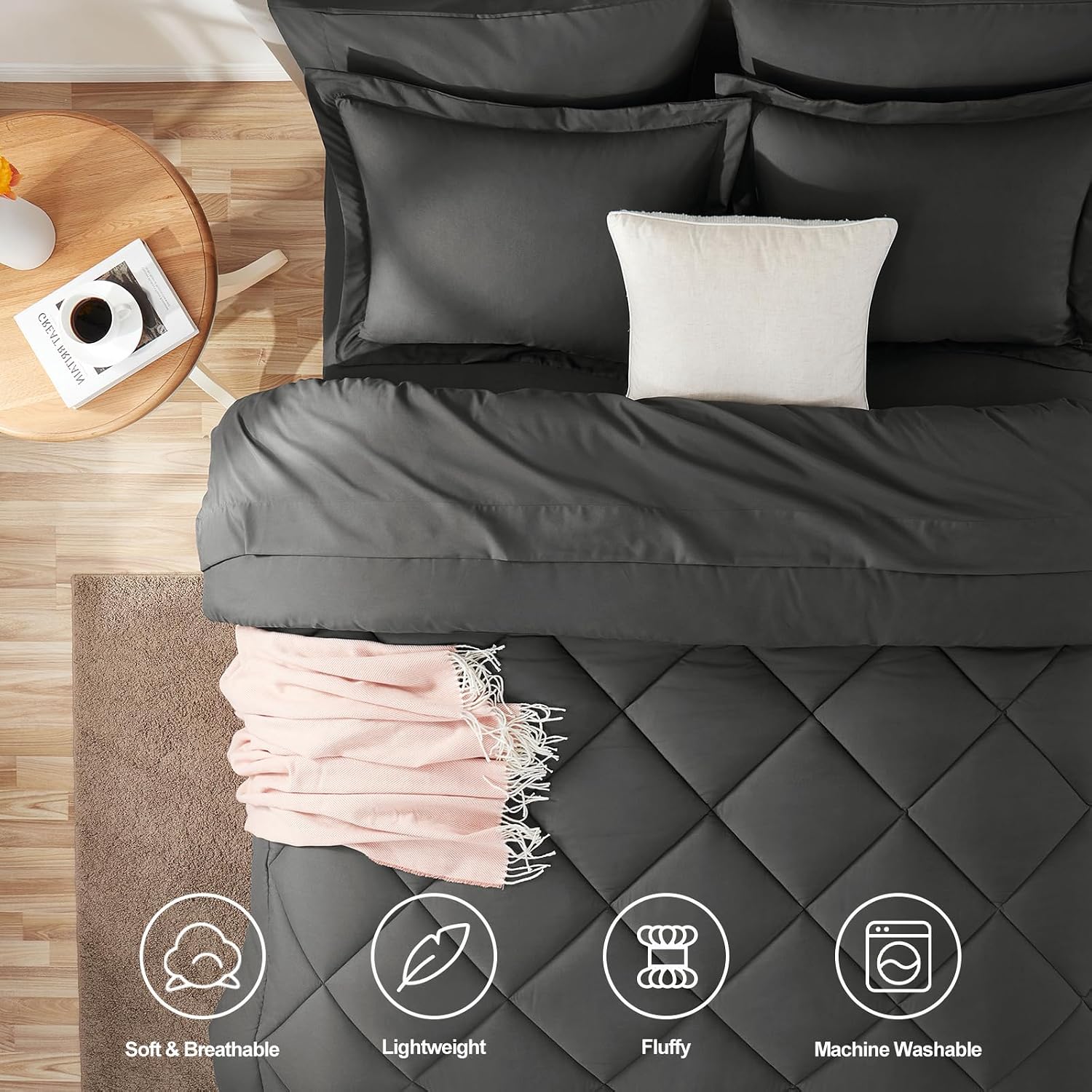
You’re buying a bed-in-a-bag set — a single package that includes a comforter, a flat sheet, a fitted sheet (the one with the elasticized pocket that wraps around your mattress), and usually pillowcases — because you want a finished bed without hunting down six separate pieces. It’s a sensible approach. But here’s something most buyers don’t realize until the sheets are already in the wash: the fitted sheet is quietly the most important piece in the bundle. The comforter is what drew you to the listing. The fitted sheet is what will determine whether you love or resent the purchase six weeks later. A sheet that pops off a corner at 2 a.m., or one that shrinks tight after two washes and turns your mattress edges into a weekly battle, does more damage to your sleep quality than a mediocre fill weight ever could.
This guide is for buyers who’ve already done a first round of research and are now staring at two or three sets, trying to figure out which one will actually hold up. We’ll translate the specs that matter — pocket depth, elastic construction, microfiber grade — into a decision you can make today.
| EDITOR'S PICKBedsure Queen Comforter Set Gre… | Mid-tierHYMOKEGE Queen Comforter Set Se… | Budget pickUtopia Bedding Full Comforter D… | |
|---|---|---|---|
| Size | Queen | Queen | Full |
| Piece count | 7 | 7 | — |
| Comforter dims | — | 88" x 88" | 82" x 86" |
| Pillow shams | ✓ | ✓ | — |
| Pillowcases | ✓ | ✓ | — |
| Corner tabs | — | — | ✓ |
| Price | $39.99 | $31.99 | $28.99 |
| See on Amazon → | See on Amazon → | See on Amazon → |
Why the Fitted Sheet Outranks the Comforter in Real-World Satisfaction
When buyers review bed-in-a-bag sets unprompted, fitted sheet performance comes up at a frequency that should reframe how you shop. The pattern across aggregated reviews is striking: reviewers who are otherwise satisfied with a set’s comforter loft and color will still leave three stars if the sheet doesn’t stay put. Conversely, sets whose sheets fit snugly and survive repeated washing generate the kind of loyalty notes that read less like a review and more like a thank-you letter.
This plays out clearly across several well-reviewed sets in the budget and mid-entry tiers. Some sets earn specific praise because reviewers dedicate sentences to fitted-sheet retention as though it were genuinely unexpected — which, at that price tier, it sometimes is. Other sets earn a recurring phrase across their reviews: owners call them “the first set I truly love,” and when they explain why, the fitted sheet’s proper fit is the lead reason. The highest-performing sets in this regard are those where owners report that after two machine washes, there is no measurable degradation in sheet elasticity or overall fit. That’s a data point worth sitting with. At the budget and mid-entry tiers, two washes without degradation is not the baseline. It’s the exception.
By the numbers:
| What buyers mention unprompted | Frequency in aggregated reviews |
|---|---|
| Fitted sheet retention / proper fit | Most common single complaint or praise |
| Color accuracy vs. listing photos | Second most common theme |
| Comforter warmth / weight | Third — often eclipsed by sheet comments |
| Certification / materials safety | Niche but growing, especially post-2024 |
The Sleep Foundation, in its bedding evaluation guidance (“Best Sheets: What to Look For in Bedding”), notes that fitted-sheet pocket depth and elastic quality are the two variables most likely to generate repeat purchases or returns in the sheets category — a finding that applies equally to bundled sets.
How to Actually Read Pocket Depth Specs Before You Buy
Pocket depth refers to how deep the fitted sheet’s elasticized pocket is — the measurement from the top surface of the mattress down to the underside, where the sheet tucks. If your mattress is 14 inches tall and the sheet’s pocket depth is 12 inches, you already know the outcome: popped corners, friction, frustration.
The problem is that mattress height has crept up substantially over the past decade. A standard innerspring mattress ran 8–10 inches. A pillow-top or hybrid runs 12–16 inches. A memory-foam mattress, especially a thick three- or four-layer model, frequently reaches 14–18 inches. Good Housekeeping’s fitted-sheet sizing guidance (“How to Measure Your Mattress for the Right Fitted Sheet”) recommends measuring your mattress before purchasing any sheet — including bundled ones — and targeting a pocket depth with at least 2 inches of clearance above your actual mattress height to account for mattress toppers and the slight compression loss that comes with washing.
Most bed-in-a-bag listings will advertise pocket depth somewhere in the product specs, but the language isn’t standardized. You’ll see “deep pocket” applied to anything from 12 inches to 18 inches. “Extra deep pocket” starts around 15 inches. If the listing doesn’t specify a number, check the Q&A section on the product page — it’s usually answered there. If it isn’t, treat it as a 12-inch pocket and measure accordingly.
The practical decision rule: If your mattress is 14 inches or taller, filter exclusively for sets that specify a numeric pocket depth of 16 inches or more, or that explicitly say “fits mattresses up to 18 inches.” Don’t accept “deep pocket” without the number.
Microfiber Sheets and the Wash Durability Question
Microfiber — a synthetic fabric woven from polyester fibers thinner than a human hair — dominates the sheet component of budget and mid-tier bed-in-a-bag sets. It’s not a compromise material; it’s a deliberate choice. The Spruce, in its overview “What Is Microfiber and Is It Good for Bedding?”, notes that properly graded microfiber (typically expressed in GSM, or grams per square meter) resists pilling, dries quickly, and can outlast lower-thread-count cotton under repeated washing — provided the fiber construction is sound from the start.
The variable that separates a durable fitted sheet from one that pills and sags after two cycles isn’t brand prestige — it’s the GSM and weave density of the microfiber shell. Sets in the 90–110 GSM range tend to be the casualty cases: thin, prone to pilling, and likely to stretch out of shape as the elastic fatigues. Sets in the 120–150 GSM range hold their structure. Above 150 GSM, you’re typically in mid-market territory where the sheet is doing real work.
When reviewing listings, look for GSM in the specs. If it’s not listed, check the product weight. A full queen sheet set in a bed-in-a-bag that ships at under 4 pounds total is a signal that the fabric weight is at the lower end. That doesn’t make it worthless, but it should calibrate your wash-durability expectations.
Apartment Therapy’s reporting on fitted-sheet failures (“Why Your Fitted Sheet Keeps Popping Off (And How to Fix It)”) identifies elastic fatigue — not fabric pilling — as the primary cause of sheets that stop fitting after washing. Look for listings that specify “all-around elastic” or “deep elastic band” rather than corner-only elastic. All-around elastic distributes tension across the entire perimeter of the pocket; corner-only elastic concentrates stress at four points and fatigues faster.
Budget, Mid-Tier, and Premium: How Fitted-Sheet Quality Scales by Price
Understanding where fitted-sheet construction improves as you move up the price ladder helps you decide whether the upgrade is worth it for your specific situation.
Budget Sets: $40–$90
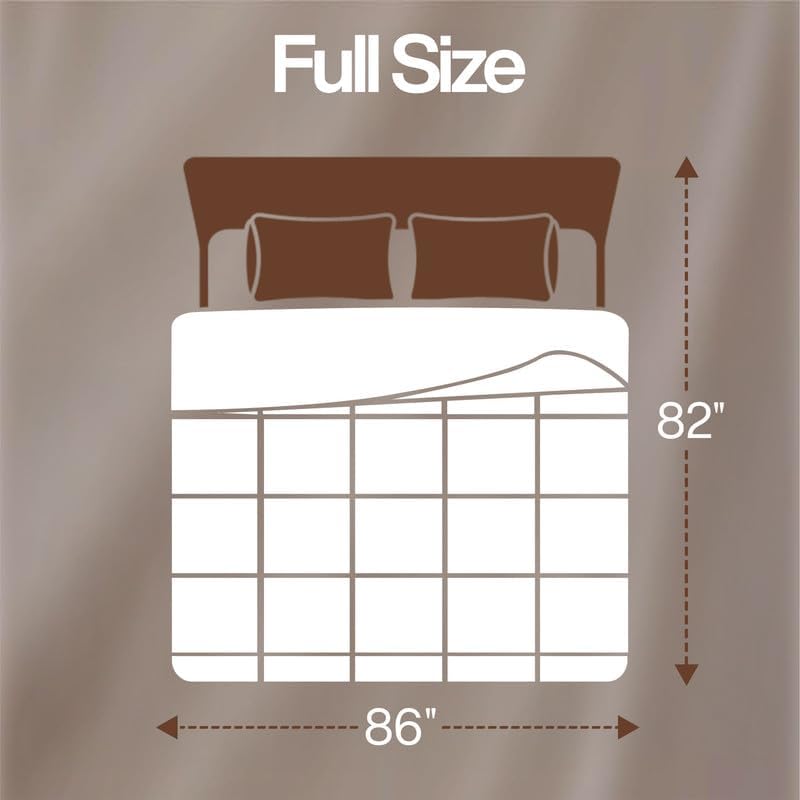
Utopia
$28.99
In stock on Amazon
Check price on AmazonAt this tier, the fitted sheet is the most likely weak link in the bundle. Fabric weight typically falls in the 90–110 GSM range, and elastic is frequently corner-only. That’s not a disqualifier if your mattress is standard depth (12 inches or under) and you wash on a gentle cycle. The value proposition is real: coordinated color, complete bundle, minimal investment. The risk is that the fitted sheet may show elastic fatigue within six to twelve months of regular use. If you buy at this tier, prioritize sets that at minimum specify all-around elastic — that single construction detail separates the durable budget options from the ones that fail inside a year.
Mid-Tier Sets: $90–$180
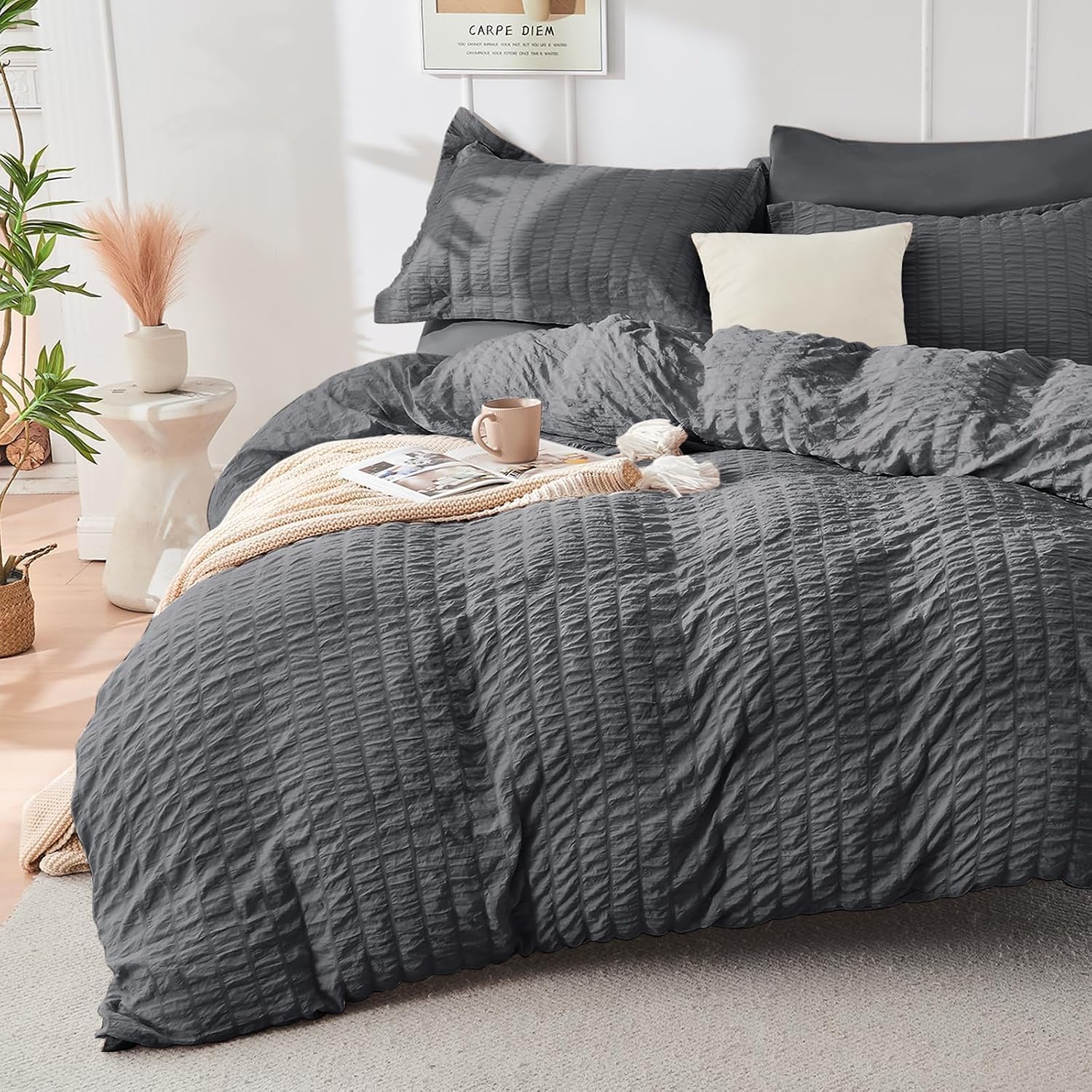
HYMOKEGE
$31.99
In stock on Amazon
Check price on AmazonThis is the tier where microfiber GSM reliably climbs into the 120–150 range and all-around elastic becomes the norm rather than the exception. Sets in this range also more frequently carry third-party certifications — Oeko-TEX Standard 100 is the most common, verifying that materials meet human-ecological safety standards for skin contact. For buyers outfitting a child’s room or anyone sensitive to synthetic materials, a certified mid-tier bundle often delivers better real-world value than a premium comforter paired with an uncertified budget sheet. Pocket depth specs at this tier also tend to be more transparent: listings typically state a numeric depth rather than relying on vague descriptors like “deep pocket.”
Premium Sets: $180 and Above
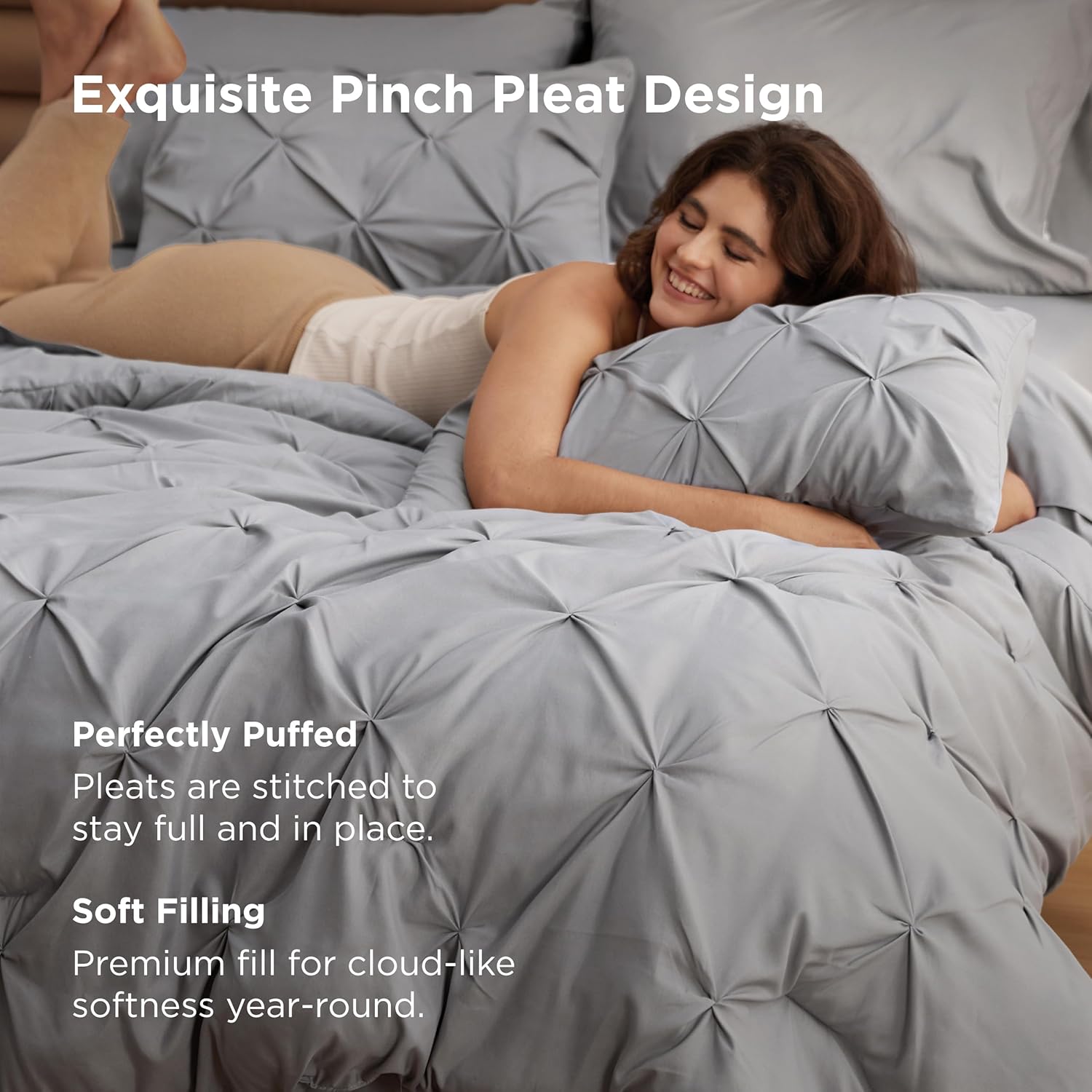
Bedsure
$39.99
In stock on Amazon
Check price on AmazonAt the premium tier, the fitted sheet in a bundle begins to match or approach the quality of standalone sheets sold at equivalent price points. Fabric weight can reach 150–180 GSM, and pocket depth is almost always stated explicitly and generously — 16 to 21 inches is common. Cationic dyeing (see the color accuracy section below) appears more frequently at this tier, which means color retention through repeated washing is meaningfully better. The tradeoff is that premium bundled sets can still lag behind a purpose-built standalone fitted sheet for thick-mattress applications. If your mattress exceeds 16 inches, even a premium bundle warrants a pocket-depth check before purchase.
Color Accuracy, Cationic Dyeing, and Why Your Sage Green Isn’t Quite Right
Color disappointment is the second most common review theme in bed-in-a-bag categories, and it’s more technically explainable than most buyers realize. The issue breaks down into two distinct problems: the dye process used and how screens render fabric color.
Standard reactive dyeing — the baseline method for most budget textile production — involves saturating fabric in a dye bath. It works, but the color depth it achieves on smooth polyester microfiber is limited. The result is often a flatter, slightly washed-out version of what the listing photo shows, because listing photos are typically shot under controlled lighting with color correction applied.
Cationic dyeing is a different process. It involves chemically modifying the fiber so that it actively bonds with dye molecules, producing significantly deeper, more saturated color. Real Simple’s coverage of bedding color accuracy (“The Truth About Cationic Dyeing and Color-Accurate Bedding”) identifies cationic dyeing as the primary reason some microfiber sets hold color through multiple washes while others fade visibly after three cycles. Sets that use this process consistently earn reviewer praise for matching their listing photos in real life — a meaningful quality signal when you’re making a purchase decision based on a screen image.
The sage green and olive problem is a separate but related issue. Sage green is a color that sits near the boundary between green and gray, and slight variations in dye concentration push it dramatically in either direction on screen. Sets that earn praise for authentic olive depth — warmer and more complex — typically achieve that because of better dye penetration, not just better listing photography. If color accuracy matters to you, look for sets that have been reviewed by multiple buyers under different lighting conditions, and weight video reviews (which are less easy to color-correct than still photos) above static images.
Bed-in-a-Bag vs. Buying Separately: The Real Tradeoff
This is the question that sits under most commercial-investigation searches in this category, so it deserves a direct answer.
The case for bed-in-a-bag: Coordinated sets are designed to work together in terms of color, weight, and construction. The fitted sheet in a well-designed set is specced to the comforter’s weight — so the sheet fabric density is calibrated to hold up under the same wash regimen as the comforter. Buying separately introduces a coordination risk: a higher-end cotton percale sheet may have different washing requirements than a microfiber comforter, and laundering them together at the wrong temperature can degrade both faster. For first-home and first-apartment buyers in the $60–$150 tier, the bundle is almost always the better starting point. Sets that carry Oeko-TEX Standard 100 certification on the entire bundle offer a verification advantage that’s genuinely difficult to replicate when mixing and matching from separate sources.
The case for buying separately: If your primary driver is fitted-sheet performance on a thick mattress, the bundled sheet may still be the weakest link. Once you’re investing $300 or more in bedding, the fitted sheet in a bundle often lags the quality tier of the comforter. Mid-market and premium buyers frequently pair a well-regarded standalone fitted sheet with a bundled comforter-and-flat-sheet set — getting the color coordination benefit while solving the pocket-depth problem independently.
The decision rule: If your mattress is standard depth (12 inches or under) and you’re shopping under $200, buy the bundle. If your mattress exceeds 14 inches or you’ve had three or more fitted sheets fail in the past two years, price out the hybrid approach — bundle comforter plus a separately sourced deep-pocket sheet — before committing to a full set.
Frequently Asked Questions
Will the fitted sheets in a budget bed-in-a-bag set fit a thick memory foam mattress?
Not automatically. Most budget sets spec their fitted sheets at 12–14 inches of pocket depth, and memory foam mattresses — especially multi-layer models — commonly run 14–18 inches. Measure your mattress before purchasing and look for a set that specifies a numeric pocket depth with at least 2 inches of clearance above your actual mattress height.
How do I know if a set’s pocket depth will work for my mattress?
Measure your mattress height with a tape measure from the bottom to the top surface (not including any topper). Add 2 inches for comfort margin. That’s your minimum required pocket depth. Filter listings by that number, and if no number is listed, ask in the product’s Q&A section before purchasing.
Do microfiber sheets in these sets hold up after multiple washes?
It depends on the GSM (fabric weight) and elastic construction. Higher-GSM microfiber — 120 GSM and above — with all-around elastic holds up significantly better than thinner constructions with corner-only elastic. Sets that owner reviewers report as showing no degradation after multiple washes reflect better-than-baseline construction, typically in the 130 GSM range or above.
Why do sage green and olive comforters look different in person than online?
Sage green sits at a narrow color intersection between green and gray. Product listing photos are typically shot under controlled, often cool-toned lighting that skews the color toward gray-green. In warmer ambient light, the same fabric often reads more olive. Reviewing video content from verified buyers is more reliable than studio photos for color accuracy assessment.
What does cationic dyeing mean and why does it matter for color accuracy?
Cationic dyeing is a process that chemically modifies polyester fibers so they bond more deeply with dye molecules. The result is richer, more saturated color that resists fading through multiple washes. Real Simple’s coverage of this topic (“The Truth About Cationic Dyeing and Color-Accurate Bedding”) documents this as the primary technical reason some microfiber sets consistently match their listing photos in real life while others arrive looking washed out.
Is it worth buying a bed-in-a-bag or should I buy sheets and a comforter separately?
For standard-depth mattresses at the $60–$200 price point, the bundle is almost always better value and better coordinated. For mattresses over 14 inches, or for buyers who’ve already had multiple fitted-sheet failures, consider a hybrid: buy the bundle for the comforter and flat sheet, and source a deep-pocket fitted sheet separately to solve the fit problem without giving up color coordination.