September 13, 2026 • Margot Calloway • 10 min reading time • Prices verified June 4, 2026
How to Fluff a Compressed Comforter: The Dryer Method, Timeline, and What to Expect
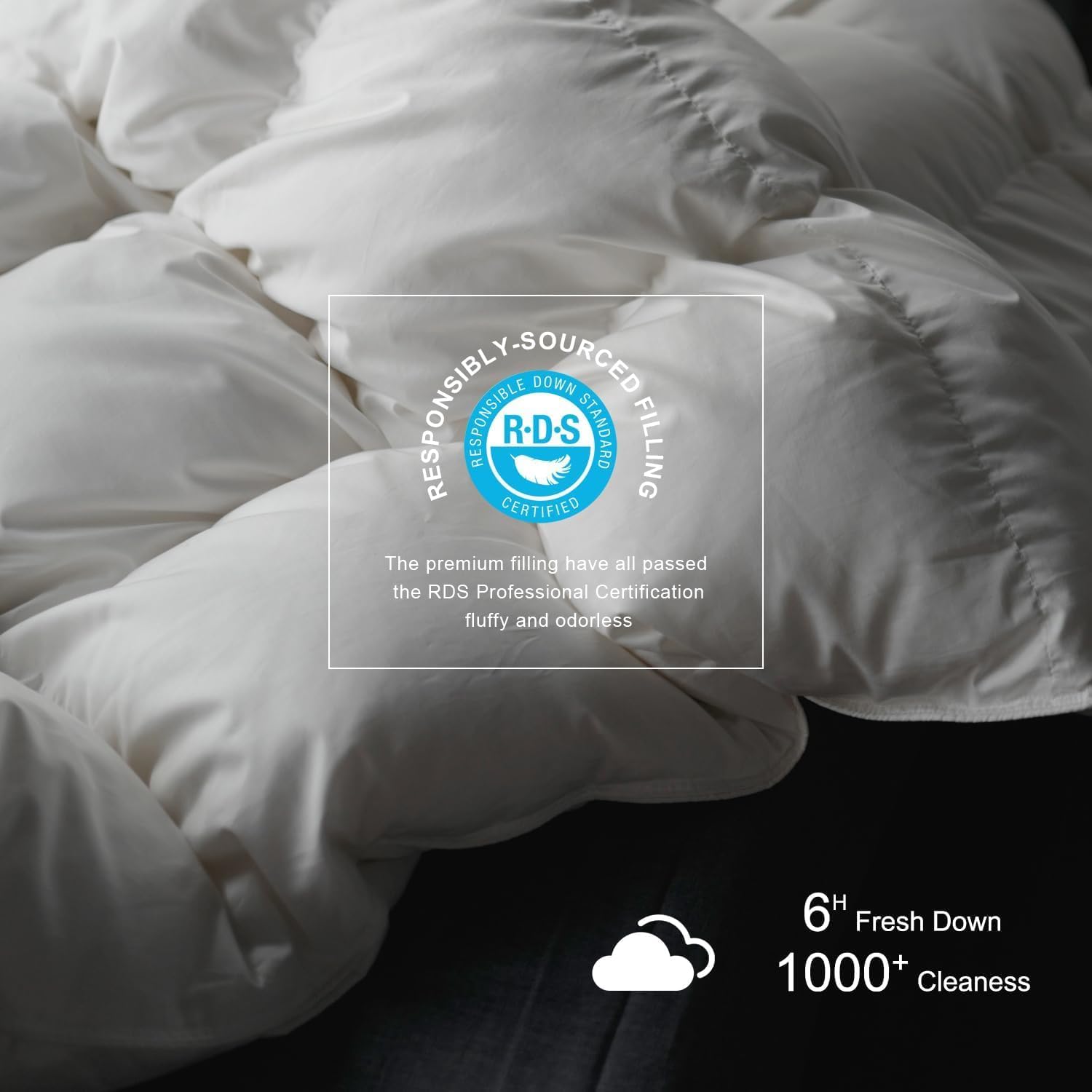
You ordered a comforter — that thick, insulating bed covering filled with down clusters, feather fibers, or synthetic alternatives — and it arrived compressed inside a vacuum-sealed bag roughly the size of a carry-on suitcase. This is normal. Manufacturers remove the air to cut shipping costs and dimensional weight, and the fill (whatever material creates the comforter’s warmth and puffiness, called “loft”) needs time and sometimes a little heat to re-expand fully. This guide walks through the dryer method, sets realistic timelines, and tells you exactly what to expect at each stage — including the honest answer to why your comforter may never look quite like the product photo.
If you’ve already opened the bag and are staring at something that looks more like a deflated pool toy than a luxury sleep experience, you’re in the right place. Most comforters recover completely. Some take ten minutes. Some take a few days. A small number never hit the loft shown on the product page — and that’s worth understanding before you decide whether to return it.
What’s Actually Happening Inside That Bag
When a comforter is vacuum-sealed, the air is mechanically removed from between every down cluster, feather fiber, or synthetic loft filament. Think of each fill cluster as a tiny spring: compressed for weeks or months during manufacturing, transit, and warehouse storage. When you cut the bag open, those clusters need to re-expand — and they do so on their own timeline, accelerated significantly by warm, tumbling air.
Down and down-alternative fills (natural goose or duck down, or hollow-fiber synthetics designed to mimic it) respond fastest to low heat in a dryer because the heat relaxes the keratin structure of the clusters and the tumbling separates any that have clumped together during compression.
Feather-and-down blends — inserts that use a mix of the flat, quill-containing feathers and the three-dimensional down clusters — take a little longer. The flat feathers mat together more readily and need more tumbling cycles to redistribute.
Heavier, high-fill-weight inserts (think: a king-size, all-season comforter with 70+ ounces of fill) dry and refluff more slowly than lightweight summer versions, simply because there’s more material to move. The Sleep Foundation’s overview of down comforter care notes that large, dense inserts often require multiple drying cycles to reach even distribution — a detail worth knowing before you assume your dryer is doing something wrong.
The Dryer Method, Step by Step
This is the consensus method across The Spruce’s laundering guides, Good Housekeeping’s home-cleaning coverage, and the care instructions attached to nearly every reviewed insert in this category.
Step 1: Let it breathe first. Before the dryer, unroll or unfold the comforter and let it expand at room temperature for 30–60 minutes. This isn’t strictly required, but it reduces the mechanical stress on compressed clusters and gives you a baseline read on how much loft is coming back on its own.
Step 2: Load it into the largest dryer available. A comforter needs room to tumble freely. If your home dryer is a compact unit, a commercial-capacity dryer at a laundromat is worth the trip. A comforter crammed against the drum walls won’t fluff — it’ll just spin in a compressed wad. The APSMILE oversized king buyers who reported success consistently noted using the low-heat cycle on a full-size residential dryer, not a compact or ventless unit.
Step 3: Use low heat, not high. This point comes up across every care guide: high heat can damage down clusters (scorching the natural oils that give them their loft), melt synthetic fill fibers, and shrink the shell fabric. Low heat takes longer but protects the insert. Set your dryer to the lowest heat setting — labeled “low,” “delicate,” or “air fluff/no heat” depending on your machine.
Step 4: Run a 20–30 minute cycle, then pause and check. Stop the dryer, pull the comforter out, and shake it manually. This redistributes any fill that’s migrated to one corner and gives you a visual progress check. Royoliving buyers specifically credited this shake-and-redistribute step with helping their insert reach even loft before they returned it to the drum.
Step 5: Repeat until the fill is evenly distributed and the comforter holds its shape off the drum. For a lightweight insert, this might be two cycles. For a heavy, fill-dense insert — the kind the Globon ultra-soft king owner described washing on arrival — plan for four to five cycles. That is not a defect. That is physics. The Globon owner reported needing approximately five dryer cycles to dry fully after their initial wash, and Good Housekeeping’s comforter-washing guide frames multiple drying passes as standard practice for high-fill-weight products.
By the Numbers
| Comforter Type | Typical Fluff Time (Dryer, Low Heat) | Manual Shakes Between Cycles |
|---|---|---|
| Lightweight synthetic / down-alt | 20–40 min total | 1–2 |
| Mid-weight down or feather blend | 40–75 min total | 2–3 |
| Heavy / high-fill-weight down or feather | 75–120+ min (4–5 cycles) | 3–5 |
The Tennis Ball Question
Do dryer balls — or the classic DIY substitute, clean tennis balls sealed in a sock — actually help? The short answer: yes, but with caveats.
Dryer balls and tennis balls work by physically agitating the fill as the drum rotates, breaking up clumps before they can re-set. Real Simple’s laundry guides and The Spruce both recommend two to three dryer balls for large inserts. The mechanism is straightforward: more impact on the fill per rotation = faster, more even redistribution.
The caveat comes from a data point worth naming directly. A reviewer purchasing a Hungarian down insert reported using both commercial dryers and tennis balls and still felt disappointed by the result. That experience matters. Tennis balls help with redistribution, but they can’t create loft that isn’t there — if a product’s fill power (the measurement of how much space one ounce of down occupies, with higher numbers meaning more loft per ounce) is lower than expected, or if the fill weight is simply lighter than the product implied, tennis balls won’t close that gap. They’re a tool for releasing existing loft, not manufacturing it.
If you have dryer balls, use them. If you don’t, two clean tennis balls in a tied-off pillowcase work fine. If you’re using a no-heat / air-fluff cycle, dryer balls become more important since the absence of heat means agitation is doing more of the work.
The Skeptic-to-Convert Arc (and What It Actually Means)
One of the most consistent patterns across buyer reviews is the 24-hour narrative: deep anxiety at unboxing, effusive praise within a day. The APSMILE oversized king buyer who reported “10 minutes on low as instructed” producing a fully fluffed result is a real data point, but so is the buyer who needed 48 hours of ambient air-fluffing alongside dryer time.
What drives the difference? A few things:
- How long the comforter was compressed. A product that sat in a warehouse for four months is more compressed than one shipped quickly.
- Fill type. High-cluster-count goose down recovers faster than feather-heavy blends.
- Shell construction. Baffle-box construction (where interior fabric walls create three-dimensional pockets for the fill) tends to recover more completely than sewn-through construction (where the shell is stitched flat, creating cold channels) because the fill has more room to expand vertically.
- Ambient humidity. Down, being a natural protein fiber, responds to moisture in the air. A humid environment can slow recovery; a dry room with some airflow speeds it.
The JOLLYVOGUE reviewer who gave five stars while noting the comforter was “not as fluffy as the picture” is one of the most honest voices in the review set — and their review sets a valuable expectation frame. Product photography typically uses prop styling, fill-heavy samples, and camera angles calibrated to maximize apparent loft. The comforter you receive will be close to what a well-fluffed insert looks like in use, which is rarely identical to a product photo. That gap isn’t deception, but it’s worth naming.
When Fluffing Doesn’t Fully Work
If you’ve run multiple low-heat cycles, shaken the comforter between passes, and let it air for 24–48 hours, and the loft still seems thin or uneven, here’s the honest decision tree:
If the fill is lumpy or migrated to one area: The fill is clumping, which can indicate inadequate baffle construction or a feather-heavy blend that needs more agitation. Try two more cycles with dryer balls and aggressive manual shaking between each.
If the comforter is flat overall, not just in patches: Compare the actual fill weight (in ounces, listed on the spec sheet or product listing) against what’s typical for the size and warmth rating. A comforter listed as “all-season” for a king bed should carry 50–65+ ounces of fill depending on fill power. If the product listing is vague or the spec sheets are absent, the loft ceiling may simply be lower than you expected.
If you’re comparing to the product photo: See the JOLLYVOGUE point above. The photo is aspirational. The real-world result is what you’re living with.
If it’s been under 48 hours: Wait. Down, especially, continues recovering well past the dryer. The Spruce’s down-care guide notes that 24–48 hours of free air circulation after a dryer session can add noticeable additional loft as residual moisture evaporates and clusters continue to expand.
Frequently Asked Questions
How long does it take for a vacuum-sealed comforter to fully fluff after opening? For most lightweight to mid-weight inserts, 30–60 minutes in a low-heat dryer followed by a few hours of air circulation gets you 90%+ loft recovery. Heavy, fill-dense inserts — particularly feather-fiber or high-fill-weight down — may need 24–48 hours of combined dryer time and air exposure. Plan for overnight rather than “ready in an hour” if your comforter is on the heavier end.
Should I put a new comforter in the dryer before using it for the first time? Yes, with one condition: check the care label first. Most down and feather inserts explicitly recommend or permit a low-heat dryer cycle before first use. Synthetic fills vary — some are rated for low heat, others for air-only. For products that allow it, a single 20–30 minute low-heat cycle before first use is one of the better things you can do for long-term loft retention.
Do tennis balls actually help when fluffing a down or feather-fiber comforter? They help with redistribution and breaking up clumps, yes. Real Simple and The Spruce both recommend the technique. They don’t create loft that the fill doesn’t have — if your fill power or fill weight is lower than expected, tennis balls won’t change that. Use two to three and pair them with manual shaking between cycles for best results.
What does it mean if my comforter never reaches the loft shown in the product photos? It usually means a combination of prop styling in the photography and realistic fill-weight differences between what the product is and what a fully maximized version would look like. Per the JOLLYVOGUE reviewer’s experience, a comforter can be genuinely good and warm and still fall short of its own marketing imagery. If the gap is significant — the comforter seems thin even after full fluffing — compare the fill weight on the spec sheet against category norms. That’s the number that sets the ceiling.
How many dryer cycles does a heavy feather comforter need to dry completely after washing? Expect four to five full cycles on low heat for a large, fill-heavy insert, based on owner reports for products like the Globon ultra-soft king. This is normal, not a product defect. The Spruce and Good Housekeeping both frame multiple passes as standard for high-fill-weight comforters. Running it damp shortens fill life and can lead to mildew — patience here pays off across years of use.