September 25, 2026 • Margot Calloway • 9 min reading time • Prices verified June 4, 2026
The Hotel-Feel Comforter Hunt: Down and Feather-Fiber Inserts That Nail That Crisp, Fluffy Look
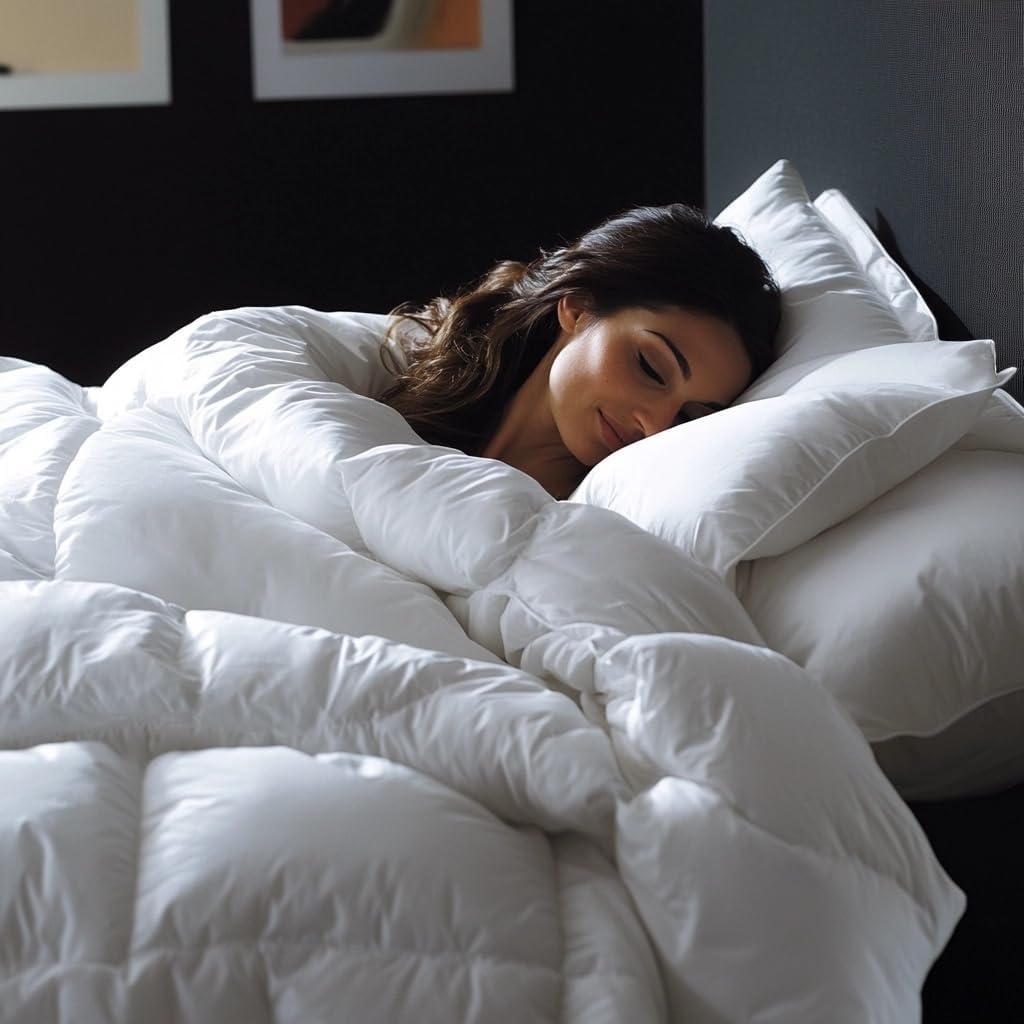
You already know what a hotel bed looks like — that high, even puff sitting under a crisp white duvet cover, the kind that makes you sink in and immediately feel like the room cost more than it did. What you may not know yet is exactly which insert specs produce that effect, or why some inserts look disappointingly flat the moment they come out of the bag. A comforter insert is simply the filled blanket that lives inside a duvet cover (the removable, washable shell). The “hotel feel” people keep describing online comes down to three things: fill power (a measure of how much space one ounce of down or down-alternative fiber occupies — higher numbers mean more loft per ounce), construction type (baffle-box stitching keeps fill evenly distributed; sewn-through stitching does not), and shell fabric (the cotton outer casing whose thread count and weave determine that satisfying, slightly crinkly sound and feel). This guide maps the tradeoffs honestly, names the products that reviewers keep returning to, and gives you a clear decision rule at the end.
| EDITOR'S PICKGlobon Winter White Goose Down… | Mid-tier600-Thread-Count Egyptian Cotto… | Budget pickAPSMILE Goose Feather Down Fibe… | |
|---|---|---|---|
| Fill Type | Goose down | Goose down | Feather-fiber |
| Fill Power | 800 | — | — |
| Fill Weight | — | 55 oz | — |
| Shell Material | — | Egyptian cotton | Organic cotton |
| Thread Count | 420 | 600 | — |
| Size | King 106x90 | Queen | King 106x90 |
| Price | $252.43 | $129.95 | $85.90 |
| See on Amazon → | See on Amazon → | See on Amazon → |
Why the “Hotel Look” Has a Specific Spec Profile
Boutique hotels and major chains are not buying random comforters. Hospitality purchasing managers — and the interior designers who spec rooms for them — have converged on a narrow target: 600–800 fill power, baffle-box construction, and a 233–300 thread count cotton percale or sateen shell. That combination produces a comforter that lofts high, stays evenly distributed after repeated laundering, and emits that soft crinkle sound that reviewers across dozens of product listings describe as a luxury signal rather than a defect.
The Wirecutter’s comforter guide (updated 2025) notes that baffle-box construction — where small fabric boxes are sewn between the top and bottom shell panels, creating separate chambers — is the single biggest structural upgrade over sewn-through construction. Sewn-through stitching compresses the fill at every seam line, producing cold channels and an uneven surface. Baffle-box eliminates both problems, which is why reviewers of the APSMILE baffle-box insert specifically call out the absence of cold spots as a differentiator from cheaper alternatives they had owned previously.
Fill power and warmth weight are separate decisions. A 700 fill power insert can be made very light (low fill weight in ounces) or very heavy (high fill weight). The Sleep Foundation’s comforter overview explains this distinction clearly: fill power tells you the quality of insulation per ounce, but fill weight tells you how much you used. A hotel-style insert optimizes for loft-to-weight ratio — it should look enormous and feel surprisingly light. If you want that floating, cloud-drape aesthetic without sweating through the night, look for a mid-weight fill at higher fill power rather than a heavy fill at low fill power.
The Flat-Out-of-the-Bag Problem (And Why It’s Not a Defect)
This is the single biggest expectation gap in this category, and it costs brands reviews they don’t deserve. A significant portion of inserts — including well-regarded options like the C&W and Pacific Coast lines — ship vacuum-packed to reduce box size. Vacuum packing compresses the fill clusters almost completely. When the insert arrives, it can look alarmingly flat, thin, and unconvincing — nothing like the product photos.
The fix is simple and takes about 20 minutes: put the insert in the dryer on a fluff or air-only cycle (no heat). Reviewers across multiple products in this category report that the insert goes from pancake-flat to full hotel loft within one 15–20 minute tumble cycle. Adding a couple of clean tennis balls or dryer balls accelerates the process by physically separating the clusters. Good Housekeeping’s bedding coverage consistently recommends this step as standard practice after any down or down-alternative insert arrives or is washed — it is not a workaround for a damaged product, it is the product working as designed.
If you skip the dryer cycle and simply unfold the insert and attempt to use it, you will be disappointed. Note this before you write a one-star review.
By the Numbers: What to Expect at Each Fill-Power Tier
| Fill Power | Loft Profile | Best For |
|---|---|---|
| 400–550 | Moderate, uniform | Year-round / warmer climates |
| 600–700 | High, hotel-standard | Most sleepers, 4-season use |
| 750–800 | Very high, cloud-like | Cold climates, dramatic aesthetic |
| 800+ | Maximum loft, luxury tier | Luxury buyers, Hungarian/Polish goose down |
Sources: The Spruce fill power explainer, 2024; Sleep Foundation comforter guide, 2025.
Down vs. Feather-Fiber: Which Actually Looks More Like a Hotel Bed?
This is where the decision splits depending on budget and ethics priorities.
Goose down (clusters from the underside of geese, with no quill) produces the highest fill power per ounce and the best loft-to-weight ratio. The Globon 800 FP insert represents the upper end of the accessible goose-down market; reviewers describe the shell as “heavenly” and praise its visual loft, though at least one reviewer noted it ran slightly lighter than preferred for genuinely cold nights — which maps directly back to the fill-power vs. fill-weight distinction above. If you sleep cold, confirm the fill weight (in ounces) before buying any high fill-power insert; the number can be deceptively low.
RDS certification (Responsible Down Standard, administered by Textile Exchange) is the credentialing system that verifies no live-plucking or force-feeding occurred in the supply chain. Responsible Down Standard’s published chain-of-custody framework requires traceability from farm through finished product. If ethics sourcing is a factor in your decision — and for a growing segment of this audience it is — look for RDS or IDFL certification explicitly on the product page, not just a vague “ethically sourced” marketing claim.
Feather-fiber blends use either goose or duck feathers (which contain a quill shaft) mixed with down clusters, or entirely synthetic microfiber fill. Feather blends are heavier for the same loft level, which is a tradeoff: some sleepers prefer the weighted feel, but the visual profile is less cloud-like. Pure synthetic alternatives (typically marketed as “down alternative” or “feather-fiber”) have closed the gap significantly in recent years. Owners of Ubauba inserts specifically mention the crinkly cotton shell sound as a feature — “I love that wonderful crinkly sound” is a direct reviewer quote — which suggests the aesthetic hotel experience is very much achievable outside of pure goose down, as long as the shell fabric is right.
The honest comparison: At the 600–750 fill power range with baffle-box construction and a percale cotton shell, the visual difference between goose down and a high-quality down alternative is small from across the room. The tactile difference — weight, breathability over a full night — is more meaningful. If your primary goal is the look of the hotel bed in photos and on arrival, a well-constructed synthetic at this tier competes. If your goal is the feel over a decade of use, down wins on durability and loft recovery after repeated washing.
Shell Fabric and That Crinkle Sound
Multiple reviewers in this category have independently flagged the crinkle sound of a cotton percale shell as a positive — a sensory marker that signals quality. This is not universal (some sleepers find it disruptive at first), but it is consistent enough across reviews to treat as a genuine product feature rather than a complaint.
Percale weave (a plain one-over-one-under weave) produces a matte, crisp, slightly stiff hand feel and that crinkle sound. Sateen weave (a four-over-one-under weave) is smoother, softer, and slightly warmer — less crinkle, more drape. Hotels historically defaulted to percale because it photographs brighter, launders crisply, and signals a clean, pressed look. Both are legitimate choices; the decision is about sensory preference, not quality hierarchy.
Thread count matters less than weave type and fiber quality above roughly 200 TC. The Spruce’s shell fabric explainer notes that inflated thread counts (achieved by counting individual plies of twisted yarn) are common in bedding marketing and correlate poorly with actual feel or durability. A 300 TC single-ply percale will almost always outperform a “600 TC” two-ply sateen of equivalent construction quality.
Decision Framework: If X, Then Y
You now have enough to map your own situation to a product tier:
- If your primary goal is the visual hotel aesthetic (loft, crinkle shell, white-on-white look) and your budget is under $150 → look for 600–650 fill power, baffle-box construction, cotton percale shell, and budget one dryer cycle before judgment.
- If you sleep in a cold room (below 65°F) and want both look and warmth → prioritize fill weight (aim for 40–50 oz for a queen) at 650–700 FP; the Globon reviewer’s note about lighter-than-preferred warmth is a useful calibration point here.
- If you are outfitting multiple short-term rental units and need consistent loft recovery after commercial laundering → baffle-box is non-negotiable; the APSMILE baffle-box insert’s even-fill praise from reviewers is exactly the durability signal you want in a multi-unit context.
- If you are comparing these inserts against department-store purchases → reviewers who made that comparison (Macy’s is specifically mentioned in multiple review threads) consistently report equal or superior loft at a meaningfully lower price point. The delta is real.
- If ethics certification matters → confirm RDS or IDFL on the product page before buying; do not accept marketing language as a substitute for chain-of-custody documentation.
Frequently Asked Questions
Does the crinkle sound go away after washing? It softens slightly with each wash as the cotton fibers relax, but it does not disappear entirely — especially in percale shells. Most reviewers who mention it come to appreciate it as a tactile cue. If you prefer a quieter, softer shell, look for sateen-weave options instead.
How long does it take for a vacuum-packed comforter to fully re-loft? Plan for one 15–20 minute dryer cycle on air-only or low heat with a few dryer balls. Most reviewers report full loft within that window. Some inserts benefit from a second cycle. Do not evaluate the product before completing this step — the flat appearance straight from the bag is a packaging artifact, not a product defect.
What fill power do I actually need to get that cloud-like hotel drape? 600–700 fill power is the hotel-standard range for a reason. Below 550, you will see noticeably less loft; above 750, you are paying for warmth performance that exceeds what most hotel aesthetics require. The visual sweet spot is 650–750 FP with baffle-box construction.
Is goose down worth it over goose feather-fiber for the hotel look? For the look alone, a quality feather-fiber blend or down alternative at 600+ FP with a cotton percale shell is competitive. For long-term loft retention after years of washing, goose down clusters maintain their structure better than feather blends or synthetics. The premium is better justified as a durability investment than a purely aesthetic one.
Can I use these inserts without a duvet cover and still have them look good? Short answer: technically yes, but the hotel look is specifically a duvet-cover look. The crisp white visual effect comes from a fresh, pressed cover, not the insert itself. Without a cover, the insert will show fill seams and will be significantly harder to launder without damaging the fill. For the hotel aesthetic to land, the cover is load-bearing.