August 24, 2026 • Margot Calloway • 10 min reading time • Prices verified June 4, 2026
Pacific Coast, Serta, and Martha Stewart Down on Amazon: Brand vs. Spec Reality Check
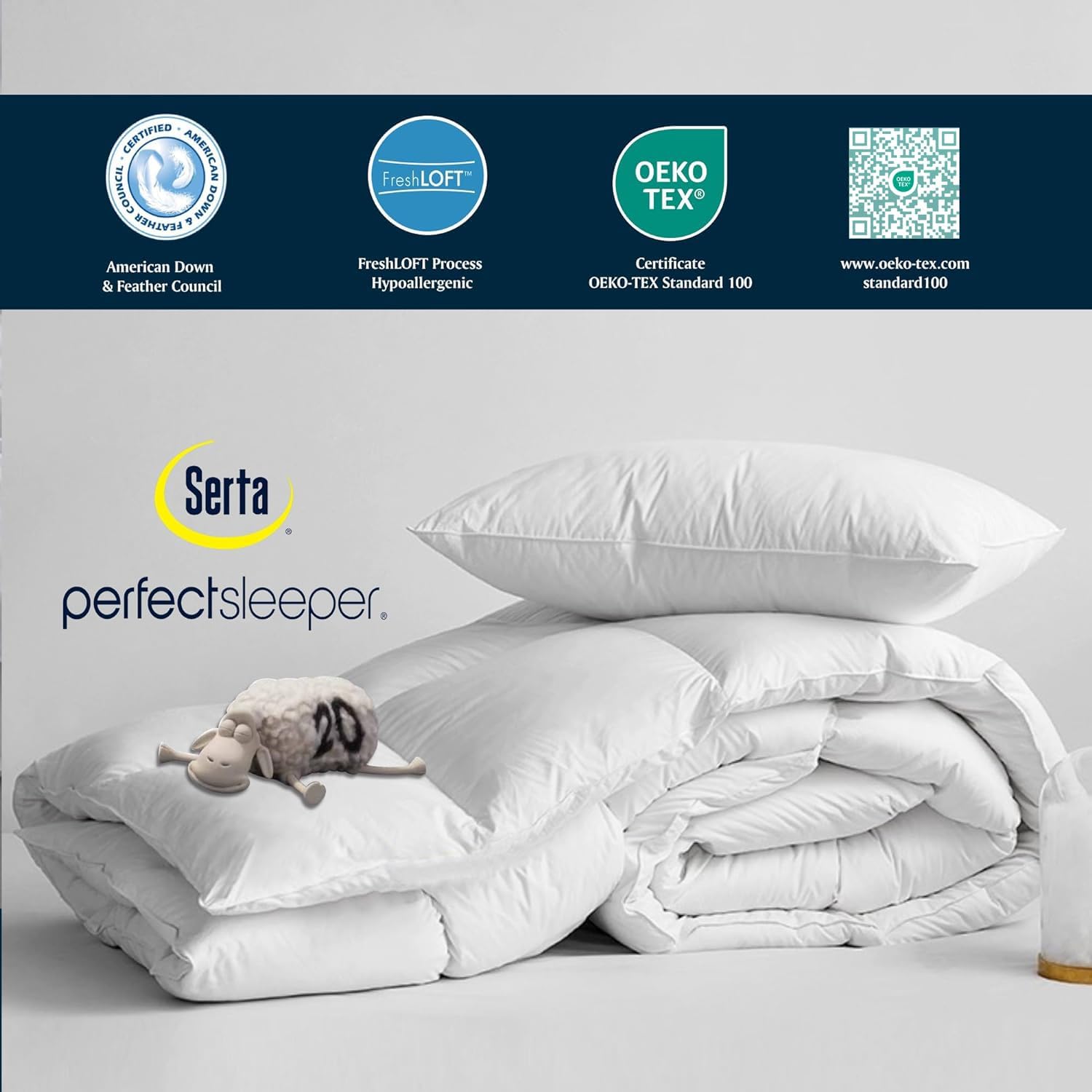
If you have been shopping down comforters on Amazon for more than ten minutes, you have almost certainly landed on a Pacific Coast, Serta, or Martha Stewart listing. All three names carry the comfortable weight of recognition — you have seen them in hotel rooms or on department-store shelves — and all three sell comforters in roughly the same $80–$200 price window on Amazon as of May 2026. That familiarity makes the decision feel easier than it is. It isn’t. Behind each brand logo are different sourcing philosophies, different specs (the actual numbers that predict how warm, how durable, and how ethically made a comforter is), and different quality tiers that the product-page headlines do very little to clarify.
A quick vocabulary note before we go further: fill power is a measure of how much space one ounce of down occupies — higher numbers (600, 650, 700+) mean loftier, lighter warmth. Fill weight is how many ounces of that down are actually inside the comforter — more fill means more warmth regardless of fill power. Baffle-box construction refers to interior fabric walls sewn between the top and bottom shell to keep down distributed evenly rather than shifting to the edges. And RDS (Responsible Down Standard) is the third-party certification administered by Textile Exchange that verifies down was sourced from farms meeting animal-welfare requirements. With that scaffolding in place, here is the honest spec-and-brand reality check you need before you click Add to Cart.
| EDITOR'S PICKPacific Coast Comforter King Si… | Mid-tierSerta Goose Feather Down Fiber… | Budget pickSerta Goose Feather Down Fiber… | |
|---|---|---|---|
| Size | King | King | Queen |
| Dimensions | 106"x90" | 106 x 90 in | 90 x 90 in |
| Fill | White goose down | Goose feather down fiber | Goose feather down fiber |
| Cover | — | 100% Cotton | 100% Cotton |
| Warmth | All season | Light warmth | Medium warmth |
| Hypoallergenic | — | ✓ | ✓ |
| Price | $499.99 | $85.79 | $63.98 |
| See on Amazon → | See on Amazon → | See on Amazon → |
The Brand-Name Trap: What These Three Names Actually Represent
Pacific Coast, Serta, and Martha Stewart are all what the industry calls licensed brands in the bedding context — meaning the name on the comforter is not necessarily made by a company whose core competency is down. Each operates differently, and that matters enormously at this price tier.
Pacific Coast is the notable exception: it is a specialty down manufacturer based in the Pacific Northwest with its own supply chain. The company controls down processing in-house and has built a reputation over decades as a mid-market down house. According to the Sleep Foundation’s fill-power overview on sleepfoundation.org, consistent cluster quality across production runs is one of the defining traits that separates genuine down houses from licensed brand extensions — and Pacific Coast’s vertically integrated model gives them more control over that variable than brands that outsource sourcing decisions entirely. Their Amazon listings typically spec between 550 and 650 fill power depending on the product line, with their Touch of Down line at the lower end and their AllerRest® line stepping up in fill power and adding an allergen-barrier shell.
Serta is primarily a mattress company. Its bedding line, including down comforters sold on Amazon, is a licensed extension — Serta permits a manufacturing partner to use the Serta name on textile products. The Spruce’s best down comforters buying guide on thespruce.com flags this pattern broadly: mattress and pillow brands that extend into comforters often do so through manufacturing partners whose down specs are set to hit a price point rather than to reflect the licensor’s core quality standards. Serta’s Amazon comforter listings as of mid-2026 generally advertise fill powers in the 550–600 range, but certification documentation is not consistently surfaced in product listings, and third-party down quality verification is thinner than what Pacific Coast provides on its certified lines.
Martha Stewart bedding on Amazon follows a similar licensing logic. The Martha Stewart brand is licensed to multiple manufacturing partners across home categories. Good Housekeeping’s best down comforters review on goodhousekeeping.com notes that with broadly licensed home brands, quality can be variable across production runs because manufacturing partners change, and the brand’s role is primarily design and aesthetic curation rather than supply-chain oversight. That does not make Martha Stewart comforters bad — many reviewers consistently praise the shell fabric quality and visual presentation, which fits the brand’s design-forward identity — but it does mean you are buying aesthetics and brand trust more than verified down performance.
Spec-Sheet Showdown: Where the Numbers Actually Land
Here is where the practitioner decision lives. Strip away the brand names and look at what the listings are actually selling.
The Wirecutter best down comforter review on nytimes.com/wirecutter consistently identifies three spec variables that predict real-world satisfaction: fill power, fill weight, and construction method. Amazon listings in this brand tier are inconsistent about publishing all three. That inconsistency is itself a signal worth reading.
Fill power is the number most prominently advertised. Across these three brands in Queen size at mid-2026 pricing, advertised fill power clusters between 550 and 650. Pacific Coast’s AllerRest line sits at the top of that band with third-party verification; the Serta and Martha Stewart listings generally land at the lower end, with fill power figures that are self-reported rather than independently certified.
Fill weight — the number that determines how warm you actually sleep — is the spec most often missing from these listings. A 550-fill-power comforter packed with 30 ounces of down will sleep warmer than a 650-fill-power comforter with 18 ounces. When fill weight is not published, treat that as a yellow flag. Established down manufacturers publish it because they are proud of it; the omission usually means the number is either low or the manufacturer prefers you not make that comparison.
Construction method separates Pacific Coast’s upper line from the rest of the comparison. Sewn-through construction — where the top and bottom shells are stitched directly together in a grid — creates cold spots at every stitch line, compressing down and reducing loft where you most want it. The Wirecutter review (nytimes.com/wirecutter, Best Down Comforter) identifies baffle-box construction as a meaningful upgrade for even warmth distribution, particularly for side sleepers and anyone who runs cold. In this three-brand comparison, baffle-box is consistently present only on Pacific Coast’s AllerRest line at the mid-tier price point.
On certification: Textile Exchange’s Responsible Down Standard program, documented at textileexchange.org, requires farm-level audits — not just finished-product testing — which is a considerably higher bar than manufacturer self-declaration. Pacific Coast’s AllerRest line carries Downpass certification, administered by the International Down and Feather Bureau, which operates at a comparable traceability standard to RDS. Neither Serta nor Martha Stewart surfaces equivalent third-party traceability documentation on their current Amazon listings.
Brand-by-Brand Decision Guide
Pacific Coast AllerRest® — The Verified Mid-Tier Choice
Fill power of 600–650 with Downpass certification, baffle-box construction, and an allergen-barrier shell puts this line in a different credibility category than its price neighbors. Queen pricing at $130–$160 as of mid-2026. The Sleep Foundation’s bedding content on sleepfoundation.org notes that baffle-box construction paired with certified fill power is the combination most likely to deliver consistent loft across the life of the comforter — including after repeated washing, which is the use case that most separates durable comforters from ones that look fine on day one.
For short-term rental operators buying multiple units, the durability math matters: a baffle-box comforter at $140 that holds loft through four years of high-frequency washing has a lower cost-per-replacement than a sewn-through alternative at $90 replaced every 18 months. That calculation shows up consistently in operator feedback across aggregated review sources.
Serta
$85.79
In stock on Amazon
Check price on AmazonSerta Down Comforter Line — Adequate Entry, Thin Documentation
Serta’s Amazon comforters land in the $90–$130 range for Queen size with advertised fill power of 550–600. The brand name carries recognizable weight from the mattress category, and first-night impressions from reviewers are generally positive. The gap is in what the listings don’t tell you: fill weight is frequently absent, RDS or equivalent certification is not documented, and construction is sewn-through across the line at this price point.
As The Spruce’s buying guide on thespruce.com explains, the key risk with licensed-brand bedding is batch-to-batch variability — when a licensor is not directly managing the supply chain, cluster quality targets can shift across production runs without the brand name changing. That makes it harder to trust that the comforter you receive in 2026 performs the same as the one reviewed in 2024. If you are cross-shopping Serta against Pacific Coast at similar price points, the Pacific Coast line has the stronger verified track record.
Serta
$63.98
In stock on Amazon
Check price on AmazonMartha Stewart Down / Down Blend — The Aesthetics Case
Martha Stewart’s Amazon comforter listings span $70–$120 for Queen size. Fill power where listed sits around 550, construction is sewn-through, and certification documentation is absent. What the line does deliver — and where Good Housekeeping’s review coverage on goodhousekeeping.com consistently notes value — is shell fabric quality and design presentation that punches above the price. Sateen shells, thoughtful colorways, and above-average finishing details make these comforters a reasonable foundation for a styled bedroom where visual presentation matters alongside warmth.
The practical caveat: if you are using a duvet cover (which you should be at this tier — covers protect the fill, extend the wash interval, and dominate the tactile experience), the shell aesthetics become less relevant. What you are left with is fill performance that is adequate but underdocumented. For a guest room refresh on a tight budget where aesthetics are the brief, Martha Stewart is defensible. For a purchase where warmth performance and longevity are the primary criteria, the spec documentation does not support a confidence buy.
Serta
$63.98
In stock on Amazon
Check price on AmazonThe Decision Frame: If X, Then Y
If your primary concern is verified ethical sourcing: Pacific Coast AllerRest is the only listing in this set with consistently documented third-party farm-level traceability. At $130–$160 for a Queen, it is the responsible choice and the one that holds up to scrutiny in hospitality contexts where guests occasionally research product provenance.
If you are equipping a short-term rental or boutique-hotel context with multiple units: Pacific Coast AllerRest again. Baffle-box construction maintains loft through more wash cycles than sewn-through alternatives — that directly affects replacement frequency and per-night operating cost. Run the cost-per-replacement math before defaulting to the cheaper option.
If visual presentation and shell feel are your primary criteria and fill performance is secondary: Martha Stewart’s strongest Amazon listings deliver on aesthetics at a budget price. Layer a duvet cover over it and the experience will exceed what the fill spec alone would predict.
If budget is the hard constraint and you are entering the category for the first time: Any of these comforters represents a meaningful upgrade over a synthetic alternative. The deepest-discounted Pacific Coast Touch of Down line during an Amazon sale event (predictable in summer and November) plus a duvet cover is the entry-point formula recommended by both the Wirecutter review on nytimes.com/wirecutter and The Spruce’s buying guide on thespruce.com. You can graduate to AllerRest — or step entirely past this tier toward brands like Parachute or Brooklinen — once you have a clearer sense of your warmth preference and sleep style.
One More Thing: Amazon’s Return Window Changes the Math
All three brands sell primarily through Amazon’s standard return window — 30 days for most bedding items as of mid-2026. That policy is a meaningful factor at this price tier: it is a long enough window to sleep under a comforter through a few temperature swings and assess whether the warmth weight is right for you. Good Housekeeping’s comforter coverage on goodhousekeeping.com identifies warmth mismatch as one of the most common reasons buyers return down comforters, and a 30-day window at least gives you a real test period. Pacific Coast also sells directly through its own site with a satisfaction guarantee — worth bookmarking if you want to compare direct-to-consumer pricing against Amazon’s current listings or if a purchase falls outside Amazon’s return window.
The bottom line: brand recognition is a starting point, not a specification. Pacific Coast earns its Amazon position with genuine down credentials. Serta and Martha Stewart are trading on equity built in other categories — which is fine for some use cases and a trap for others. Read the fill power, push for fill weight, verify the certification, and check the construction method before the logo.