September 3, 2026 • Margot Calloway • 10 min reading time • Prices verified June 4, 2026
The Prewashed Shell Difference: Why Bedsure's GentleSoft Finish Gets Talked About So Much
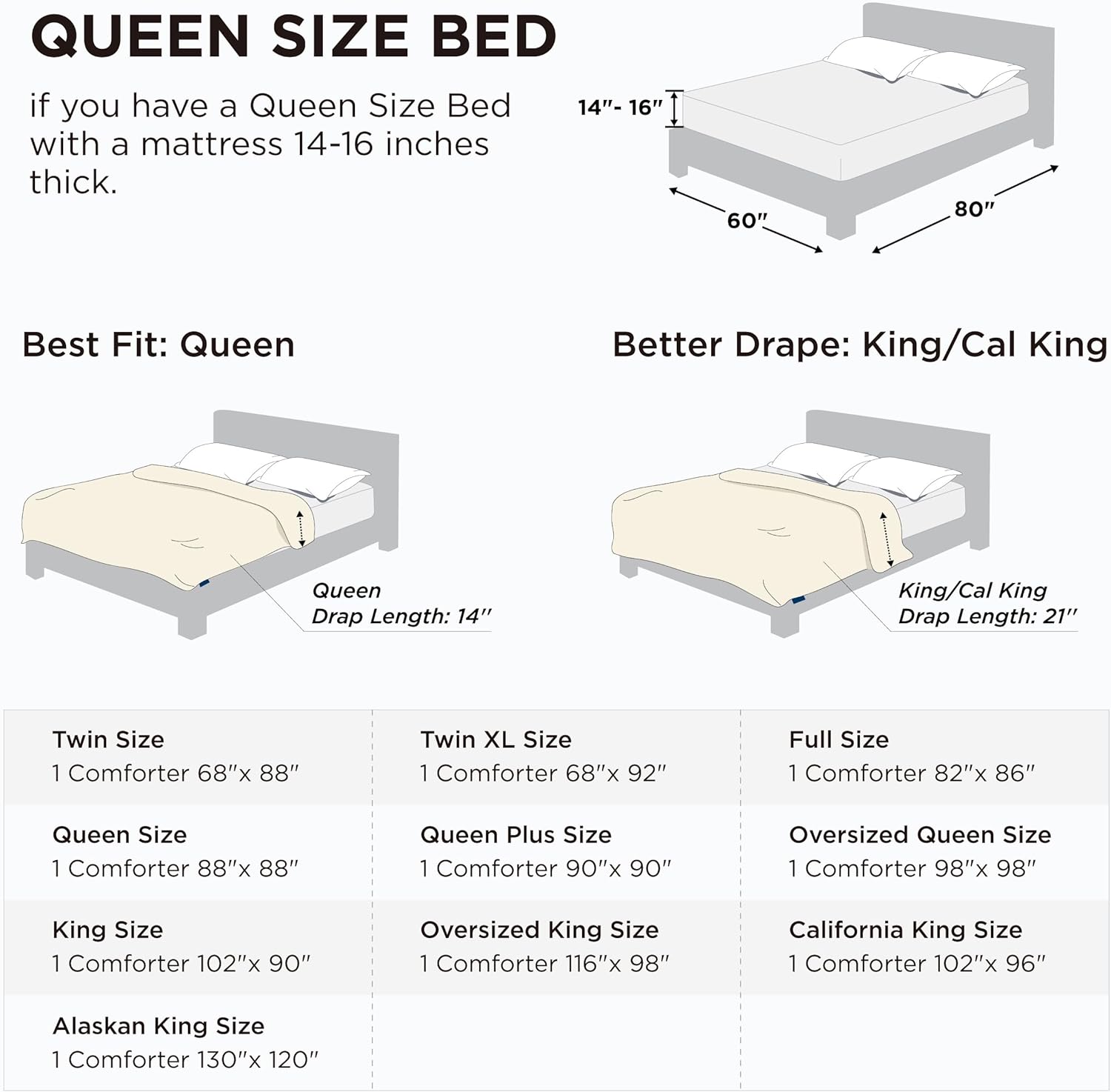
If you’ve ever read comforter reviews and noticed that Bedsure buyers sound almost weirdly specific — “it already feels broken in,” “I don’t even use a duvet cover on it,” “quieter than I expected” — you’re picking up on something real. Most budget comforter reviews sound like this: soft, great price, happy with it. Bedsure’s GentleSoft reviews sound like that, plus a layer of behavioral detail that’s unusual for the sub-$80 category. People are describing how they actually use the thing differently than they expected to. That specificity is worth unpacking.
This article covers what “GentleSoft” actually means as a product finish versus a marketing label, how prewashing as a shell treatment produces those sensory outcomes, and how the Bedsure experience stacks up honestly against Utopia Bedding at the same price tier. The review patterns also reveal something useful about who each product is really for — and the comparison structure below is organized to make that decision as clean as possible.
You don’t need to be a textile engineer to follow this. Key concepts — shell finish, prewashing, fill weight, baffle vs. sewn-through construction — are defined as they come up.
What “GentleSoft” Actually Means — and What It Doesn’t
Let’s start with honesty: GentleSoft is Bedsure’s proprietary marketing term, not an industry-standard textile classification. There is no third-party body that certifies a shell as “GentleSoft” the way the Responsible Down Standard (RDS) or IDFL certifies fill sourcing. Bedsure applies the label to select comforters that use a shell fabric with a particular surface treatment, but the brand does not publicly disclose the exact finishing method — whether that’s a prewash cycle, a mechanical softening process, a peach-skin finish (a brushed microfiber technique common in budget-tier shells), or some combination.
That caveat matters because it shapes how you should evaluate the praise. When reviewers say the shell feels “already broken in,” they’re describing a real tactile outcome — they’re just not necessarily describing a single, standardized process. What we can say, based on aggregated reviewer language documented in Apartment Therapy’s comparative budget comforter coverage and The Spruce’s “Best Down Alternative Comforters” roundup, is that the outcome is consistent enough to produce unusually specific and convergent reviewer behavior across thousands of purchases. That convergence is the signal.
The most plausible explanation: Bedsure’s GentleSoft shells undergo a prewash or pre-treatment finishing step before the shell is cut, sewn, and filled. Prewashing — common in premium bedding (think “stonewashed” linen or “enzyme-washed” cotton percale at the Parachute tier) — relaxes the fabric’s weave, reduces initial stiffness from sizing agents used in manufacturing, and produces a surface that mimics the texture of fabric that has been through ten or fifteen domestic wash cycles. For a budget microfiber shell, this matters more than it would for a high-thread-count cotton shell, because microfiber in its raw state can feel slightly waxy, stiff, or plasticky until it’s been washed a few times. Prewashing short-circuits that break-in period.
The Acoustic Clue — and Why It’s More Telling Than the Softness Reviews
Here’s the reviewer signal that stands out most to anyone who reads this category carefully: “surprisingly quiet — doesn’t make that crinkly noise.”
Shell noise is an underappreciated quality differentiator. Stiff, unfinished microfiber shells crinkle audibly when you shift in bed. This isn’t dangerous or even particularly annoying after a few washes, but it’s one of the sensory tells that reminds a budget-tier buyer they bought a budget product. The Sleep Foundation’s published guidance, “How to Choose a Comforter,” notes that tightly woven synthetic shells can retain stiffness longer than natural fiber shells, making surface finish at the point of sale more consequential than it is for cotton.
When a reviewer specifically calls out quietness — especially when they weren’t expecting it — that’s not a generic softness claim. That’s someone reporting that the shell behaves like a laundered fabric from the first use. It’s the acoustic equivalent of the “already broken in” language. Both are describing the same underlying phenomenon: a shell that starts where most budget shells end up after a dozen washes.
The contrast with Utopia Bedding is instructive here. Utopia’s box-stitch down-alternative comforter earns genuinely warm reviews — “great value,” “does the job,” “very soft” — but reviewers don’t reach for the “broken in” or “no cover needed” language. Utopia buyers are satisfied. Bedsure GentleSoft buyers are specific. That gap in language precision reflects a real difference in first-touch sensory experience, even if both products land in similar warmth and loft territory over time.
Bedsure vs. Utopia: A Three-Tier Decision Frame
Both products target the same buyer: someone spending $50–$80 on a down-alternative comforter — a synthetic fill designed to mimic real down’s loft and warmth without the animal-sourcing concerns or the high price — either as a first purchase or a rental-property refresh. The right choice depends on what job you’re hiring the product to do. The three scenarios below map the decision cleanly.
H3: The Rental Operator or Guest Room Furnisher
Primary need: A comforter that impresses from night one, ideally without requiring a duvet cover that needs its own laundering cycle.
What the reviews show: Bedsure GentleSoft buyers in this use case are the source of the “no cover needed” language. The pre-treated shell feels finished from the first use — not raw or waxy — which matters acutely in contexts where first impressions drive star ratings. Apartment Therapy’s budget comforter comparison notes that this population of buyers weights immediate softness far above long-run construction durability, because rental operators cycle products every 18–24 months rather than using a single comforter for five or more years.
Verdict: Bedsure GentleSoft is the stronger fit here. Shell feel at first contact is higher-leverage than box-stitch fill distribution when your guest is forming an impression on night one.
Utopia
$29.89
In stock on Amazon
Check price on AmazonH3: The Daily Personal-Use Buyer Prioritizing Long-Run Construction
Primary need: A single comforter that holds up well through repeated washing and maintains even fill distribution over several years of daily use.
What the reviews show: Utopia’s box-stitch construction — a grid of stitched squares that keeps fill distributed evenly — is arguably more functional at preventing cold spots than Bedsure’s pintuck design, which is primarily decorative. Good Housekeeping’s “Best Comforters” evaluation criteria consistently weight fill distribution and shell integrity as primary factors for long-term satisfaction. For a buyer planning five-plus years of daily use, construction consistency is the higher-leverage variable.
Verdict: Utopia’s box-stitch holds a functional edge for this buyer. The shell softness gap narrows after a dozen washes anyway, so the first-touch advantage Bedsure carries matters less over a long ownership horizon.
Bedsure
$39.99
In stock on Amazon
Check price on AmazonH3: The Coordinated Bedroom Set Buyer
Primary need: A matched, photo-worthy bed setup — comforter, shams, and sheets — purchased in a single transaction, with color accuracy as the primary quality signal.
What the reviews show: The review patterns shift meaningfully when you move from a standalone Bedsure comforter insert to 7-piece comforter sets from brands like HEVUMYI or JOLLYVOGUE that occupy adjacent search results. Reviewers of those sets focus heavily on color accuracy and sheet fit — does the sham match the product photo, do the fitted sheets accommodate a deep-pocket mattress. Shell softness is secondary in that conversation, sometimes absent entirely. The Spruce’s “Best Down Alternative Comforters” roundup notes this behavioral split explicitly: buyers shopping sets are solving a coordination problem, not a sleep-feel problem.
Verdict: If your primary job-to-be-done is bedroom coordination, evaluate color consistency and sizing specs carefully. Shell finish will be less differentiated across the 7-piece-set category, and neither Bedsure nor Utopia offers a compelling edge on that dimension versus coordinated-set specialists.
Bedsure
$44.99
In stock on Amazon
Check price on AmazonSide-by-Side: Key Specs at a Glance
| Attribute | Bedsure GentleSoft | Utopia Box-Stitch |
|---|---|---|
| Shell finish | Pre-treated / GentleSoft | Standard microfiber |
| Construction | Pintuck (decorative quilting) | Box-stitch sewn-through |
| First-use softness | ”Already broken in" | "Softens after a few washes” |
| Shell acoustics | ”Quiet” per reviewers | No consistent mention |
| Fill warmth | Medium / all-season | Medium / all-season |
| Strongest use case | Rental ops, cover-free use | Daily personal use, long horizon |
Utopia
$29.89
In stock on Amazon
Check price on AmazonNeither product publishes fill weight — the total ounces of fill per comforter, which determines warmth output more precisely than fill power in down-alternative products. The Spruce’s budget comforter guidance flags this as a common spec gap in the under-$100 tier. Warmth is roughly equivalent between the two; the GentleSoft’s meaningful advantage is shell feel, not thermal performance.
Frequently Asked Questions
Can I use a GentleSoft comforter without a duvet cover?
Reviewers consistently say yes — and this is one of the defining behavioral notes in the GentleSoft review record. The shell’s pre-treated surface feels finished enough that many owners skip the cover layer entirely, especially in warmer months. The main practical consideration: without a duvet cover, the shell will soil more quickly and need washing more often. Bedsure’s microfiber shell handles machine washing well per owner reports across multiple long-run reviews.
Does the prewashed softness hold up after multiple machine washes?
Based on aggregated owner reports — including buyers who note washing frequency of every two to four weeks — the GentleSoft texture holds reasonably well through repeated wash-and-dry cycles. The pre-treatment appears to be structural (woven into the fabric’s break-in state) rather than a surface coating that strips away. No treatment is permanent, and softness at wash 40 will differ from wash one, but the consensus is that the feel doesn’t degrade dramatically in the first year of normal use.
Is the pintuck design functional or purely decorative?
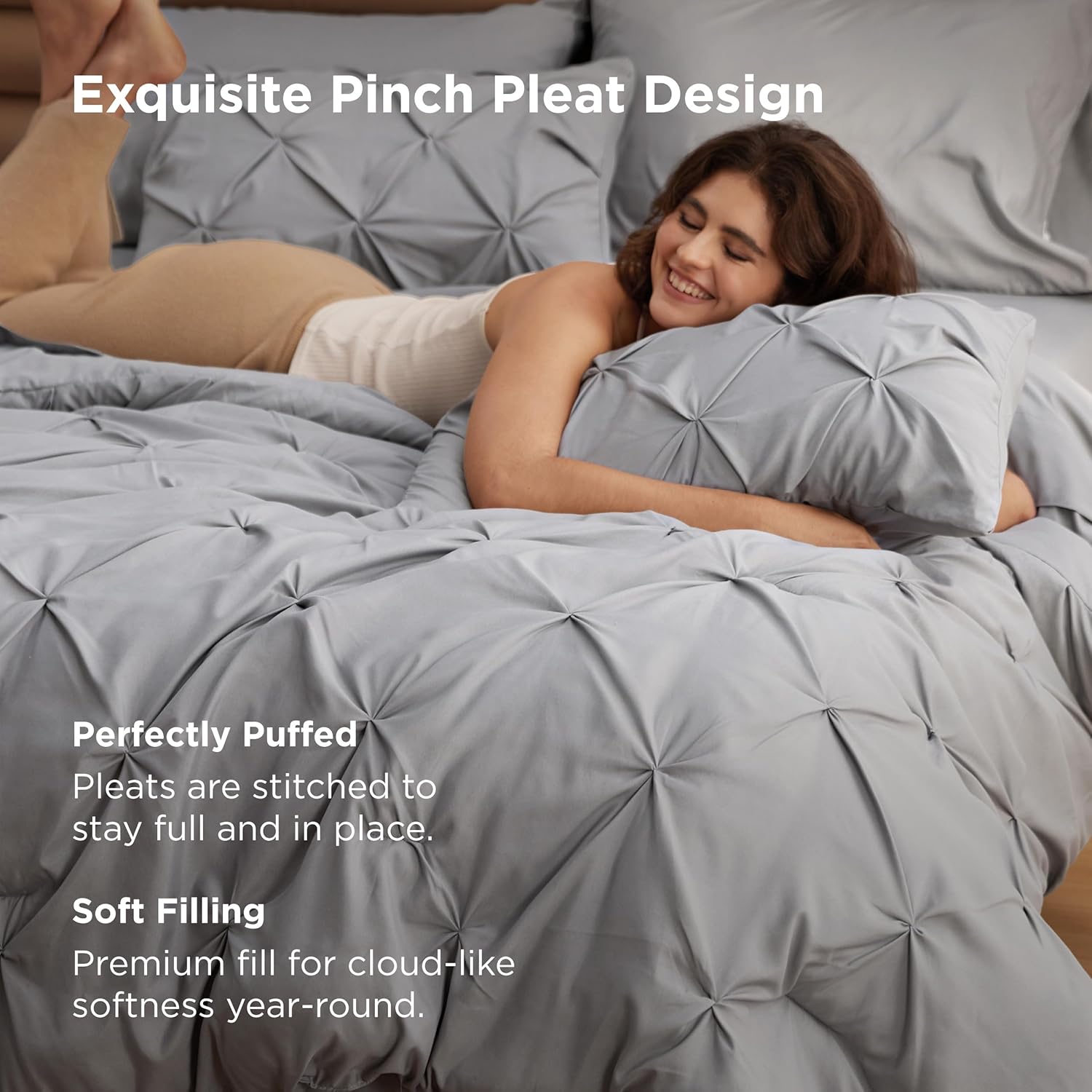
Primarily decorative. Pintuck quilting creates the gathered, textured surface that photographs well and contributes to the “high-end look without the price” perception reviewers mention. It provides some fill containment, but it’s less effective at preventing fill migration than true box-stitch or baffle-box construction. If cold spots and fill evenness are your top concern over a long use period, box-stitch alternatives like Utopia’s design are the more functional choice.
Why do some Bedsure reviewers say it’s “not fluffy enough” while others rave about it?
This split maps onto two variables: expectation calibration and fill settling. Buyers who expect the loft of a high-fill-power goose-down comforter will find any down-alternative insert underwhelming — the physics of synthetic fill clusters don’t replicate premium down’s loft-to-weight ratio. Within the realistic expectation set for this price tier, the split more often comes down to how the fill settled in shipping. Down-alternative fills can compress in transit; a 20-minute tumble in a dryer with a few tennis balls typically restores loft. Reviewers who do this step tend to land in the “rave” camp.
Does the 3-piece oversized king set include sheets?
No. The Bedsure oversized king 3-piece set typically includes the comforter insert plus two pillow shams. It does not include fitted sheets, flat sheets, or pillowcases beyond the shams. If you’re seeing a listing that appears to include sheets, verify the item count carefully — “3-piece” in comforter sets consistently refers to insert plus shams, not a full sheet set.
The GentleSoft label is marketing language, but the outcome it describes is real and consistent enough to shape purchase decisions. For a buyer who wants a comforter that feels finished from the first night — and who may skip the duvet cover entirely — Bedsure’s pre-treated shell is doing something meaningfully different from what Utopia offers at the same price. Know which job you’re hiring the product to do, and the choice gets straightforward.