August 8, 2026 • Margot Calloway • 12 min reading time • Prices verified June 4, 2026
The Crinkling Shell Problem: Which Comforters Are Truly Quiet at Night
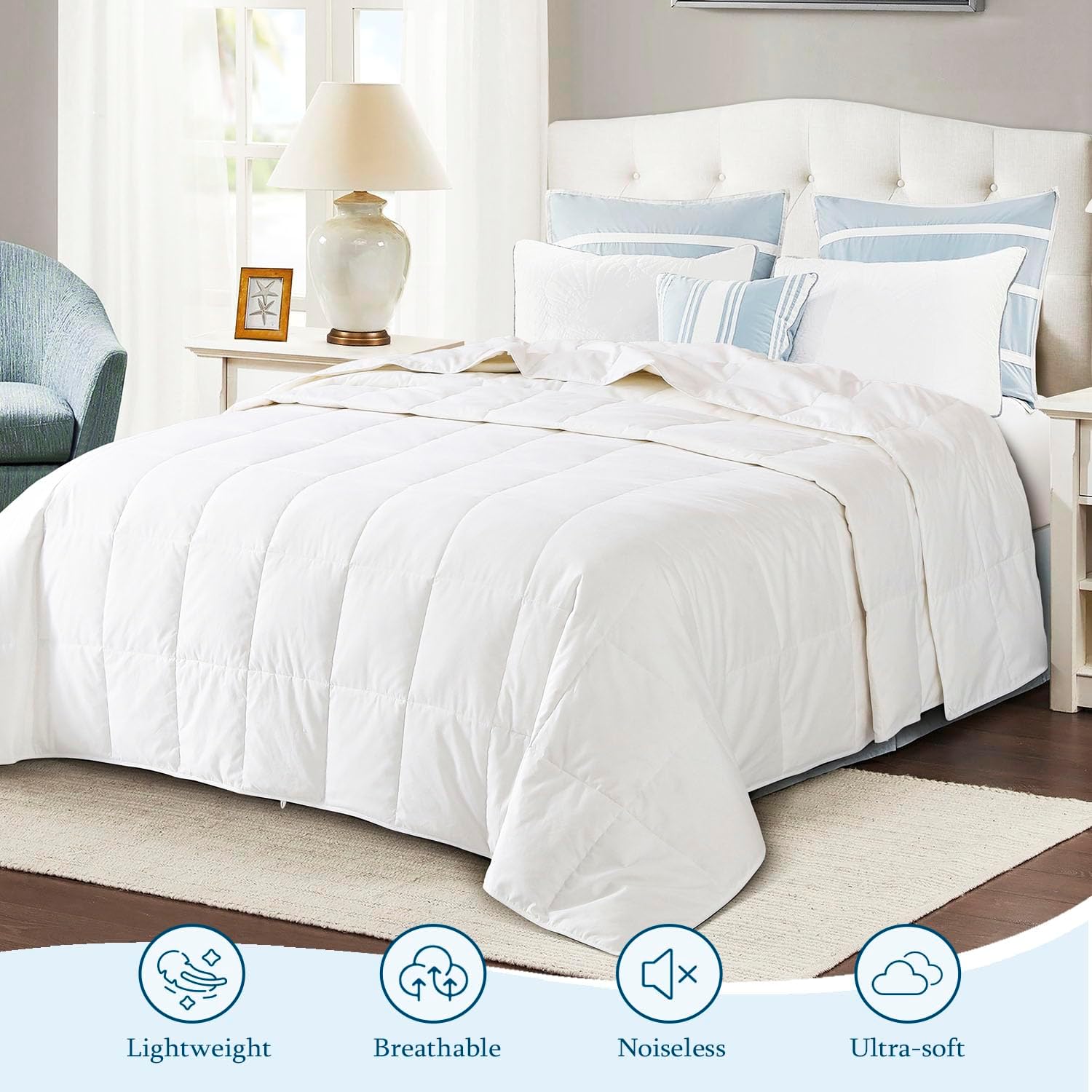
If you have ever shifted positions at 2 a.m. and been jolted awake by the sound of your own comforter — a sharp papery crinkle that feels completely out of place in a bedroom — you already know what this article is about. That noise comes from the shell, the outer fabric casing that holds the down or feather fill inside. Not all shells are made the same way, and the weave type, thread count, and finishing process all affect how much sound the fabric generates when it moves against itself or against a duvet cover. Some shells are essentially silent. Others rustle audibly with every turn. Neither outcome is a manufacturing defect — but knowing which experience you are walking into before you buy makes a real difference in how well you sleep.
This guide is written for buyers who already know the basics: fill power, baffle-box versus sewn-through construction, and why shell thread count matters beyond aesthetics. If you are deciding between two or three comforters right now and shell noise is part of the equation, here is what the specs, the manufacturer descriptions, and aggregated owner reviews actually tell us.
| EDITOR'S PICKGlobon Winter White Goose Down… | Mid-tierGlobon Summer Down Comforter Bl… | Budget pickAPSMILE Goose Feather Down Fibe… | |
|---|---|---|---|
| Fill Power | 800 | — | — |
| Thread Count | 420 | — | — |
| Fill Weight | — | 10 oz | — |
| Shell | Noiseless | Noiseless | Organic cotton |
| Size | King | Queen | King |
| Dimensions | 106×90 in | 90×90 in | 106×90 in |
| Price | $252.43 | $119.99 | $85.90 |
| See on Amazon → | See on Amazon → | See on Amazon → |
Why Shells Make Noise in the First Place
The short answer is weave tightness and finishing chemistry. Down comforter shells need to be downproof — the weave must be tight enough that individual down clusters cannot poke through and escape. Achieving that level of tightness traditionally requires a high thread count and often a calendering process, which presses the fabric under heat and pressure to close gaps between threads. The Spruce, in its explainer on fill power and down comforter construction, notes that 200 TC and above is a common industry threshold for downproofing in cotton shells.
That calendering step is where noise enters the picture. Calendered cotton — particularly percale cotton, which uses a plain one-over-one-under weave — tends to feel crisp and slightly stiff when new. That stiffness means the fabric has memory: when you compress it and release it, it springs back with an audible rustle. Cheaper shells sometimes use a light synthetic coating or a resin finish to achieve downproofing without a high thread count, and these coated shells can sound almost plasticky when new.
Sateen weaves, which use a four-over-one-under thread structure, are generally quieter because the longer thread floats on the surface give the fabric more drape and less rigidity. Shell weight matters too. Heavier shells — such as a 400 TC sateen — have more mass to dampen their own movement. Lighter, crispier shells amplify it.
Wirecutter, in its New York Times–published review of the best down comforters, identifies shell fabric choice as one of the most underrated specification decisions in the category. Good Housekeeping’s expert-tested comforter roundup consistently flags shell feel — including auditory feel — as a primary differentiator among otherwise similar fill specs. The Sleep Foundation’s comforter selection guide recommends reading a substantial number of verified reviews with a specific focus on texture and noise comments, since these details tend to surface in feedback from light sleepers who notice them.
The Noise Spectrum: Shell Types and What to Expect
Before comparing specific product tiers, it helps to understand the underlying fabric logic. The table below maps shell types to their typical noise profiles, based on weave characteristics described by The Spruce and material testing notes from Good Housekeeping.
| Shell type | Typical TC range | Noise level | Hand feel |
|---|---|---|---|
| Percale cotton (calendered) | 200–300 TC | Moderate to high | Crisp, cool |
| Sateen cotton | 300–500 TC | Low to moderate | Smooth, drapey |
| Brushed or flannel cotton | 150–250 TC | Very low | Soft, warm |
| Resin-coated synthetic blend | 180–260 TC | High (plasticky when new) | Stiff initially |
With that framework in place, here is how real products — and the buyers who own them — fall across that spectrum.
Comparing Comforters by Shell Noise Profile
Budget-Tier: Functional but Often Crispier
At the budget end of the market, shells are more likely to be percale cotton at a moderate thread count — typically 200 to 280 TC — or, in the least expensive cases, a resin-coated polyester-cotton blend. These are the shells most likely to generate audible crinkle, particularly in the first weeks of ownership before washing breaks down the calendered or coated finish.
That said, “budget” and “noisy” are not synonyms. Some buyers in this tier actively prefer the crisp percale feel. Owners of budget-priced percale-shell comforters frequently describe the sound as normal for the material — the same family of sound produced by crisp hotel-style percale sheets. For warm sleepers who value the cool, structured feel of percale and sleep alone, the noise profile is an acceptable or even welcome trade-off.
The practical takeaway for this tier: if you are buying a budget percale-shell comforter and noise is a concern, plan to wash it twice in the first month. The Spruce’s construction explainer and aggregated owner reviews both confirm that percale shells soften meaningfully after two or three laundry cycles as the calendered finish breaks down with heat and agitation.
What to look for in listings: if the description says “100% cotton shell” with no thread count and no weave information specified, assume percale at a moderate count. The omission of weave detail is itself an informative signal.
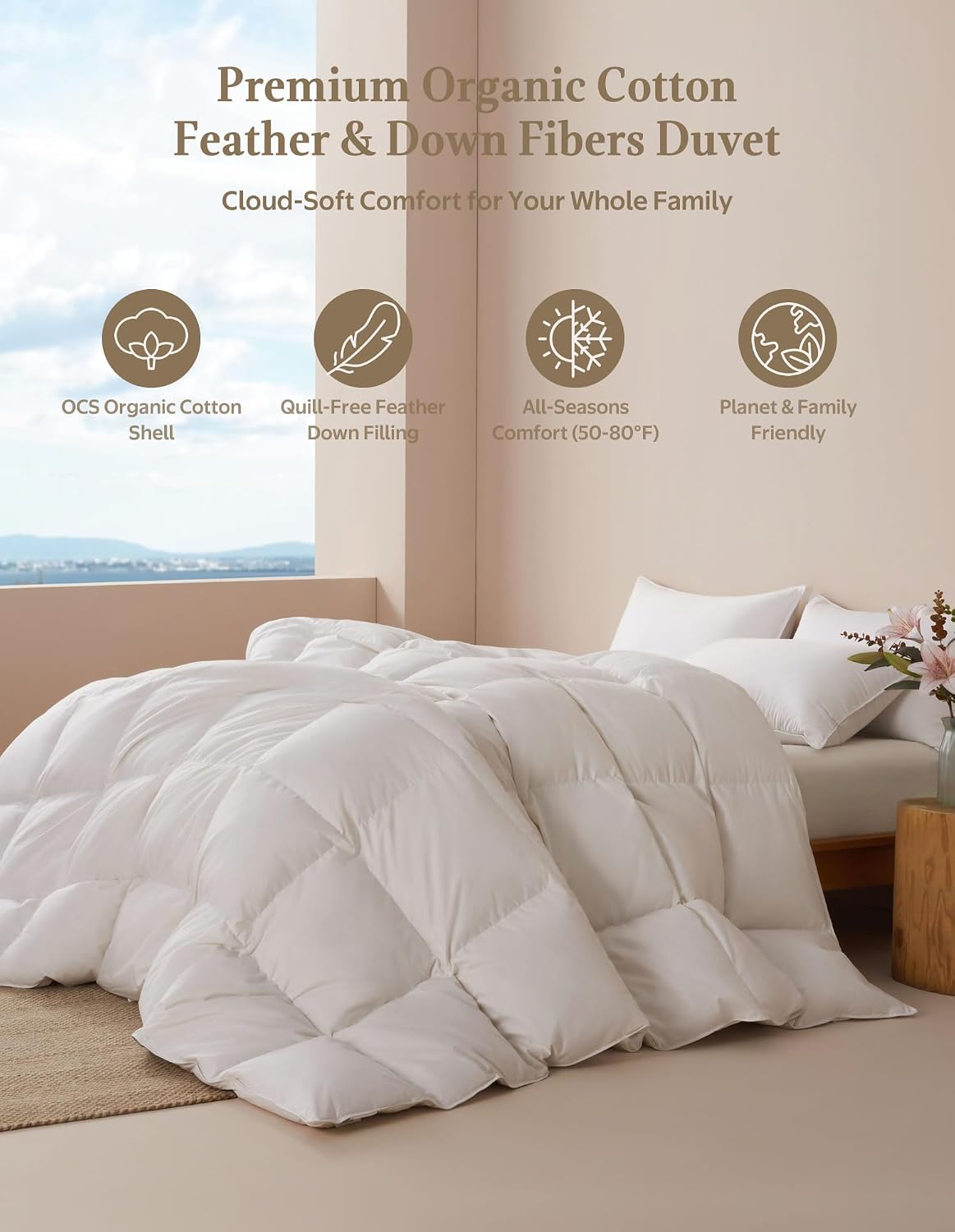
APSMILE
$85.90
In stock on Amazon
Check price on AmazonMid-Tier: Where Quiet Shells Start to Appear
In the mid-price range, brands begin to differentiate on shell experience more deliberately. Sateen-weave shells become more common at this tier, and the difference is audible. The longer thread floats in a sateen weave give the fabric more natural drape, which means less rigidity and less sound when the fabric flexes. Thread counts in the 300 to 400 TC range add enough mass to further dampen movement.
Bedsure’s mid-tier comforter line is a useful reference point. Owner reviews across Bedsure’s all-season products consistently call out the absence of crinkle as a standout feature — one frequently cited comparison point in head-to-head reviews against prior-owned comforters in the same price category. The shell feel is described as soft from the start rather than crisp, which correlates with a sateen or brushed-cotton finish rather than a calendered percale.
Good Housekeeping’s expert-tested comforter reviews note that shell feel — including the presence or absence of noise — is one of the categories where mid-tier products most frequently outperform budget options in real-world use, even when fill specs are otherwise comparable. This is because quieter shell engineering (heavier weight, sateen weave, no resin coating) costs something to produce, and that cost tends to show up in the mid-price bracket rather than at the lowest price points.
APSMILE’s down alternative comforter sits at a similar mid-tier noise profile: owners note a light sound when the shell is actively shuffled but describe it as soft rather than sharp — more a whisper than a crinkle. For most sleepers this level of noise is not disruptive during normal sleep movement, and several reviewers characterize it as a pleasant lofty-quality signal rather than a complaint.
Globon
$119.99
In stock on Amazon
Check price on AmazonPremium-Tier: Engineered Silence (and Engineered Crispness)
At the premium end, shell engineering becomes an explicit brand differentiator — in both directions.
Some premium brands engineer specifically for silence. Globon’s product line is the clearest current example: the brand explicitly markets its shells as “Noiseless,” and owner reviews across multiple Globon products confirm the claim holds in real-world use. Reviewers describe turning in bed at night without producing any audible rustling. This outcome appears to be a combination of a softer sateen-style finish, a higher shell weight, and an absence of resin coating — all characteristics that add cost and represent genuine engineering choices worth noting in listings.
Other premium products engineer deliberately for the opposite experience. A Canadian Luxury comforter owner linked shell stiffness directly to the comforter’s lofted, cloud-like drape: the stiffer shell holds the fill up and off the body, creating a floating sensation the reviewer found luxurious. A Royoliving buyer described the noise as normal for the material and entirely expected — the percale-adjacent feel associated with high-thread-count sheets that feel cool and structured. One Ubauba comforter owner specifically listed “that wonderful crinkly sound” as a feature she values.
The pattern at the premium tier: shell noise is rarely accidental. Brands either engineer for quiet and say so explicitly, or they engineer for a crisp, cool, structured hand and position the sound as part of that experience. Both Wirecutter’s New York Times–published down comforter review and Good Housekeeping’s expert roundup make this distinction clearly — noise is a preference variable at this tier, not a quality indicator.
What to look for in premium listings: explicit language such as “noiseless,” “quiet shell,” or “soft sateen finish” signals engineered silence. Language such as “crisp,” “hotel-style,” “cool to the touch,” or “structured drape” signals an intentional percale-style experience that will produce more sound.
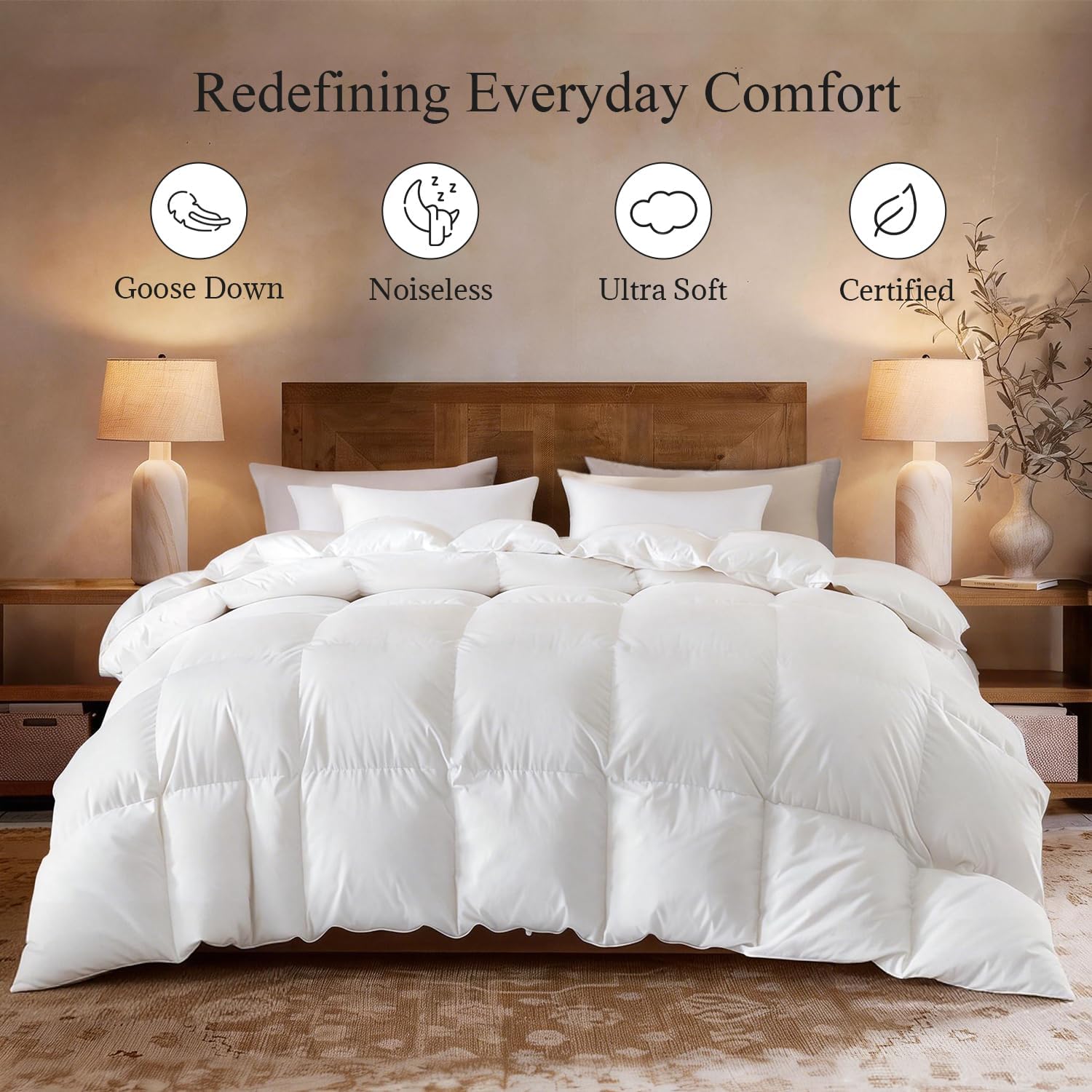
Globon
$252.43
In stock on Amazon
Check price on AmazonHow to Read a Listing Before You Buy
If a product listing does not tell you the weave type, the thread count, or whether the shell has a special finish, those omissions are informative. Brands that engineer for quiet — Globon being the clearest current example — make it a marketing point because achieving it costs something. When a listing says only “100% cotton shell” with no further detail, assume percale at a moderate thread count: not bad, but not engineered for silence.
Look for these signals in listing copy and Q&A sections:
- “Noiseless,” “quiet,” or “silent” shell language — rare, but trustworthy when backed by owner reviews
- Thread count above 350 TC — correlates with heavier, quieter shells
- Sateen weave called out explicitly — typically quieter than percale
- “Crisp,” “hotel-style,” or “cool to the touch” — signals a percale shell; will make more noise
- “Soft,” “brushed,” or “peached” finish — quieter, warmer hand feel
Does Shell Noise Actually Affect Sleep Quality?
For most people, the answer is no — after a week or two of regular use. Down shells, especially percale, soften measurably with washing. The calendering finish that creates initial stiffness breaks down with the first few laundry cycles, and most owners who initially noticed crinkle report that it fades significantly after washing. Resin-coated shells are the exception: reviews suggest the synthetic finish takes longer to soften and occasionally does not fully break down.
For light sleepers, partners who share a bed with a restless sleeper, or anyone who wakes easily to auditory stimuli, shell noise is a real purchase variable — not a nitpick. A comforter that wakes your partner every time you roll over is a sleep quality problem, not just a texture complaint. The Sleep Foundation’s comforter selection guide highlights partner disturbance as one of the underappreciated dimensions of bedding choice for couples.
One practical solution: a duvet cover adds a second fabric layer over the shell, which dampens crinkle substantially. A sateen-weave duvet cover at 400 TC or above reduces audible rustling without replacing the comforter itself. It will not fully eliminate a very stiff resin shell, but it makes a noticeable difference in the first few weeks before washing softens the shell naturally.
The Decision Rule
If you or your partner are light sleepers, or you share a bed: prioritize products that explicitly market quiet shells or have reviewer consensus on silence. Globon’s noiseless-shell products are the clearest signal in the current market. Bedsure’s owner reviews back up a similar quiet-shell experience. Read the three-star reviews specifically — noise complaints cluster there when they exist.
If you run warm, want a crisp hotel feel, and sleep alone or heavily: a percale-shell comforter will feel cool, clean, and slightly structured — and the sound may read as premium rather than disruptive. The Royoliving and Ubauba buyer profiles above describe this experience accurately.
If noise is a secondary concern: buy the comforter that wins on fill quality and construction for your budget, add a 400 TC sateen duvet cover, and wash the comforter twice in the first month. For the large majority of buyers, the noise question resolves itself within four to six weeks of regular use.
Frequently Asked Questions
Why do some down comforters make a crinkling or rustling noise? The noise comes from the shell fabric — the outer casing — rather than the fill. Tightly woven percale cotton and resin-coated shells are the most common sources. The downproofing process (which keeps fill from escaping through the weave) often requires finishing treatments that add stiffness, and that stiffness produces sound when the fabric flexes.
Does a noisy shell mean lower quality? No. Shell noise correlates with weave type and finishing process, not fill quality. Some of the crispest, noisiest shells are on well-constructed percale comforters with excellent fill. As Good Housekeeping’s comforter expert testing makes clear, noise is a preference variable, not a quality indicator.
Which comforters are genuinely quiet at night? Based on aggregated reviewer consensus, Globon comforters — which explicitly brand their shells as “Noiseless” — and Bedsure have the strongest track record for quiet-shell performance. Owner reviews on both lines consistently confirm low audible noise during normal sleep movement.
Does the crinkle noise go away after washing? For most cotton shells, yes — noticeably so after two or three washes. Percale shells soften as the calendered finish breaks down with heat and agitation. Resin-coated synthetic shells improve more slowly and less completely.
Is shell noise worse with feather fills than with pure down? The fill itself does not generate noise; the shell does. However, feather-fill comforters are often heavier, which can cause more dramatic shell movement when you shift positions, amplifying whatever noise the shell was already producing. The effect is modest but real for noise-sensitive sleepers.
Can a duvet cover eliminate shell noise? It reduces it substantially but rarely eliminates it entirely. A heavier sateen-weave duvet cover adds a damping layer and is the most practical immediate fix for an existing comforter. If you are buying new and silence is a firm requirement, choose the shell type first rather than relying on a cover to compensate.