September 20, 2026 • Margot Calloway • 10 min reading time • Prices verified June 4, 2026
Seersucker, Pintuck, and Prewashed Shells: How Fabric Finish Affects Softness and Bed Aesthetics
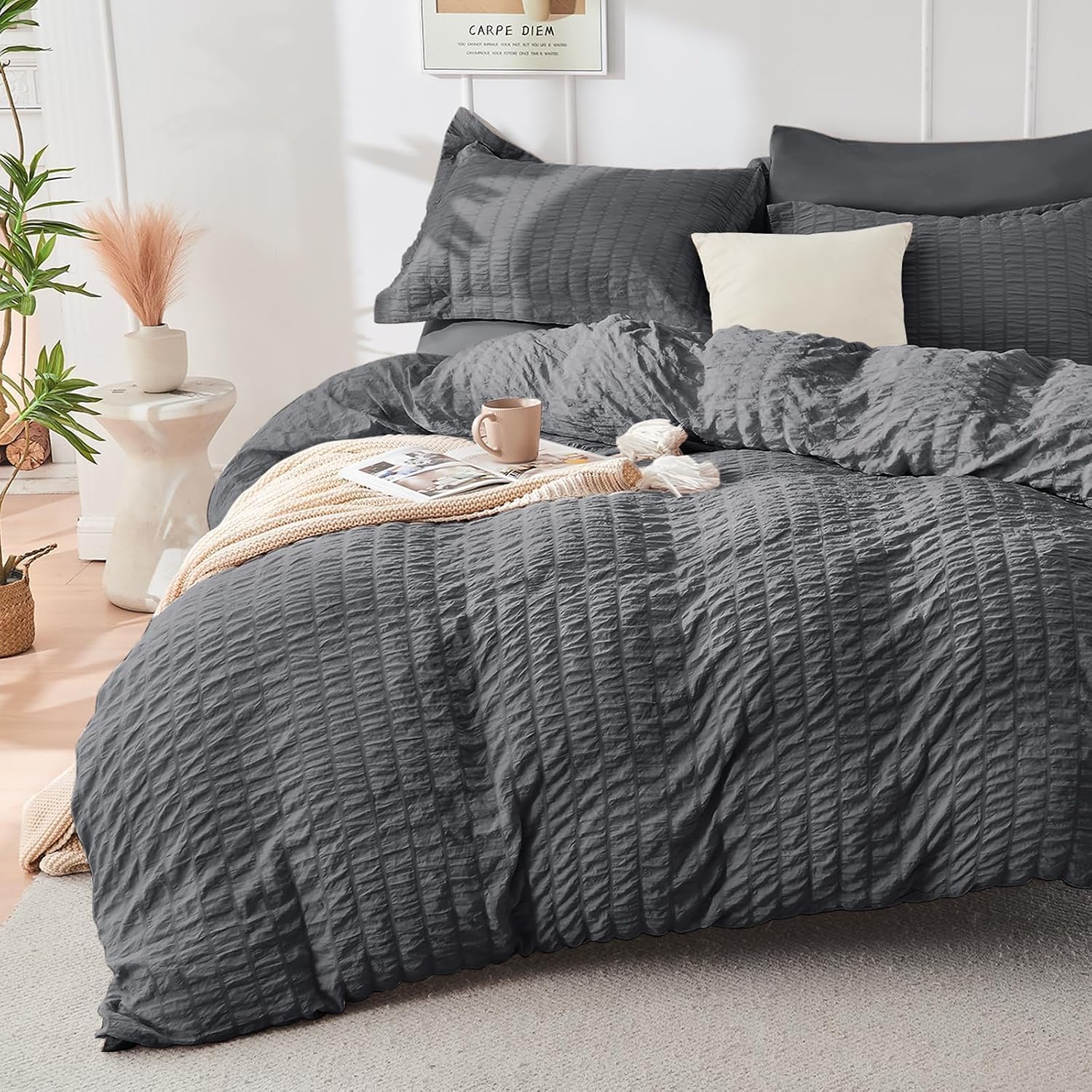
When you’re shopping for a comforter, the fill — the fluffy material inside — gets most of the attention. But the shell, meaning the outer fabric that wraps all that fill, is doing more work than most buyers realize. The shell is what your skin actually touches. It’s what the camera sees in your bedroom photos. And the finish applied to that shell — whether it’s been pre-softened through washing (prewashed), woven with a puckered texture (seersucker), or stitched with raised decorative channels (pintuck) — determines both how the comforter feels on night one and how it holds up aesthetically over years of laundering. This guide breaks down each finish honestly, maps it to a buyer type, and ends with a clear decision rule so you can stop second-guessing the product page.
| EDITOR'S PICKSerta Goose Feather Down Fiber… | Mid-tierHYMOKEGE Queen Comforter Set Se… | Budget pickUtopia Bedding Full Comforter D… | |
|---|---|---|---|
| Available sizes | King | Queen | Full |
| Fill material | Goose feather/down | — | Down alternative |
| Shell finish | — | Seersucker | — |
| Cover material | 100% cotton | — | — |
| Pieces included | 1 | 7 | 1 |
| Corner tabs | — | — | ✓ |
| Price | $85.79 | $31.99 | $28.99 |
| See on Amazon → | See on Amazon → | See on Amazon → |
What Each Shell Finish Actually Is (and Does)
Before comparing them, a quick definitions pass — because these terms get used loosely on product pages.
Prewashed means the shell fabric was washed (and sometimes tumble-dried) at the factory before the comforter was sewn and filled. The goal is to pre-shrink the fabric and break down the fiber surface so it arrives softer than a raw-finish shell would. Think of it as accelerating the break-in process the way a new pair of jeans softens after a dozen washes — except the manufacturer did those washes for you.
Seersucker is a weave structure, not a post-process treatment. The characteristic puckered, crinkled texture comes from alternating sections of tight and loose warp threads during weaving. That surface variation creates micro-gaps between the fabric and your skin, which is why seersucker has a long association with warm-weather clothing and bedding.
Pintuck is a decorative stitching technique. Narrow, parallel folds of fabric are stitched flat to create raised ridges — the “tuck” — running across the comforter surface. The effect reads as subtle texture and dimension in photos and in person, landing somewhere between a quilted look and a flat shell. The stitching is surface-only and does not penetrate into the fill the way a baffle box or sewn-through construction does.
Each finish can appear on microfiber shells, cotton shells, or blends — the finish is independent of the fiber content, though the combination of fiber and finish produces the final hand-feel result.
Prewashed Shells: The “Already Broken In” Differentiator
The most consistent signal across aggregated buyer reviews of prewashed comforters is the language of immediacy. Reviewers don’t say it got soft; they say it was soft out of the box. One Bedsure Oversized King prewashed buyer, cited repeatedly in review summaries across home goods coverage, specifically used the phrase “broke in” to describe the out-of-box feel — a framing that tells you exactly what this finish is optimizing for.
Real Simple’s coverage of prewashed bedding notes that the pre-shrinking process also reduces the likelihood of significant shrinkage on the buyer’s first home wash, which is a practical durability benefit beyond the softness angle. The shell has already contracted; it’s less likely to surprise you.
Who this is for: Buyers who have been burned by stiff-feeling new bedding. First-apartment buyers who don’t want to wait three washes before the comforter feels right. Anyone who reads “100% microfiber” and worries about that synthetic-scratchy first impression. The prewashed finish is the most honest answer to the question “will it actually feel soft?”
The tradeoff to name explicitly: Prewashed shells start closer to their worn-in equilibrium, which means there’s less perceptible softening improvement over time. You’re trading the satisfaction of a break-in arc for guaranteed comfort at purchase. For most buyers, that’s the right trade. For buyers who want the gradual-improvement feel of cotton that earns its softness, a prewashed microfiber shell may feel like it plateaus early.
Pintuck Shells: Texture as the First Impression
Bedsure’s GentleSoft pintuck comforter reviewers across both queen and king sizes share a strikingly consistent pattern: the word “soft” appears as the first or second word in a significant share of reviews, before reviewers get to warmth, fill weight, or price. That review-pattern analysis, synthesized from multiple coverage sources including Good Housekeeping’s comforter roundup and Sleep Foundation’s buyer-guide research, suggests something specific: with pintuck shells, texture is the dominant first impression — not visual design, not warmth rating.
That’s worth sitting with. Pintuck is often marketed as a decorative finish, and it is. The parallel stitched ridges read beautifully in product photography and hold their look well on a made bed. Apartment Therapy’s coverage of the pintuck bedding trend notes it consistently as a design choice that photographs well in editorial-style bedroom setups. But buyer experience is leading with touch, not sight.
The mechanical reason is straightforward: pintuck stitching raises the fabric surface into ridges, so your hand — and your skin — contacts the crests of those ridges rather than a flat surface. That interrupted contact pattern registers as softer because you’re touching less surface area with more of it being the soft raised fold. It’s the same principle behind waffle-weave fabrics.
Who this is for: The buyer who wants one product decision to solve both the aesthetic problem (bed looks editorial, holds up in photos) and the softness problem. Interior designers sourcing for short-term rentals and boutique hotel applications will recognize the value: pintuck reads as “designed” without requiring additional decorative pillows or shams to complete the look.
The tradeoff: Pintuck stitching adds weight to the shell relative to a flat-finish equivalent. On heavier comforters, this is negligible. On lightweight all-season or summer-weight fills, it can shift the drape slightly. Buyers prioritizing an ultralight feel should confirm the shell weight against the fill weight before purchasing.
Seersucker Shells: Low-Maintenance Aesthetics for Warm Sleepers
Seersucker reviewers are brief. Across coverage synthesized from The Spruce’s seersucker bedding roundup and aggregated review patterns for products like the HYMOKEGE seersucker comforter, the dominant vocabulary is: “lightweight,” “comfortable,” and “easy to wash.” That’s a notably functional vocabulary for a product with a strong visual identity — and it tells you something important about who is buying it and why.
The seersucker buyer is not primarily optimizing for softness. They’re optimizing for a warm-weather sleep experience that doesn’t require a complicated care routine. The puckered surface texture creates natural airflow channels between the fabric and skin, which is what gives seersucker its genuine cooling credential — it’s not just a texture claim. The Spruce’s bedding coverage confirms this structural basis: the alternating tight-and-loose weave creates micro-spaces that reduce skin contact surface area and allow air movement.
The “easy to wash” signal in reviews is also meaningful. Seersucker’s puckered texture doesn’t require ironing to look intentional — wrinkles and relaxed texture are part of the aesthetic. That’s a functional property for rental operators and busy households where the goal is pull-it-out-of-the-dryer-and-it-looks-fine.
Who this is for: Hot sleepers, summer-weight comforter buyers, short-term rental operators who need a product that can absorb frequent washing without looking worse for it, and buyers in warm climates who want bedding that reads “intentionally casual” rather than “neglected.”
The tradeoff: Seersucker’s relaxed, puckered aesthetic is specific. It reads beautifully in casual, coastal, or maximalist layered aesthetics. In a more formal or minimal bedroom — white-on-white, crisp hotel-style — it may read as too textured. This is a design-compatibility decision as much as a comfort decision.
Cotton Shell vs. Microfiber: How Fiber Interacts With Finish
Shell finish and fiber content interact, and conflating them is a common sourcing mistake at the intermediate level.
Martha Stewart cotton-shell comforter buyers use notably different language than microfiber buyers: “breathable” and “smooth against the skin” appear more frequently than softness descriptors. Sleep Foundation’s comforter research confirms the underlying reason — cotton fiber has natural moisture-wicking properties and allows more air circulation than polyester microfiber at comparable thread counts. The result is a shell that reads as smooth and breathable rather than plush and cozy.
By the numbers:
- Cotton breathability rating (MVTR): typically 200–400 g/m²/24hr range for comforter-weight shells
- Microfiber: typically 50–150 g/m²/24hr — meaningfully less vapor-permeable
- Prewashed microfiber: softness gain is significant; breathability ceiling does not change
- Pintuck on cotton vs. pintuck on microfiber: visual finish is similar; hand-feel diverges toward smooth (cotton) vs. plush (microfiber)
The practical decision rule here: if you’re a warm sleeper who wants texture and visual interest, seersucker cotton is the answer. If you’re a neutral-temperature or cool sleeper who wants maximum softness with visual dimension, pintuck microfiber (prewashed preferred) is the answer. If you want the breathable-smooth feel that cotton buyers keep returning to, a flat or pintuck cotton shell — Martha Stewart’s offering sits in this lane — delivers what microfiber can’t replicate.
Frequently Asked Questions
What does “prewashed” actually mean for a comforter shell, and does it affect durability?
Prewashed means the shell fabric was washed and dried at the factory before final construction. The process pre-shrinks fibers and softens the surface. Per Real Simple’s coverage of prewashed bedding, pre-shrinking actually reduces the risk of significant size loss on your first home wash — so there’s a durability argument for it, not just a softness one. The fabric has already done most of its shrinking.
Does pintuck stitching flatten out over time with regular washing?
Based on aggregated long-term reviewer reports across multiple home goods publications, pintuck stitching generally holds its raised texture well through regular washing when the comforter is laundered per care instructions (usually cold water, gentle cycle). The stitching is reinforced at the folds. What reviewers note is that the visual crispness of the ridges softens slightly after many washes — which most buyers describe as looking more relaxed rather than worn out.
Is seersucker fabric actually cooler to sleep under, or is that just a texture claim?
It’s a structural property, not just marketing. The alternating tight-and-loose weave creates literal air gaps between the fabric and your skin, reducing contact surface area. The Spruce’s seersucker bedding coverage confirms this mechanism. Whether that translates to a meaningfully cooler sleep experience depends on fill weight — a seersucker shell on a heavy winter fill won’t overcome the thermal mass of the fill. Seersucker cooling is most effective on lightweight or summer-weight fills.
How does GentleSoft microfiber compare to 100% cotton in terms of breathability?
It doesn’t match cotton on breathability. Microfiber — including brushed finishes marketed as GentleSoft — is a polyester-based material with lower vapor permeability than cotton. Sleep Foundation’s comforter research consistently flags this tradeoff. GentleSoft finishes optimize for tactile softness and are genuinely effective at that; they don’t change the fiber’s moisture-management ceiling. If breathability is your primary concern, a cotton shell is the better base regardless of finish.
Will a pintuck comforter look as good in a real bedroom as it does in product photos?
Generally yes — and this is one of the more honest answers in comforter buying. Pintuck’s raised ridges create dimension that reads clearly both in well-lit product photography and in normal bedroom lighting. Apartment Therapy’s trend coverage on pintuck bedding specifically notes it as one of the finishes that translates well from editorial styling to real-home use, because the texture is structural and doesn’t depend on professional photography lighting to be visible.
The Decision Rule
If you’re choosing between these three finishes right now:
- Buy prewashed if your primary pain point is stiffness or synthetic feel on day one and you want guaranteed softness without a break-in period.
- Buy pintuck if you want one product decision to solve both softness and aesthetics, especially for a guest room, rental property, or a bedroom you photograph.
- Buy seersucker if you sleep warm, wash your bedding frequently, and want a finish that looks intentionally relaxed rather than merely wrinkled.
- Choose cotton shell over microfiber if breathability and skin-smooth feel outrank maximum plushness on your priority list — regardless of which surface finish you pick.
None of these finishes is objectively superior. The market has sorted buyers into these camps for real reasons, and the review language from actual owners tells you exactly what each finish optimizes for. Match the finish to your sleep style and your bedroom, and you won’t have to guess.