September 29, 2026 • Margot Calloway • 10 min reading time • Prices verified June 4, 2026
The Two-Year Search Is Over: What Makes Buyers Finally Stop Looking and Commit to a Comforter
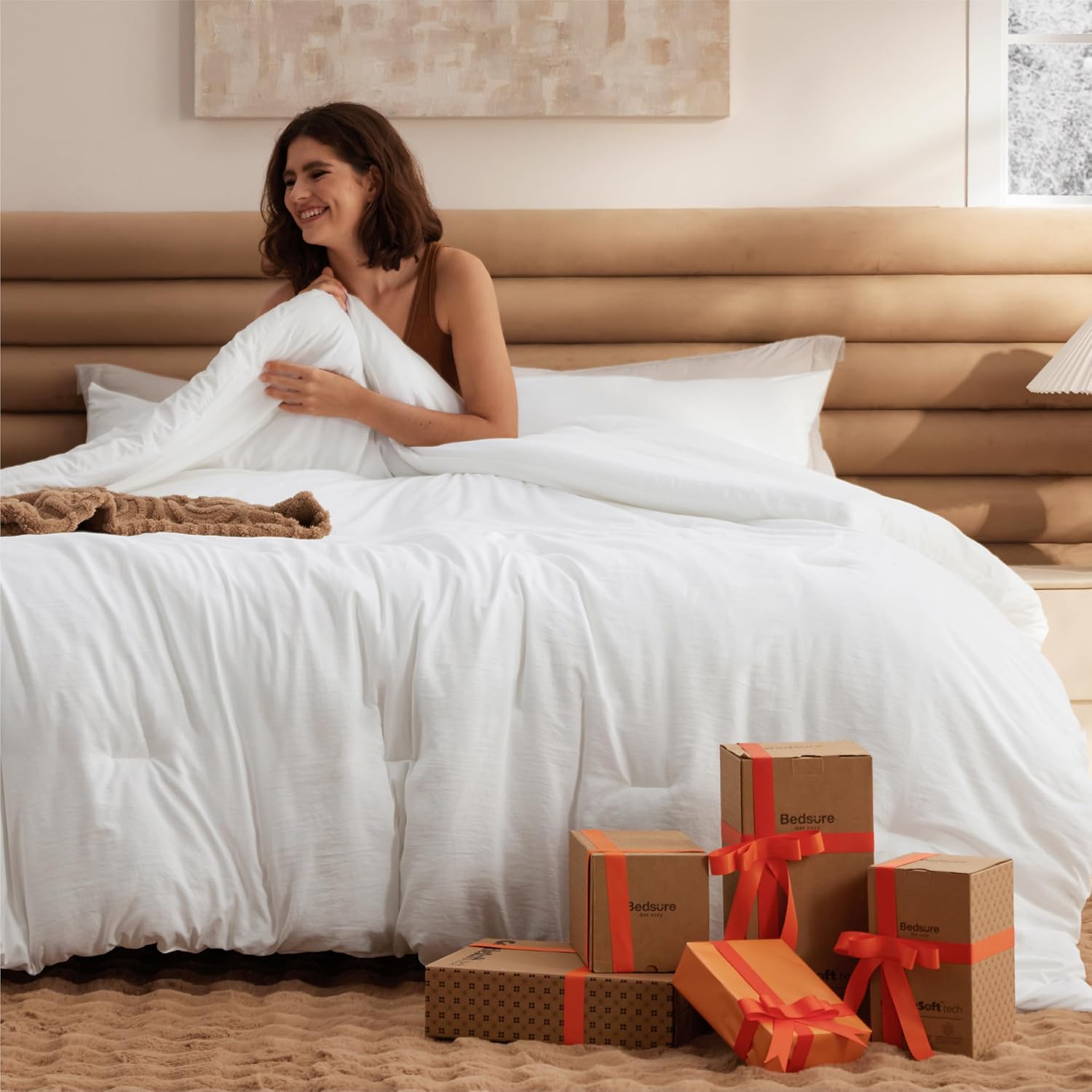
There’s a review for the Bedsure Oversized King comforter that opens with a sentence you probably recognize in your bones: “It took me about 2 years to find exactly what I was looking for.” The writer had visited stores. Checked brands. Read specs. Returned things. And then — finally — stopped. That sentence isn’t a product testimonial. It’s a description of a shared experience that almost everyone who takes bedding seriously goes through. A comforter, for context, is the thick quilted blanket — filled with down (bird feathers), synthetic fiber, or a blend — that sits at the top of your bed and does the primary work of keeping you warm. Finding one that genuinely satisfies you turns out to be harder than it should be, because the gap between “looks good in photos” and “feels right every night” is surprisingly wide. This article is about closing that gap faster.
| EDITOR'S PICKGlobon Goose Down Comforter Kin… | Mid-tier600-Thread-Count Egyptian Cotto… | Budget pickBedsure Oversized King Comforte… | |
|---|---|---|---|
| Size | King | Queen | Oversized King |
| Fill Power | 800 | — | — |
| Fill Weight | — | 55 oz. | — |
| Thread Count | 420 | 600 | — |
| Shell Material | — | Egyptian Cotton | — |
| Pieces Included | — | — | 3 |
| Price | $226.78 | $129.95 | $51.99 |
| See on Amazon → | See on Amazon → | See on Amazon → |
Why the Search Takes So Long (It’s Not Just You)
The comforter category has a structural problem: the things that matter most to long-term satisfaction are almost impossible to evaluate in a store or from a product page. Thread count on the shell fabric (the outer casing), fill power (a measure of how much loft — or fluffiness — one ounce of down creates), and fill weight (the total ounces of fill inside) tell you something. But they don’t tell you how the comforter feels draped over your shoulder at 2 a.m., whether it breathes the way you need it to, or whether it has what one reviewer memorably called “just the right amount of crunch.”
The Sleep Foundation’s fill power overview explains the metric clearly: 600-fill-power down is decent; 700 is good; 800+ is premium loft with excellent warmth-to-weight ratio. But fill power alone doesn’t govern feel. A high-fill-power comforter in a sewn-through construction — where the shell is stitched straight through in a grid pattern, creating flat “channels” — will sleep differently than the same fill power in a baffle-box construction, where small fabric walls between the top and bottom shell allow down to loft fully in three dimensions. Wirecutter’s Best Down Comforters guide flags this distinction as one of the most commonly misunderstood variables in the category, noting that sewn-through construction is less expensive to make but limits loft, especially in heavier fill weights.
None of this is intuitive. And it’s why buyers spend two years.
The Archetypes: What Kind of Searcher Are You?
Reading across thousands of long-form reviews, a handful of searcher types repeat with striking consistency. Recognizing yours shortens the process considerably.
The Memory Chaser. One buyer of a puredown comforter explicitly named a $500 comforter purchased at Bed Bath & Beyond in 2007 as the quality standard they were trying to match — pricing every current candidate in that historical context. Memory chasers aren’t being irrational. That 2007 comforter probably had real goose down, a tightly woven shell that kept fill from migrating, and baffle-box construction. The challenge is that the $500 price point in 2007 dollars buys roughly $750 worth of product in 2026 terms, per general CPI tracking. If you’re a memory chaser, your instinct to spend more than the budget options is correct — but you don’t necessarily need to go all the way to Sferra or Matouk. The Parachute Hotel Collection and Brooklinen Luxe tiers, with 600–700 fill power and proper baffle-box construction, are where reviewers in this archetype most consistently report finding their match.
The Sensory Specificist. This is the buyer who opened the FMQXMBZT oversized king review with the phrase “not hot and just the right amount of crunch to make it luxurious” and followed it with “I have never enjoyed bedding so much.” The word crunch appears across feather-blend reviews — it describes the faint rustle and light resistance that down and feather-heavy fills create when you shift positions. It is not a defect. It is, for some sleepers, the exact tactile signal that something high-quality is present. Sensory specificists often don’t know what they’re looking for until they find it — but once they find the right word for it, they know exactly where to look. If crunch is your thing, you’re almost certainly in the feather-and-down blend or lower-fill-power natural-fill category, not in the ultralight 850-fill-power Hungarian goose down end of the market, which tends to feel almost weightlessly silent.
The Grown-Up Kid. One buyer described growing up with a real down comforter and spending years in synthetic fill before finally returning to a down insert and saying they’d never go back. Real Simple’s comforter buying guide notes that synthetic fill has improved significantly — Primaloft and other microfiber clusters genuinely approximate down warmth — but the feel on the skin and the way down shifts and conforms hasn’t been fully replicated synthetically. If you’re this archetype, your search probably ends with a natural fill product, and the only remaining question is budget.
The Reluctant Upgrader. The Globon all-season king buyer who wrote “I wish I could afford to buy another one” is the clearest example here — full satisfaction, genuine aspiration, honest budget constraint. This is someone for whom the $150–$250 tier delivered a genuinely good result, and who’s accumulating the case for eventually spending more. The right move for this archetype isn’t to be pushed upmarket prematurely. If a $180 comforter is producing five-star sleep, the cost-per-night math on a premium upgrade needs to clear a high bar to justify it.
The Variables That Actually Predict Satisfaction
Once you know your archetype, the remaining decisions collapse into a shorter list.
Construction first, fill second. Good Housekeeping’s Best Comforters sourcing notes consistently prioritize baffle-box or box-stitch construction for anything above the $200 price point, because sewn-through construction causes fill to migrate to the edges over time. If a comforter at any price claims high fill power but uses sewn-through construction, that fill power will degrade unevenly with washing.
Fill weight is the warmth lever, not fill power. The Spruce’s fill power vs. fill weight explainer is clear on this: fill power measures quality and loft; fill weight measures how much of that material is actually inside. A lightweight summer comforter might use 800-fill-power down but only 12 ounces of it, making it genuinely insufficient for cold sleepers. An all-season comforter at 600 fill power with 20+ ounces will sleep warmer. Match fill weight to your climate and thermostat settings, not just the fill power number.
Shell fabric matters more than most buyers expect. A 233-thread-count cotton shell is the minimum for effective down-proofing — the weave needs to be tight enough that individual down filaments don’t poke through. The Responsible Down Standard (RDS) certification, tracked by Textile Exchange at responsibledown.org, addresses sourcing ethics, not shell quality. But brands that invest in ethical sourcing tend also to invest in proper shell construction — it’s a reasonable proxy signal.
Size up by default. This comes up repeatedly across reviews at every price tier. A queen comforter on a queen bed gives you roughly 6–8 inches of drape on each side — enough to look made and feel tucked-in, but not enough to fully cover both sleepers if one person pulls. Sizing to a king insert on a queen bed (a common recommendation in the review corpus) adds meaningful drape and reduces the nightly tug-of-war.
By the numbers:
- 600 fill power: entry-level quality, good warmth, moderate loft
- 700–750 fill power: mid-market sweet spot, strong loft-to-weight ratio
- 800+ fill power: premium, ultralight feel, diminishing returns unless you’re a hot sleeper needing loft without weight
- 233+ thread count on the shell: minimum for down-proofing on natural fill
How to Actually End the Search
Here’s the decision frame, stated plainly:
If you’re a memory chaser trying to replicate a premium hotel or childhood comforter: Target 700+ fill power, baffle-box construction, cotton shell at 300+ thread count. The Parachute Hotel Collection and Brooklinen Luxe ranges are where the review pattern most consistently resolves for this archetype.
If you’re a sensory specificist who wants the crunch: Look at feather-and-down blends rather than pure down. Lower fill power (500–650) in a blend will produce the tactile feedback you’re after. This is also typically a more budget-accessible entry point.
If you’re a grown-up kid returning to natural fill after years in synthetic: Almost any natural fill product in the $200+ tier will satisfy you — your palate has already been calibrated. The main decision is whether you want a lightweight summer fill or an all-season weight.
If you’re a reluctant upgrader at a budget tier: Don’t move upmarket until your current comforter is genuinely failing you. When it does — pilling, fill migration, loss of loft after washing — use the failure mode to diagnose exactly what to fix in the next purchase.
If you’re sizing for a short-term rental or boutique property: The hotel-feel is real and achievable in the $150–$350 range. Reviews consistently show that oversized cuts (designed to drape fully on both sides), white shell fabric, and baffle-box construction produce guest responses that reference “hotel bed” at price points well below luxury-tier.
Frequently Asked Questions
How do I know if a comforter will feel like the one I remember from childhood or a hotel stay? The signature of that remembered feel is almost always natural down or a high-quality feather-down blend, in a baffle-box construction, with a tightly woven cotton shell. If the current candidate hits those three criteria and has fill power above 600, it’s likely to land close. The Sleep Foundation’s bedding overview notes that cotton percale shells produce a crisper, cooler feel; cotton sateen is slightly smoother and warmer. That shell difference can be the final variable between “close” and “exactly right.”
What does ‘crunch’ mean when reviewers describe a feather comforter, and is it a good thing? Crunch describes the faint audible and tactile resistance that comes from natural feathers and down shifting against a tightly woven shell when you move. It’s not the same as poking or prickling, which signals a low-quality feather fill with quill exposure. For buyers who grew up with natural fill, crunch is a comfort cue — it signals presence and quality. Whether it’s a good thing depends entirely on your preference. Ultralight, high-fill-power down comforters tend to be nearly silent; feather blends and lower-fill-power products produce more of it.
Is the ‘hotel bed feel’ actually achievable without spending hundreds of dollars? Yes, with some specificity. The hotel bed feel is largely a function of oversized cut (so the comforter drapes over the mattress edge), white or white-adjacent shell, baffle-box construction, and adequate fill weight for the season. Reviewers consistently report achieving this at the $150–$300 range. The primary trade-off at the lower end of that range is longevity — cheaper shells and lower fill quality degrade faster with washing — not the initial feel.
Should I size up to get the right drape and coverage even if my bed is a standard queen? Almost universally, yes. A queen insert on a queen bed gives minimal drape. A king insert on a queen bed gives 10–12 inches per side — enough for full coverage without daily repositioning. The only exception is if you’re using a duvet cover with a queen pocket that won’t accommodate a king insert, in which case look for “oversized queen” dimensions (typically 92” x 96” versus the standard 88” x 88”).
How many comforters do most people try before finding one they’re truly happy with? The review pattern suggests two to four. A first purchase that underdelivers, a return or donation, a second attempt that gets closer, and then a third or fourth that sticks. The two-year search isn’t usually two years of continuous shopping — it’s two years of periodic frustration punctuated by attempts. Understanding your archetype and the three or four variables that govern feel (construction, fill weight, shell fabric, size) compresses that timeline substantially.